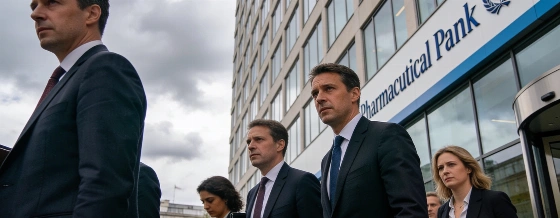
AstraZeneca shares tumbled while Bristol Myers surged after reports of a potential $400 billion merger. Investors are weighing patent risks, pipeline strength, and regulatory hurdles as Wall Street reacts to the pharma sector's biggest deal talk in years
Two of the world's largest pharmaceutical companies, AstraZeneca and Bristol Myers Squibb, saw their stock prices move in opposite directions after reports surfaced that the two had discussed a potential merger valued near $400 billion. The news, first reported by the Financial Times and confirmed by Bloomberg, sent AstraZeneca shares down as much as 7% in London trading on August 3, while Bristol Myers closed near a 52-week high in U.S. markets. The divergent reaction highlights how investors interpret the risks and rewards of mega-mergers in the drug industry.
Market Reaction and Deal Dynamics
Typically, when merger talks emerge, the company being acquired sees its stock rise on expectations of a buyout premium, while the acquirer's shares often fall due to concerns about integration costs and strategic fit. That pattern played out here: Bristol Myers, facing a looming patent cliff, gained as investors anticipated a potential lifeline, while AstraZeneca dropped as shareholders questioned the logic of absorbing a rival with major revenue at risk.
Bristol Myers relies heavily on two blockbuster drugs-Eliquis, a blood thinner, and Opdivo, a cancer immunotherapy-that together accounted for $24.5 billion in sales last year, or about 51% of the company's total revenue. Both drugs are set to lose key U.S. patent protection around 2028, opening the door to generic competition and threatening a sharp decline in future earnings. For Bristol Myers investors, a merger with AstraZeneca could fold this risk into a larger, more diversified company and potentially deliver a premium if a formal offer materializes.
Why AstraZeneca Investors Are Skeptical
For AstraZeneca shareholders, the deal looks far less appealing. The company already boasts one of the strongest drug pipelines in the sector and is targeting $80 billion in annual sales by 2030, up from $58.74 billion in 2025. Many analysts argue that acquiring Bristol Myers would dilute AstraZeneca's growth rate, disrupt its research pipeline, and saddle it with products facing imminent generic competition. According to reporting by TheStreet, some analysts described the rumored talks as perplexing, given AstraZeneca's robust position and lack of need for financial engineering.
TD Cowen estimates that a merger could reduce AstraZeneca's projected sales growth by two percentage points between 2027 and 2032. The timing is also notable: AstraZeneca recently reported a late-stage heart drug trial failure, adding to investor anxiety about taking on additional risk. Large pharmaceutical mergers often lead to years of integration challenges, which can slow innovation and erode value for shareholders.
Regulatory and Political Barriers
Even if both boards were to agree on terms, a deal of this scale would face intense antitrust scrutiny in the U.S., U.K., and Europe. Both companies market competing cancer immunotherapies-Opdivo for Bristol Myers and Imfinzi for AstraZeneca-raising the likelihood that regulators would require divestitures of overlapping products. Such forced sales could erode the revenue base that makes the merger attractive in the first place and delay any potential benefits by months or years.
There is also a national interest angle. AstraZeneca is the U.K.'s second most valuable company, and any move to fold it into a U.S.-based structure could trigger political pushback. Regulatory reviews of this magnitude are rarely swift, and the uncertainty could weigh on both companies' shares for an extended period.
What Happens Next
Neither AstraZeneca nor Bristol Myers has confirmed the merger talks, and both declined to comment on the reports. The companies are scheduled to report third-quarter earnings in late October-Bristol Myers on October 29 and AstraZeneca on October 30-where executives are likely to face direct questions about the potential deal. For now, Bristol Myers shares are trading at a premium on deal hopes, while AstraZeneca trades at a discount tied to deal fears. If talks collapse, those moves could quickly reverse.
For context, the last time Wall Street saw such a dramatic divergence in stock reactions to a major deal rumor was during the 2026 IPO wave, when investors were forced to weigh the risks of sudden wealth against the need for disciplined planning, as discussed in this analysis of IPO windfalls and planning risks.
According to company filings, a combined AstraZeneca-Bristol Myers entity would become the world's largest drugmaker by revenue, though it would still rank fourth by market value. The reported $400 billion valuation would make it one of the largest mergers in pharmaceutical history, but the outcome remains highly uncertain as both sides weigh strategic, financial, and regulatory risks.
For investors, the situation underscores the importance of understanding not just the headline numbers, but the underlying business risks, patent timelines, and regulatory hurdles that can make or break a mega-merger in the healthcare sector.
Pharmaceutical mergers of this scale are rarely straightforward. While combining two major players can create operational efficiencies and a broader product portfolio, it also introduces significant risks. Patent cliffs, integration challenges, and regulatory demands can erode the very value such deals aim to create. Investors should pay close attention to the timing of patent expirations, the strength of each company's drug pipeline, and the likelihood of forced divestitures. Ultimately, the success or failure of a merger often hinges less on the initial announcement and more on the ability to execute a complex integration while maintaining innovation and growth.