AT&T's CEO says decades of network investment give the company a lasting advantage over satellite challengers like Starlink, but new partnerships and rising competition could reshape how Americans connect-and what investors expect next
In the race to deliver internet and wireless service across the U.S., few companies have the entrenched infrastructure of AT&T. While new entrants like SpaceX's Starlink are drawing attention with satellite-based connectivity, AT&T's leadership argues that the company's decades-long investment in physical networks gives it a durable edge-especially in dense urban and suburban markets where reliable indoor coverage is essential.
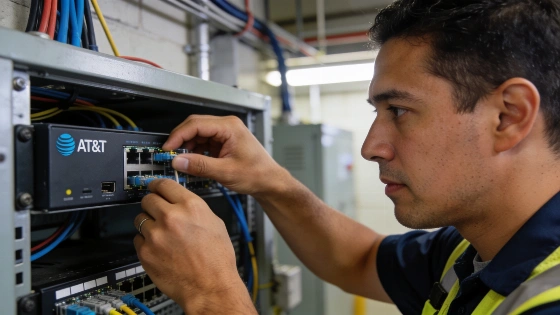
AT&T's CEO, John Stankey, recently addressed the competitive threat from Starlink on CNBC's Squawk Box, following the company's strong second-quarter earnings. Stankey acknowledged that satellite providers are bringing new technology and capital to the market, but emphasized that building a network to rival AT&T's reach and reliability is a long-term challenge. According to reporting by TheStreet, Stankey pointed to the billions invested over decades in fiber, copper, and wireless infrastructure-much of it embedded in hospitals, universities, stadiums, and high-rise buildings-as a barrier that satellite-only providers cannot easily overcome.
Network Economics
One of the key limitations for satellite-based services is indoor coverage. While Starlink and similar providers can reach remote or rural areas where terrestrial networks are sparse, they struggle to deliver consistent service inside large buildings or underground spaces. AT&T reports that more than 98% of its converged customer traffic is handled by its terrestrial networks, with satellites addressing only the small fraction of time when users are truly off-grid. Stankey indicated that AT&T plans to close even that gap through partnerships with multiple satellite operators, rather than relying on a single provider.
For investors, the scale of AT&T's operations remains a significant differentiator. In the second quarter of 2026, AT&T reported $31.6 billion in revenue, a 2.3% increase from the prior year, and announced a $10 billion accelerated share buyback program for 2026. By comparison, Goldman Sachs projects Starlink's full-year 2026 revenue at roughly $15.6 billion, with a global subscriber base of about 12 million-far below AT&T's more than 100 million U.S. mobile and broadband customers.
Wholesale Strategy and Partnerships
AT&T's approach to satellite partnerships is shaped by its ability to serve most U.S. customers directly. Stankey explained that the company only pursues wholesale agreements when its own distribution, brand, or product cannot reach a segment of the market. In the U.S., where AT&T's infrastructure and brand recognition are strong, the company prefers to aggregate satellite capacity from multiple providers-including AST SpaceMobile, Amazon Kuiper, and SpaceX-rather than locking into an exclusive deal. This strategy allows AT&T to offer off-grid coverage at competitive prices without becoming dependent on any single satellite operator.
This consortium model also limits both the upside and risk for AT&T and its satellite partners. While it gives AT&T flexibility and bargaining power, it means that satellite providers must compete for a share of a relatively small portion of the U.S. connectivity market-primarily in areas where terrestrial networks are not practical or cost-effective.
Financial Performance and Consumer Impact
AT&T's second-quarter results underscore the company's focus on both growth and shareholder returns. Adjusted EBITDA reached $12.3 billion, up 5.2% year over year, while free cash flow rose to $4.7 billion. The company added more than 646,000 total internet net adds, including 367,000 fiber and 279,000 fixed wireless customers. Postpaid phone churn-a key measure of customer retention-stood at 0.86%.
AT&T is also expanding its fiber footprint, aiming to reach 40 million locations by the end of 2026 and 60 million by 2030. At the same time, the company is raising prices by $5 per month for fiber and copper internet plans starting August 16, targeting customers who joined between June 2024 and July 2025. This combination of price increases and volume growth is designed to support margin expansion, but could test customer loyalty as competition intensifies.
Year to date, AT&T shares are up 0.64%, but the stock has delivered an 89.07% return over the past three years, according to Yahoo Finance. The company's decision to accelerate its buyback program and directly address the satellite threat appears to have reassured some investors, with shares rising 5.10% on July 24 following the earnings release.
Competitive Landscape
While satellite providers like Starlink are making inroads, especially in underserved rural areas, the economics of large-scale network deployment still favor established players with deep infrastructure. AT&T's strategy of leveraging its existing assets, expanding fiber, and selectively partnering with satellite operators positions it to defend its market share in the near term. For consumers, the result may be more options for off-grid connectivity, but the core of U.S. internet and wireless service is likely to remain grounded in terrestrial networks for years to come.
According to AT&T's Q2 2026 earnings report, the company returned $4.1 billion to shareholders in the quarter, including $2.2 billion in common share repurchases. Advanced Connectivity service revenue grew 5.1% to $23.5 billion, with operating income from that segment up 20.3%. These figures highlight the company's ability to generate cash and invest in both network expansion and shareholder returns, even as new technologies reshape the competitive landscape.
Satellite connectivity is often seen as a solution for rural and remote areas where building fiber or wireless infrastructure is prohibitively expensive. While Starlink and similar services can provide high-speed internet to places traditional networks cannot reach, they face challenges with latency, weather interference, and indoor penetration. For most U.S. households and businesses, terrestrial networks remain the backbone of connectivity, offering higher speeds, lower latency, and more reliable service. As technology evolves, the interplay between ground-based and satellite networks will continue to shape the options available to consumers and the strategies of major telecom providers.