SpaceX shares tumbled after earnings as investors questioned heavy capital spending and weak cash flow, but Bank of America sees AI-driven growth as a reason to double down on its bullish outlook
SpaceX investors faced a sharp sell-off after the company's latest earnings, as Wall Street reacted to surging capital expenditures and persistent doubts about the company's ability to generate cash. The quarter's results highlighted a dramatic increase in spending, with management signaling that high investment levels will continue through the rest of the year. This stance has fueled skepticism about whether SpaceX can justify its ambitious expansion into artificial intelligence, satellite, and mobile services.
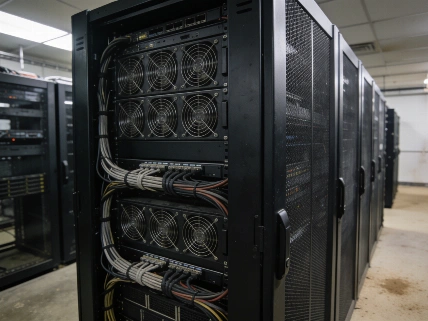
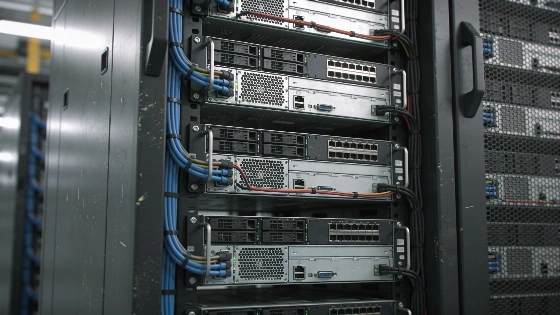
Yet Bank of America is bucking the market's caution. In a post-earnings note, the bank reaffirmed its Buy rating on SpaceX and maintained a $235 price target-an 87.5% premium over the stock's reference price of $125.33. The bank's optimism is rooted less in SpaceX's traditional rocket-launch business and more in the company's rapidly growing AI segment. According to Bank of America, third-party computing sales drove the main upside in the second quarter, with SpaceX ending the period at 1.4 gigawatts of computing capacity and aiming to surpass 2 gigawatts by year-end. The company projects capacity could reach as high as 10 gigawatts by 2027, a more than sevenfold increase from current levels.
Bank of America now expects SpaceX's AI sales to approach $24.5 billion in 2026, accounting for over half of the company's revised sales forecast. This marks a significant shift, as AI is moving from a speculative side business to the core of SpaceX's earnings model. The bank also points to new revenue streams from recent agreements with Anthropic and Google, which are expected to ramp up in the coming quarters.
Transformed Forecasts
Following the earnings release, Bank of America raised its 2026 sales forecast for SpaceX by about 15% to $46.9 billion. The bank's 2027 and 2028 projections jumped even more sharply, to $100.7 billion and $184.8 billion, respectively. Earnings estimates saw even more dramatic revisions: the 2026 EPS forecast swung from a 2-cent loss to a 91-cent profit, while 2027 and 2028 EPS estimates rose to $3.19 and $7.29. EBITDA forecasts were also lifted by 40% to 46% across these years, reflecting expectations of significant operating leverage as the AI business scales.
Despite these bullish revisions, Bank of America acknowledges that SpaceX is likely to continue burning cash for several years. The bank projects negative free cash flow of $43.6 billion in 2026, $45.4 billion in 2027, and $37.4 billion in 2028, as capital expenditures climb toward $167.5 billion. The model assumes that operating margins will improve rapidly-from negative 13.9% in 2025 to 24.9% in 2026, then to 41.9% in 2027 and 51.8% in 2028-but actual cash generation is expected to lag behind reported earnings and profits.
CapEx Surge and Payback Risks
SpaceX spent $18.4 billion on capital expenditures in the second quarter, with management indicating that spending will remain at similar levels through year-end. Bank of America raised its 2026 CapEx forecast by 40% to $67.3 billion, reflecting the company's aggressive investment in AI infrastructure. Notably, about 86% of Q2 CapEx-nearly $15.8 billion-was directed toward AI, with management claiming that these investments are reaching cash break-even in less than a year due to strong demand and tight supply for computing capacity.
This rapid payback period is central to Bank of America's bullish thesis, but it also introduces risk. The sustainability of these returns depends on continued shortages in computing capacity. If supply catches up, pricing could normalize and payback periods could lengthen, potentially undermining the economic rationale for such heavy investment.
Stock Volatility and Market Value
SpaceX shares closed at $108.27 after a 14% post-earnings drop on August 5, erasing roughly $223 billion in market value in a single session. Since its IPO at $135 per share and a $1.8 trillion valuation, the stock has fallen about 17%, wiping out $300 billion in equity value and remaining about 50% below its post-IPO peak. The next test for the stock comes as up to 911.5 million insider shares-worth around $100 billion-become eligible for sale, potentially doubling the public float and increasing volatility.
Recent trading data underscores the stock's turbulence: SpaceX has declined 28.3% over the past 20 trading days and another 2.8% over the last five days, with an average daily move of 10.3%. The nine-day relative strength index sits near 38, signaling weak momentum. For context, this level of volatility is far above the norm for large-cap U.S. stocks.
Valuation and Catalysts
Bank of America's $235 price target is based on a discounted cash-flow model that stretches through 2045, using a 5% long-term growth rate and discount rates between 14% and 28% to account for high uncertainty. Even after the recent sell-off, SpaceX trades at a lofty 137.7x price-to-earnings ratio based on near-term earnings, though that multiple could fall to 17.2x if the company delivers the quadruple-digit earnings growth projected for 2026 and beyond-a scenario that remains highly ambitious.
The next major catalyst for SpaceX is the upcoming Starship Flight 14, expected in late August or early September. Success in this test could validate the company's push for rapid rocket reusability and lower launch costs, which are key to its long-term vision for orbital computing infrastructure. Meanwhile, SpaceX's move to build its own terrestrial infrastructure for Starlink Mobile could improve long-term economics but would require even more capital and expose the company to new regulatory and competitive risks.
For investors weighing the risks and rewards of high-growth tech stocks, the SpaceX story echoes broader debates about the true costs and benefits of AI expansion. As Palantir's CEO recently warned, companies betting heavily on AI must grapple with not just the promise of new revenue, but also the hidden costs and competitive pressures that come with scaling up infrastructure at breakneck speed.
According to the company's most recent quarterly filing, SpaceX reported $18.4 billion in capital expenditures for the second quarter of 2026, with management indicating that spending will remain at similar levels through the rest of the year. The company's AI segment accounted for 86% of this investment, reflecting a strategic pivot toward high-demand computing services. Despite these investments, SpaceX's free cash flow remains deeply negative, with Bank of America projecting continued cash burn through at least 2028.
SpaceX's aggressive investment in AI infrastructure highlights the trade-offs companies face when pursuing rapid growth in emerging technologies. While heavy capital spending can position a company to capture new markets and revenue streams, it also increases financial risk if demand or pricing power falters. For investors, understanding the difference between reported earnings and actual cash generation is critical, especially in sectors where upfront investment is high and payback periods are uncertain. As the AI arms race accelerates, the ability to balance growth ambitions with financial discipline will likely separate long-term winners from those who overextend.