Coca-Cola’s 63-year dividend growth streak and steady margins have Bank of America raising its price target, but investors face risks from global demand shifts and currency swings
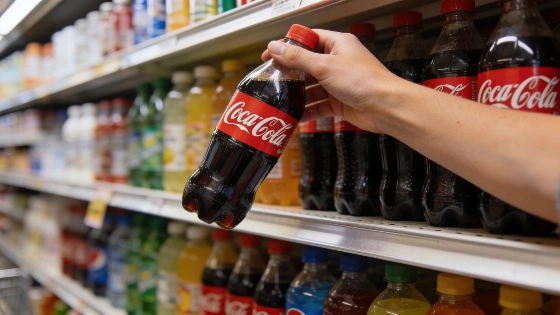
Dividend stocks with a century-long track record rarely trade at what analysts consider a discount, but Bank of America is making the case that Coca-Cola shares are currently mispriced. The beverage giant, which has paid dividends every year since 1920 and increased its payout for 63 consecutive years, is now the subject of renewed bullishness from Wall Street ahead of its upcoming second-quarter earnings report, scheduled for July 28.
Analyst Upgrade
Bank of America recently reiterated its buy rating on Coca-Cola and raised its price target to $95 from $90, suggesting nearly 15% upside from the stock’s recent trading level around $82.63. The firm’s optimism is rooted in Coca-Cola’s ability to maintain strong margins and consistent demand, even as the broader consumer staples sector faces mixed signals and macroeconomic headwinds.
According to Bank of America, Coca-Cola’s trailing 12-month gross margin stands at approximately 61.7%, about 160 basis points above its five-year average. This margin stability is notable given the volatility in consumer demand and inflation pressures that have affected many global brands. While some competitors, such as PepsiCo, have reported weaker-than-expected U.S. demand due to higher gas prices and shifting consumer behavior, Bank of America sees Coca-Cola’s challenges as more concentrated overseas, with regional growth expectations adjusted accordingly.
Dividend Consistency and Yield
Coca-Cola’s reputation as a “Dividend King” is supported by 63 straight years of dividend increases, far outpacing the consumer staples sector median of just three years. The company’s trailing 12-month dividend yield is 2.49%, with a forward yield of 2.54%, both below the sector median but supported by a healthy cash-flow payout ratio of 61%. While the yield trails the sector average, Coca-Cola’s dividend growth rate over the past year was 4.8%, ahead of the sector’s 2.82% median, and its three-year growth rate is 4.94%.
For income-focused investors, the reliability of Coca-Cola’s dividend—even during periods of modest share price movement—remains a key attraction. The company’s ability to fund its payout from operating cash flow adds a layer of security, especially as it navigates a slow-growth environment.
Growth Outlook and Valuation
Bank of America’s $95 price target is based on a 27-times multiple of estimated 2027 earnings per share, up from its previous 25.5-times assumption. The firm expects Coca-Cola’s earnings per share to rise from $3.27 in 2026 to $3.50 in 2027 and $3.75 in 2028, with dividends per share projected to increase from $2.11 in 2026 to $2.30 in 2028. For the upcoming quarter, BofA forecasts unit case volume growth of 2%, close to consensus estimates.
Regionally, Bank of America has lowered its growth outlook for Latin America to 1.4% but raised expectations for EMEA (Europe, Middle East, and Africa) to 2.3% and Asia Pacific to 2.9%, citing improved trends in Japan. North America’s growth forecast remains steady at 1.5%.
Risks and Uncertainties
Despite the positive outlook, Bank of America highlights several risks that could undermine its bullish case. Global macroeconomic volatility, especially in emerging markets, could disrupt demand and pressure volumes. Currency fluctuations present another challenge, as a stronger U.S. dollar can reduce the value of overseas earnings when translated back to dollars, potentially weighing on reported profits.
Additionally, shifting consumer preferences—particularly growing concerns about sugar and calories—could impact demand for Coca-Cola’s core products. The rise of low- and zero-sugar beverages, as well as increased scrutiny of traditional soft drinks, may require ongoing investment in product innovation and marketing to sustain growth.
According to Coca-Cola’s 2025 annual report, the company generated $46 billion in net operating revenues and $10.7 billion in net income for the year ended December 31, 2025. Its market capitalization as of June 2026 was approximately $190 billion, making it one of the largest consumer staples companies globally.
Dividend stocks like Coca-Cola are often favored by investors seeking steady income and lower volatility, but their performance can be sensitive to changes in interest rates, inflation, and sector rotation. While a long history of dividend growth signals financial strength, investors should weigh the trade-offs between yield, growth potential, and valuation—especially when sector yields are higher elsewhere. For those considering dividend stocks, it’s important to assess not just the payout, but also the company’s ability to sustain and grow dividends in a changing market environment.