
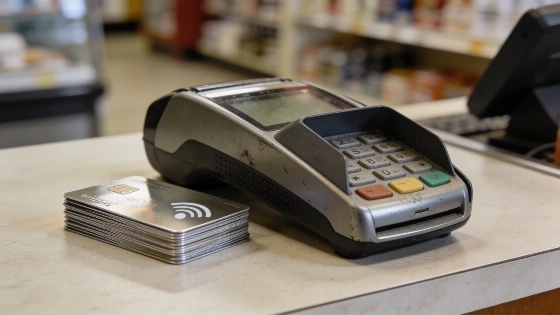
Pershing Square's latest $1.1 billion investment in Visa signals a major shift toward financial infrastructure stocks, as Bill Ackman also adds Mastercard and S&P Global to his portfolio in a high-conviction move
Bill Ackman's Pershing Square Capital Management has made a decisive move into the financial infrastructure sector, disclosing new billion-dollar stakes in Visa, Mastercard, and S&P Global. According to recent regulatory filings, the hedge fund acquired 3.27 million shares of Visa, valued at approximately $1.12 billion as of June 29, 2026. This position now represents 5.4% of Pershing Square's portfolio, making Visa one of the fund's largest holdings, just behind Uber, Brookfield Corp, Microsoft, and Amazon.
The same filing reveals Pershing Square also initiated a $1.09 billion position in Mastercard, purchasing 2.12 million shares, and a $1.06 billion stake in S&P Global, a key player in credit ratings and financial data. All three investments are new additions for the quarter, signaling a deliberate strategy to increase exposure to companies that underpin global payments and financial information systems.
Strategic Shift Toward Payments and Data
For a fund known for concentrated, high-conviction bets, opening three related positions in a single quarter marks a notable shift. Ackman's combined investment in Visa, Mastercard, and S&P Global exceeds $3 billion, reflecting a strong view on the resilience and growth potential of the payments and financial data sector. This move comes as digital payments continue to expand, driven by consumer spending and the adoption of new technologies.
Visa's recent performance has been robust. In its fiscal third quarter of 2026, the company reported net revenue of $11.6 billion, up 14% year over year, and earnings per share growth of 11%. Payments volume surpassed $4 trillion for the first time, with processed transactions reaching 72 billion, both up 10% from the prior year. U.S. payment volume grew at its fastest pace since 2019, excluding the pandemic recovery period, while cross-border volume (excluding intra-Europe) rose 12%.
Visa Expands Revenue Streams
Visa is not just relying on transaction fees. Its value-added services segment-which includes fraud prevention, data analytics, and consulting-grew revenue by 34% in constant dollars during the quarter and now accounts for nearly a third of total revenue. The company is also investing in new technology, including partnerships with OpenAI and Meta to enable secure payments in AI-driven commerce, and the launch of the Visa Stablecoin Platform to support digital dollar transactions.
These moves are designed to position Visa at the center of evolving commerce, as the company aims to provide trusted payment credentials in both traditional and emerging digital environments. Visa also repurchased $4.9 billion in stock and paid $1.3 billion in dividends during the quarter, underscoring its strong cash flow and commitment to shareholder returns.
Valuation and Analyst Outlook
Analyst forecasts compiled by Tikr.com project Visa's revenue to rise from $40 billion in fiscal 2025 to $67.6 billion by 2030, with free cash flow expected to grow from $21.6 billion to $39 billion over the same period. If Visa trades at 20 times forward free cash flow-a discount to its five-year average multiple-some analysts estimate the stock could deliver a 15% return over the next three years. Out of 28 analysts covering Visa, 26 rate it a "Buy" and two a "Hold," with an average price target of $422 compared to a recent price of $371.
Pershing Square's move comes amid a broader trend of hedge funds targeting financial infrastructure stocks. The fund's willingness to build large, related positions in a single quarter echoes its recent strategy shift, such as its renewed investment in Netflix after a previous loss, as discussed in this analysis of Ackman's Netflix stake.
Risks and Market Context
While Visa and Mastercard benefit from entrenched positions in global payments, they face competition from fintech startups, evolving regulatory scrutiny, and the rise of alternative payment methods such as stablecoins and central bank digital currencies. S&P Global, meanwhile, is exposed to fluctuations in credit markets and regulatory changes affecting ratings agencies. Investors should consider these risks alongside the sector's growth prospects and the potential for technological disruption.
For the quarter ending June 2026, Visa's $11.6 billion in net revenue and $4 trillion in payments volume highlight the scale and momentum of the business. The company's ability to grow both core transaction revenue and value-added services, while returning capital to shareholders, has helped support its premium valuation relative to peers.
Payment networks like Visa and Mastercard operate as toll collectors in the global economy, earning fees each time a card is swiped or a digital transaction is processed. Their business models are built on scale, security, and trust, which can be difficult for new entrants to replicate. However, as technology evolves and new forms of digital money emerge, these companies must continue to innovate to maintain their competitive edge. For investors, understanding the interplay between legacy infrastructure, regulatory risk, and technological change is essential when evaluating opportunities in the payments sector.