
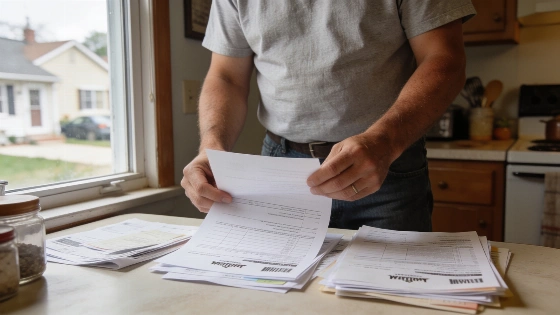
Buffalo Niagara borrowers are not overextending on home loans, suggesting many households are keeping debt manageable even as higher borrowing costs and household expenses test budgets
Homeowners in Buffalo Niagara appear to be approaching mortgages with unusual restraint. Rather than taking on loans that stretch their budgets to the edge, many borrowers are keeping payments at levels they can manage, even as higher rates and broader cost pressures make housing decisions harder.
That matters because mortgage debt is often the biggest fixed expense in a household budget. When borrowers avoid overcommitting, they leave more room for emergencies, repairs, taxes and other bills that can quickly turn a manageable payment into a strain. In practical terms, that reduces the odds of missed payments and forced financial trade-offs later on.
The region's pattern also points to a cautious housing market rather than an overheated one. Buyers and existing homeowners who refinance or move are still weighing monthly affordability first, not simply chasing the largest loan they can qualify for. That kind of discipline can help stabilize a local market when borrowing costs are elevated and income gains have not kept pace with every expense.
For households, the trade-off is straightforward: a smaller loan may limit buying power, but it can also make homeownership less fragile. A payment that fits comfortably within a budget is easier to absorb if property taxes rise, maintenance costs jump or income becomes less predictable. That is especially important in a market where the cost of ownership often extends well beyond principal and interest.
According to the Federal Reserve Bank of New York's Household Debt and Credit Report for the third quarter of 2025, total U.S. mortgage balances stood at about $12.6 trillion, underscoring how central home loans remain to household balance sheets. Even so, the broader credit picture has been shaped by elevated borrowing costs, which have forced many consumers to be more selective about how much debt they take on and where they carry it.
For Buffalo Niagara, the message is less about rapid growth than about balance sheet discipline. Homeowners who keep debt service under control are generally better positioned to handle rate resets, higher insurance premiums and other expenses that can affect the true cost of owning a home. That does not eliminate risk, but it does make the shock of a tougher economy easier to absorb.
Mortgage affordability is not determined by the loan amount alone. Lenders also look at the debt-to-income ratio, which compares monthly debt payments with gross monthly income, while borrowers have to account for closing costs, escrowed taxes and insurance, and the possibility that maintenance will arrive all at once. A household that focuses only on the monthly principal-and-interest figure can underestimate how quickly ownership costs rise. That is one reason modest borrowing often leaves more room for financial flexibility than a maximum-approval strategy.