Burger King has reclaimed its spot as the No. 2 U.S. burger chain, but Restaurant Brands International's latest results show that not all of its brands are keeping pace, raising new questions for investors
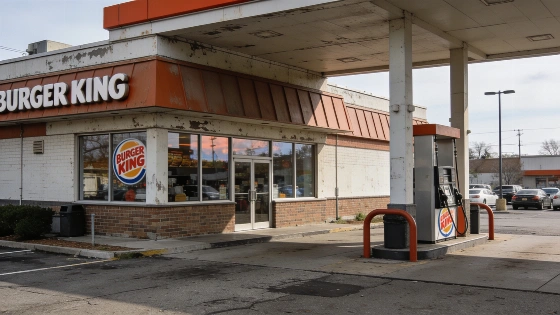
Burger King has regained its position as the second-largest burger chain in the U.S., surpassing Wendy's after a six-year gap. The shift, revealed in Restaurant Brands International's latest quarterly results, highlights both the progress of Burger King's turnaround and the uneven performance across the company's portfolio.
Burger King's Comeback
For two years, Burger King and Wendy's have moved in opposite directions. Wendy's reported its sixth consecutive quarter of declining U.S. same-store sales, with a 7% drop in the second quarter of 2026. In contrast, Burger King's U.S. same-store sales have risen for five straight quarters, climbing 8.5% in Q2-outpacing both McDonald's 0.8% growth and Wendy's decline, according to CNBC.
This recovery is tied to Burger King's "Reclaim the Flame" initiative, a $400 million investment launched in September 2022. The plan targeted three areas: improving food quality (such as upgrading buns and condiments), modernizing kitchen operations with digital tools to speed up service and reduce errors, and remodeling stores to attract more customers. These changes have helped drive higher sales per location, a key metric for franchise profitability and systemwide growth.
Mixed Results Across Brands
Despite Burger King's strong performance, Restaurant Brands International's other major brands struggled. Popeyes saw U.S. same-store sales fall 5.2% in the quarter, marking its sixth consecutive decline. Tim Hortons, primarily in Canada, posted just 0.1% growth. As a result, QSR's overall same-store sales rose 3.8%, and systemwide sales increased 6.4% year-over-year, with total revenue reaching $2.52 billion-up 4.5% from the prior year. Adjusted earnings per share came in at $1.07, beating Wall Street's $1.03 estimate.
Investors reacted cautiously. QSR shares slipped 1.6% on August 7, closing at $73.89, as the market weighed Burger King's gains against ongoing weakness at Popeyes and Tim Hortons. The company returned $435 million to shareholders through dividends and buybacks during the quarter, but the uneven brand performance limited enthusiasm.
Popeyes Faces a Prolonged Slump
Popeyes remains a significant drag on QSR's results. After rapid expansion following its 2019 chicken sandwich launch, operational challenges and franchisee bankruptcies have led to store closures and declining sales. Management is rolling out a new "Easy to Love" plan, aiming to simplify the menu, add automation, and modernize digital ordering, with a full U.S. rollout expected by the end of 2026. CEO Josh Kobza has told investors he expects Popeyes to return to positive same-store sales in the second half of 2026, but until then, the chain will continue to weigh on overall growth.
Dividend Moves and Investor Choices
Wendy's not only lost its No. 2 ranking but also cut its quarterly dividend in half, from 14 cents to 7 cents per share, and withdrew its full-year 2026 outlook. The company is now under new leadership and working on a turnaround plan. For income-focused investors, this contrasts sharply with Restaurant Brands, which raised its dividend for the 11th consecutive year and now pays $0.65 per share quarterly, yielding about 3.5% at recent prices.
McDonald's, meanwhile, continues to trade at a premium, offering stability but little near-term sales momentum in the U.S. Wendy's stock appears cheap, but the discount reflects real operational challenges rather than a bargain opportunity. Restaurant Brands sits between the two, offering faster growth than McDonald's and a rising dividend, but with clear risks tied to its underperforming brands.
What to Watch Next
For investors, the key questions are whether Popeyes can reverse its sales slump, if Tim Hortons can move beyond flat growth in Canada, and whether Burger King can maintain its lead over Wendy's as both chains pursue new recovery strategies. The next few quarters will be critical in determining whether QSR can replicate Burger King's turnaround across its broader portfolio.
These developments come as investors face broader market uncertainty, with major indexes recently hitting record highs but the Federal Reserve signaling less forward guidance-a dynamic explored in this analysis of shifting Fed policy and market records.
For now, Burger King's resurgence removes a long-standing concern for QSR shareholders, but the company's overall returns will depend on its ability to address persistent weaknesses at Popeyes and Tim Hortons. Investors considering QSR stock should weigh the strength of its dividend and Burger King's momentum against the risks posed by its lagging brands and the potential for further volatility in consumer spending and input costs.
Restaurant Brands International's Q2 2026 results show the company earned $1.07 per share on an adjusted basis, with revenue of $2.52 billion. U.S. same-store sales for Burger King rose 8.5%, while McDonald's increased 0.8%, Tim Hortons grew 0.1% in Canada, Wendy's fell 7%, and Popeyes dropped 5.2%. The company returned $435 million to shareholders through dividends and buybacks during the quarter.
Dividend cuts and increases can signal much more than just a change in payout. When a company reduces its dividend, it often reflects a need to conserve cash or address operational challenges, which can be a warning sign for investors seeking stable income. Conversely, a rising dividend-especially one sustained over many years-can indicate management's confidence in future cash flow and business stability. Still, even a strong dividend history does not eliminate the risks tied to weak performance in other parts of a company's business, and investors should always consider the broader context before making decisions based solely on yield.