
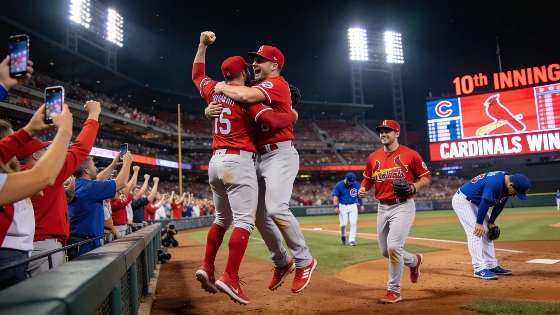
A late-game rally lifted the St. Louis Cardinals past the Chicago Cubs, ending a three-game skid and highlighting the impact of bullpen depth and timely hitting as the MLB trade deadline approaches
The St. Louis Cardinals halted a three-game losing streak with a 3-2 extra-inning victory over the Chicago Cubs on July 29, 2026, underscoring the financial and roster implications for both teams as the MLB trade deadline nears. Iván Herrera delivered the decisive blow in the 10th inning, driving a two-run double to left-center that erased a late deficit and secured the win for St. Louis. The comeback was set up by a pinch-hit single from Lars Nootbaar, a walk to JJ Wetherholt, and a run-scoring groundout by Jordan Walker, all against Cubs reliever Trent Thornton. Herrera finished the night with three hits in five at-bats, marking his second career walk-off hit and reinforcing his value as a developing asset for the Cardinals.
For the Cubs, Pete Crow-Armstrong's two-run homer in the top of the 10th briefly put Chicago ahead, but the bullpen was unable to hold the lead. The loss dropped Thornton's record to 3-4 and highlighted the volatility that can affect late-inning relievers, especially as teams evaluate their pitching depth ahead of the August 3 trade deadline. The Cardinals' bullpen, by contrast, delivered four consecutive hitless innings, with Justin Bruihl, Ryne Stanek, George Soriano, and Riley O'Brien combining to keep the Cubs off the board after starter Dustin May exited. May allowed just one hit and two walks over five innings, throwing 70 pitches in what could be his final start for St. Louis if the team chooses to move him before the deadline.
St. Louis entered the game having lost nine of its previous eleven contests, a stretch that put pressure on management to consider both short-term competitiveness and long-term roster construction. The win not only provided a morale boost but also offered a timely showcase for players who may be involved in trade discussions. For the Cubs, the defeat underscored the risks of relying on late-game power and the importance of bullpen stability, especially for teams on the fringe of playoff contention. Both clubs face critical decisions in the coming days that could affect payroll, prospect development, and competitive balance for the remainder of the season.
According to Major League Baseball data, the average MLB team payroll in 2026 stands at approximately $170 million, with the Cardinals and Cubs both ranking in the top half of the league. As the trade deadline approaches, teams with higher payrolls often face increased scrutiny from ownership and fans regarding return on investment, especially when recent performance has lagged expectations. The Cardinals' ability to halt their losing streak may influence front office strategy, while the Cubs' bullpen struggles could prompt targeted acquisitions or internal promotions to address late-inning vulnerabilities.
In the final game of the four-game series, the Cubs are set to start right-hander Javier Assad (6-1, 3.86 ERA), who has been moved up in the rotation, against Cardinals right-hander Andre Pallante (11-6, 3.77 ERA). The outcome could further shape each team's approach to the trade deadline, with both clubs weighing the financial and competitive costs of buying, selling, or standing pat in a tightly contested National League Central division.
Extra-inning games in Major League Baseball often serve as a test of roster depth, bullpen management, and player endurance. Under current MLB rules, teams begin each extra inning with a runner on second base, a change implemented to reduce game length and increase late-game scoring opportunities. This format places a premium on situational hitting and bullpen flexibility, as managers must balance the immediate need for outs with the risk of overextending relievers. For front offices, frequent extra-inning contests can expose weaknesses in roster construction and influence trade deadline priorities, especially for teams with postseason aspirations or financial constraints.