ChargePoint shares surged 74% in two days after the company posted record gross margins and nearly eliminated its cash burn, defying a 27% drop in U.S. EV sales and outpacing struggling competitors like Lucid and Rivian.
ChargePoint's stock experienced a sharp rally, climbing 74% over five days after the company reported a near-elimination of cash burn and record gross margins. This performance stood out against a sector-wide downturn that has weighed heavily on electric vehicle (EV) charging stocks and sent competitors such as Lucid into steep decline. The results surprised investors who had anticipated further challenges in the EV sector, as ChargePoint delivered rare operational progress while most peers continue to face significant headwinds.
ChargePoint's non-GAAP net loss narrowed to $9.2 million in the fiscal second quarter of 2026, a 72% improvement year-over-year, while GAAP net loss was $35.6 million.
EV Market Faces Policy and Demand Headwinds
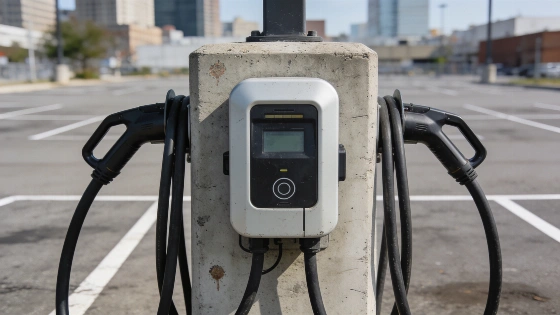
ChargePoint's results were released as the broader U.S. EV market contracted significantly. According to Cox Automotive, electric vehicle sales declined 27% year-over-year in the first quarter of 2026 after the One Big Beautiful Bill Act eliminated the federal tax credit, which had previously provided up to $7,500 for new EVs and $4,500 for used models. This policy change led to a rapid drop in consumer demand, exposing charging infrastructure providers to a shrinking addressable market. Despite these challenges, ChargePoint's installed base of 44,800 commercial charging locations remains the largest in the country.
To offset hardware volatility, ChargePoint's higher-margin subscription software revenue increased 10% to $43.7 million. The company also announced expanded partnerships with Mercedes-Benz and Eaton, and launched its Express Solo fast charger, targeting growth from commercial fleet electrification-a segment less affected by consumer EV adoption cycles. Management clarified that the record gross margin was partly due to the one-time tariff refund, with normalized margins closer to 35%, as confirmed in the TradingKey transcript.
Wall Street Skepticism and Execution Risks
In addition to financial improvements, ChargePoint confirmed the expansion of its partnerships with Mercedes-Benz and Eaton, including new commercial electrification projects for fleet and charging infrastructure in the UK and Germany.
For the third quarter, ChargePoint has guided revenue to a range of $105 million to $115 million. Investors are watching to see if the company can exceed the $110 million midpoint and continue progressing toward breakeven. Given the stock's volatility, prudent position sizing and diversification remain important considerations for prospective shareholders.
ChargePoint Outpaces Sector Laggards
While ChargePoint has gained approximately 40% in 2026, competitors have struggled. Lucid's stock has fallen 99% amid bankruptcy speculation, and Rivian has also faced significant challenges. The sector is under increasing pressure as government incentives are withdrawn and consumer demand weakens. Investors who shifted to cash or defensive sectors-such as those previously reported-have largely avoided the steepest losses.
ChargePoint's ability to convert a strong quarter into a sustained trend remains unproven. Consistent positive cash flow and growth in software and fast-charging businesses could position it as a rare survivor in a struggling industry. However, with the EV market contracting and skepticism persisting, the company faces a narrow path forward. The next two quarters will be critical in determining whether ChargePoint's turnaround is sustainable or a temporary rebound.
As of June 2026, the Federal Reserve's federal funds rate stands at 5.25-5.50%, the highest in over two decades. Elevated rates have increased borrowing costs for consumers and businesses, contributing to weaker auto sales and tighter capital conditions for growth companies like ChargePoint. The S&P 500 has remained volatile, with technology and clean energy stocks underperforming the broader index since January.
Commercial EV charging infrastructure requires substantial capital investment and depends on both hardware deployment and recurring software revenue. Hardware sales are cyclical and sensitive to macroeconomic changes, while subscription software provides more stable margins and cash flow. Companies that successfully shift their revenue mix toward software and services are better positioned to weather downturns in hardware demand. For investors, distinguishing between one-time hardware sales and recurring software income is essential when evaluating the long-term prospects of charging networks such as ChargePoint. The company's recent performance demonstrates tactical execution, but the durability of its progress will be tested as sector headwinds persist and capital remains costly.