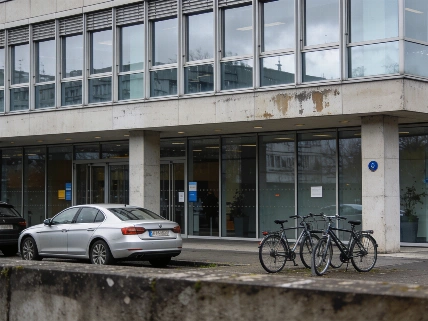

Costco's decision to drop Focus Factor wiped out over half of its supplier's revenue and triggered bankruptcy. Now Reckitt's Neuriva stands to capture the shelf space and sales with minimal friction
When Costco abruptly ended its 16-year relationship with Focus Factor, the consequences for Synergy CHC-the brand's manufacturer-were immediate and severe. Losing its largest customer overnight eliminated 58% of Synergy's annual revenue and forced the company into Chapter 11 bankruptcy. This single decision not only terminated a longstanding business partnership but also destabilized Synergy's entire financial structure, prompting its lender to accelerate $18.9 million in debt and eliminating any prospect of a gradual recovery.
For investors and competitors, the significance extends beyond the collapse of a supplement brand. The key question is who will fill the gap left on Costco's shelves. Reckitt Benckiser, listed in the U.S. as RBGLY, is positioned to capitalize with its Neuriva brain health line, which is already approved, stocked, and selling at Costco. Unlike other potential entrants, Reckitt does not need to compete for shelf space or navigate Costco's rigorous onboarding process. Its infrastructure is established, making expansion a matter of logistics rather than negotiation.
Synergy CHC filed for Chapter 11 bankruptcy protection on September 4, 2026, in the U.S. Bankruptcy Court for the District of Columbia, and is currently operating as a debtor-in-possession while preparing a liquidation or reorganization plan within 120 days.
Retail concentration risk
Synergy's collapse illustrates the dangers of excessive reliance on a single retail channel. Although Focus Factor was distributed through Walmart, Walgreens, Amazon, and BJ's, Costco alone generated the majority of its revenue. When that primary channel was lost, Synergy's balance sheet could not absorb the impact. The company's SEC filing made clear that losing Costco would have a material adverse effect on all aspects of the business, from operations to liquidity.
Costco did not publicly disclose its reasons for discontinuing Focus Factor. The retailer is known for making swift, sometimes opaque decisions regarding product selection in its high-volume, high-turnover environment. Synergy had no opportunity to pivot or replace lost sales before creditors intervened.
After Synergy missed an interest payment on its senior secured term loan on August 3, 2026, and the cure period expired on August 6, its creditor, via ACP Agency, accelerated repayment and demanded immediate payment of approximately $18.9 million in debt on August 25, 2026. This escalation followed previously disclosed default events and left Synergy with an outstanding principal of about $17.6 million.
Why Reckitt is the winner
Reckitt's Neuriva is already established in Costco's supplement aisle, with the Original 50-capsule product retailing for $43.99. The company's advantage is structural: it does not need to persuade Costco's buyers or demonstrate supply chain reliability. Neuriva's presence is secure, and Reckitt's broader portfolio-including Neuriva Plus, Neuriva Ultra, and Neuriva Memory 3D-aligns with Costco's emphasis on premium, research-backed wellness products. This strategic alignment is something the legacy Focus Factor lineup could not achieve.
Regulatory history further differentiates the competitors. Focus Factor has been subject to Federal Trade Commission settlements and class-action lawsuits related to efficacy claims. In contrast, Reckitt markets Neuriva with clinically studied, GMO-free ingredients and has avoided major compliance controversies. For Costco, which prioritizes risk management and brand reputation, this distinction is significant.
Financials and investor impact
Reckitt's recent half-year results highlight its strong position. Core Reckitt reported 2.7% like-for-like net revenue growth in the first half of 2026, accelerating to 4.2% in the second quarter. The core business achieved a gross profit margin of 60.9% and an adjusted operating profit margin of 24.8%. Free cash flow reached £419 million, and the company returned approximately £3 billion to shareholders through dividends and buybacks during the period. The ADRs (RBGLY) are trading at $14, down 10.62% year-to-date, with a trailing P/E of 11.36 and a forward P/E of 14.24. The dividend yield is 4.6%, based on the most recent payout of $0.64 per share, according to Macrotrends.
Reckitt has also announced a 5% increase in its interim dividend and an additional £500 million share buyback, reflecting confidence in its cash generation and growth prospects. Full-year guidance projects 4% to 5% like-for-like net revenue growth in the core business. The company's ability to absorb additional volume from Costco without significant incremental cost or risk provides a direct competitive advantage.
What's next for Costco and the category
Synergy's vulnerability was evident in its filings well before bankruptcy. The company built a recognizable brand on a foundation that could not withstand the loss of a single retailer. For Reckitt, the opportunity is clear: leverage regulatory credibility, supply chain strength, and product innovation to capture the demand left by Focus Factor's exit. The key question is how aggressively Costco will expand Neuriva's shelf presence and whether Reckitt can convert that into sustained revenue and margin growth.
Costco's decision highlights the risks associated with retail concentration. For investors, the takeaway is clear: companies with diversified distribution, strong compliance records, and operational flexibility are better positioned to withstand sudden disruptions. Reckitt's current structure offers a rare opportunity to consolidate its leadership in the brain health supplement market-provided it maintains discipline and avoids the pitfalls that led to its predecessor's downfall.
The Federal Reserve's June 2026 Financial Stability Report notes that U.S. household debt reached $17.7 trillion, with revolving credit balances at a record high. Retailers like Costco are becoming increasingly selective about the brands they support as consumer spending patterns evolve and margin pressures intensify. Companies unable to diversify their revenue streams face heightened risk in this environment.
Retail concentration risk arises when a supplier depends on a single retailer or a small group of buyers for most of its sales. While this can drive rapid growth, it exposes the supplier to abrupt revenue loss if the retailer changes direction. Diversification across multiple channels, robust cash reserves, and adherence to regulatory standards are essential for long-term viability. Investors assessing consumer brands should closely examine customer concentration metrics and supplier agreement terms to evaluate business resilience.