A surprise surge in U.S. job creation sent the Dow tumbling as investors recalibrated expectations for the Federal Reserve's next move on interest rates. The market's reaction signals heightened uncertainty for portfolios and borrowing costs.
An unexpectedly strong August jobs report sent the Dow Jones Industrial Average down 300 points, prompting investors to reassess the Federal Reserve's likely path on interest rates. The Labor Department reported 162,000 jobs added-nearly triple Wall Street's consensus-triggering a rapid repricing of risk across equities, bonds, and consumer borrowing costs.
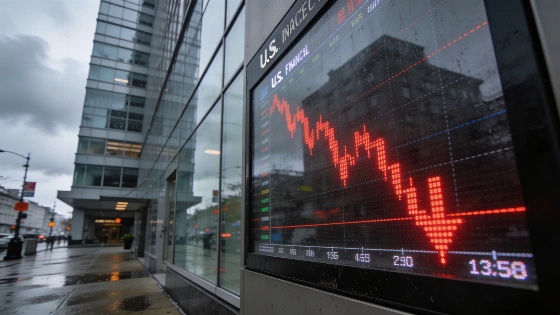
At the opening bell following the jobs report, the Dow dropped by 176.48 points, or 0.33%, to 53,509.63, with the S&P 500 and Nasdaq also moving into negative territory.
The immediate risk for households and businesses is clear: a renewed rate hike would push mortgage rates further above 7%, keep credit card APRs at record highs, and increase the cost of auto and business loans. While savers could benefit from higher deposit yields, the volatility introduces additional uncertainty for investment portfolios and retirement planning.
Federal Reserve Governor Christopher Waller stated on September 3 that he would support keeping rates unchanged if inflation continues to slow, emphasizing that his position is directly tied to the upcoming August inflation data.
Chris Waller's recent comments had briefly steadied markets, but his stance remains highly data-dependent. As Kyle Rodda of Capital.com notes, each new economic release now has the potential to shift expectations, with investors closely monitoring both labor and inflation indicators.
While strong hiring benefits job seekers, it complicates the Fed's efforts to control inflation. Robust employment can drive wage growth and consumer spending, both of which risk sustaining price pressures. The central bank faces a delicate balance: cooling inflation without undermining economic growth, a challenge heightened by persistent surprises in the jobs data.
The Fed's benchmark federal funds rate remains at a 23-year high of 5.25%-5.50%. Mortgage rates have stayed above 7% throughout the summer, and credit card APRs are at all-time highs. The S&P 500, after a strong first half, has become more volatile as investors weigh the risk of further tightening against resilient consumer demand and persistent inflation.
Corporate earnings reflect these crosscurrents. As reported earlier, companies like Walmart are shifting toward higher-margin businesses to offset rising costs and unpredictable consumer behavior-a strategy likely to become more common if borrowing costs continue to rise.
With the Fed's next move hinging on upcoming inflation data, both investors and households face a period of heightened volatility. The market's sharp reaction to the jobs report demonstrates that even strong economic news can trigger downside risk when it threatens to alter the central bank's policy trajectory. The Fed's credibility now depends on its ability to interpret conflicting signals and respond appropriately. Until inflation data provides clear direction, volatility is likely to persist in U.S. markets, and investors should prepare for continued swings as policy uncertainty remains elevated.