
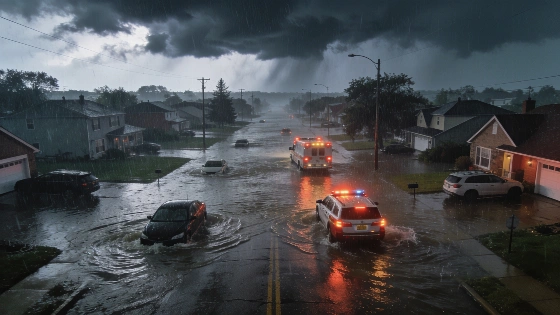
Heavy thunderstorms have triggered a flash flood warning in Racine and Kenosha counties, with up to 5 inches of rain possible. Residents face property damage, insurance complications, and travel disruptions as water levels rise rapidly
Severe thunderstorms sweeping across southern Wisconsin have led the National Weather Service to issue a flash flood warning for Racine and Kenosha counties, effective until 3 p.m. on Monday, July 27. With rainfall totals already reaching between 2 and 3 inches and forecasts calling for an additional 1 to 2 inches, the risk of sudden flooding has increased sharply for local households and businesses. The warning covers not only residential neighborhoods but also major roadways and low-lying commercial areas, raising the potential for costly property damage and insurance claims.
Flash floods occur when intense rainfall overwhelms drainage systems in a short period-typically six hours or less-causing water to rise rapidly and unpredictably. Unlike river flooding, which develops over days, flash floods can inundate streets, basements, and parking lots within minutes. According to the National Weather Service, even areas that are not directly under heavy rain can experience flooding if runoff accumulates downstream. This dynamic makes it difficult for property owners to anticipate which locations will be hardest hit, complicating both emergency response and insurance coverage decisions.
For drivers and commuters, the financial risks extend beyond property loss. Flooded roads, including highways and secondary streets, can become impassable or structurally compromised, leading to vehicle damage, towing costs, and potential increases in auto insurance premiums. The National Weather Service advises residents to avoid driving through standing water, as just two feet of moving water can sweep away most vehicles. Attempting to cross flooded streets also increases the risk of injury and can result in denied insurance claims if warnings are ignored.
Homeowners and renters should review their insurance policies to determine whether flood damage is covered, as standard homeowners insurance typically excludes flood-related losses. Separate flood insurance, often provided through the National Flood Insurance Program (NFIP), may be required for coverage. Policyholders should document property conditions before and after the event and keep receipts for emergency repairs, as insurers may require detailed evidence to process claims. Those without flood insurance may face significant out-of-pocket costs for repairs and temporary relocation.
According to the Federal Emergency Management Agency (FEMA), floods are the most common and costly natural disaster in the United States, accounting for billions of dollars in property losses each year. In 2023, the average flood insurance claim payout nationwide was approximately $52,000, highlighting the potential financial impact for uninsured or underinsured households. Wisconsin residents can check their flood risk and insurance options through the NFIP and state emergency management resources.
During a flash flood warning, emergency officials recommend evacuating if instructed, monitoring local alerts, and moving to higher ground when possible. Residents should avoid walking or driving through floodwaters, as even six inches of fast-moving water can knock an adult off their feet. Parents are urged to keep children away from streams and drainage ditches, where hidden debris and strong currents pose additional hazards. Fire risks may also increase if electrical systems are exposed to water, so power should be shut off in affected areas when safe to do so.
Understanding the distinction between a flash flood watch and a warning is critical for financial and personal safety. A watch signals that conditions are favorable for flooding, while a warning means flooding is imminent or already occurring. Immediate action during a warning can reduce the risk of injury, property loss, and insurance complications. Residents should enable weather notifications on their phones and have a battery-powered radio available for updates if power is lost.
Flood insurance is a specialized product that differs from standard homeowners or renters insurance. While most property policies exclude flood damage, coverage through the National Flood Insurance Program or private insurers can help offset repair and replacement costs after a disaster. Premiums are based on location, property elevation, and flood risk, and there is typically a 30-day waiting period before new policies take effect. For households in high-risk areas, evaluating the cost of coverage against potential out-of-pocket losses is a key financial decision. Even outside designated flood zones, flash floods can cause significant damage, making risk assessment and preparedness essential for long-term financial stability.