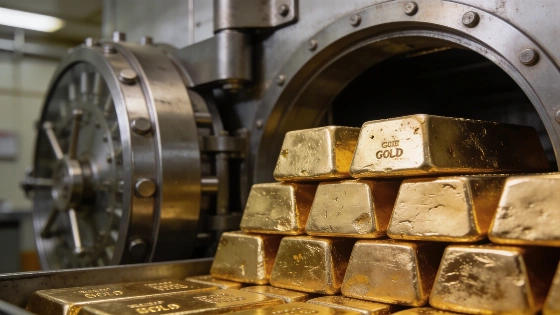
Gold prices have seesawed between record highs and sharp declines in 2026, leaving investors to weigh shifting Fed policy, central bank demand, and the risks of chasing the next rally as market signals remain mixed
Gold's price swings in 2026 have left many investors and traders struggling to interpret the next move. After reaching an all-time high of about $5,589 per ounce in late January, gold tumbled more than 18% before rebounding sharply. The metal remains well above its 52-week low, but the path forward is anything but clear as market participants debate whether the latest rally is sustainable or just another head fake.
Fed Policy and Market Expectations
Much of gold's recent volatility has been driven by shifting expectations around Federal Reserve policy. Weaker-than-expected U.S. jobs data and softer inflation readings have reduced the likelihood of a rate hike at the Fed's September meeting. According to CME Group's FedWatch tool, traders now assign roughly a 40% probability to a September increase, down from earlier in the summer. Lower odds of higher rates tend to support gold by reducing the opportunity cost of holding a non-yielding asset, especially as the U.S. dollar has softened against other major currencies.
Still, the Federal Reserve's stance remains a source of uncertainty. The central bank has kept rates steady throughout 2026, and the July Consumer Price Index (CPI) report came in close to economists' forecasts. New Fed Chair Kevin Warsh has delivered cautious and sometimes ambiguous signals, which some analysts say has contributed to increased market volatility and a rotation out of equities and into perceived safe havens like gold.
Central Bank Demand and Global Drivers
Central banks, particularly in emerging markets, have continued to add to their gold reserves. China's central bank, the People's Bank of China (PBOC), purchased nearly 20 metric tons of gold in July, marking its largest monthly addition since late 2023 and extending its buying streak to 21 consecutive months. This persistent demand is seen by some as a sign of eroding confidence in fiat currencies and ongoing efforts to diversify away from the U.S. dollar.
Goldman Sachs projects that central banks will continue buying gold at a pace of about 60 metric tons per month through 2026, as reserve managers seek to hedge against currency risk and geopolitical uncertainty. Earlier in the year, higher U.S. rate expectations triggered significant outflows from gold-backed exchange-traded funds (ETFs), but those outflows have slowed as the policy outlook has shifted.
Investor Strategies: Miners, ETFs, and Alternatives
While some investors prefer direct exposure to gold bullion or ETFs like SPDR Gold Shares and iShares Gold Trust, others are looking to gold mining stocks for potential value. Large producers such as Newmont and AngloGold Ashanti have traded at relatively low forward earnings multiples while maintaining dividend payouts, attracting attention from value-oriented investors. Mining stocks can offer greater leverage to gold price movements, but they also carry company-specific risks and operational challenges.
Retail investors often use equity-focused funds like VanEck Gold Miners or VanEck Junior Gold Miners to gain diversified exposure to the sector. Bank of America has recently favored larger, established producers over smaller miners, especially during periods of price pullback. Silver has also participated in the recent rally, posting its strongest week since February.
Market Data and Broader Context
For the week ending August 9, gold posted its best weekly gain since January, rising more than 7% as investors responded to softer economic data and shifting Fed expectations. Central bank purchases have provided a floor for prices, even as ETF flows remain volatile. According to the World Gold Council, global central banks added 55 metric tons to their reserves in June, with China accounting for more than a third of that total.
Gold's role as a hedge against inflation and currency risk remains a central theme, but the metal's performance is also tied to broader market sentiment and policy uncertainty. As reporting by Financial Sumo on recent AI-driven security incidents highlights, unexpected risks and shifting investor behavior can quickly reshape market dynamics, even in traditionally stable sectors.
For U.S. investors, the interplay between Fed policy, global central bank demand, and the evolving macroeconomic backdrop will likely continue to drive gold's volatility in the months ahead. While some see the current rally as the start of a longer-term uptrend, others caution that further swings are likely as markets digest new data and policy signals.
Gold is often described as a safe-haven asset, but its price can be highly sensitive to changes in interest rates, currency values, and investor sentiment. Unlike stocks or bonds, gold does not generate income, so its appeal tends to rise when real yields fall or when confidence in financial markets is shaken. Investors considering gold exposure should weigh the trade-offs between physical bullion, ETFs, and mining stocks, each of which carries distinct risks, costs, and tax implications. As with any investment, suitability depends on individual goals, risk tolerance, and time horizon.