Hollywood Bowl reported record FY26 revenue and increased shareholder returns. UK comparable sales fell, leaving the durability of those payouts exposed to softer demand and rising costs.
For the year ended 30 September 2026, Hollywood Bowl reported group revenue of £261.6 million, up 4.3% from £250.7 million.
The company also said it expected adjusted profit before tax to grow in line with market expectations. It has increased its dividend and launched a share repurchase programme, putting more cash in shareholders' hands as sales rise.
The payout comes against a less tidy UK sales picture.
UK comparable sales fell 1.4% over the financial year and 5.6% in the second half. Hollywood Bowl linked the weaker trading to exceptionally hot, dry weather that encouraged people to spend time outdoors.
The later update showed UK revenue up 3.5% to £219.9 million from £212.4 million. Canadian revenue rose 8.9% to £41.7 million from £38.3 million. The official trading statement records growth in both markets even as comparable sales at established UK sites declined.
That distinction matters to investors. Total revenue can rise while like-for-like demand at existing UK venues weakens. A higher payout is useful only if the business can keep generating cash without squeezing investment in its centres or expansion.
In the second half, Hollywood Bowl completed a £2.9 million share buyback and ended the year with net cash of £13.5 million. The company plans to publish its full-year results in December 2026, though it has not confirmed the exact date.
Hollywood Bowl said strict cost control and flexible pricing helped mitigate the effect of the weather. It maintained its expectation that adjusted profit before tax would grow in line with analysts' forecasts.
Hollywood Bowl is the UK's largest ten-pin bowling operator and a FTSE 350 company. Its business depends on discretionary outings, rather than the steadier demand often associated with traditional dividend sectors.
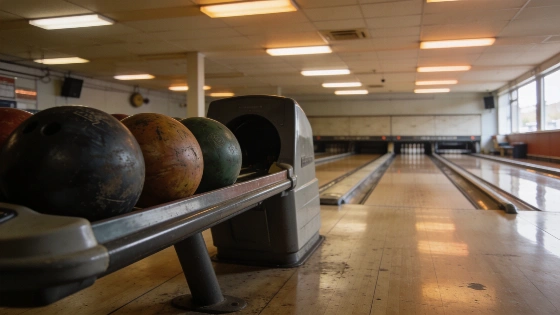
The company sells an outing as well as a game. Its UK centres pair ten-pin bowling with food and drinks, and also offer amusement machines. It operates mini-golf venues too. In Canada, it has expanded through acquisitions.
Regular refurbishments update the décor and lanes. The company also updates venue technology, aiming to attract visitors and increase how much each customer spends.
That mix puts Hollywood Bowl in the competitive socialising market, where customers gather around an activity and spend on food and entertainment. Bowling takes place indoors, so demand is less exposed to weather than at some outdoor leisure businesses. Still, the recent fall in UK comparable sales shows indoor venues can feel shifts in customer behaviour. Value-for-money pricing may help when households weigh discretionary purchases, but it cannot remove the risk of a consumer spending downturn.
The dividend sends cash directly to shareholders. A buyback uses company cash to purchase shares and reduce the number in circulation; if earnings hold up, that can lift earnings per share. Neither guarantees a higher share price, and a repurchase cannot replace durable operating performance.
A dividend cut elsewhere offers a useful comparison: another payout decision showed how a company may preserve cash when results weaken. Hollywood Bowl is moving in the opposite direction as sales rise. In either case, distributions depend on cash generation, and the headline decision alone says little about their long-term reliability.
Costs are the test. Higher employer national insurance contributions and minimum wages are pushing up labour expenses. Energy remains a significant consideration for large indoor venues.
Management must balance price increases against the affordable experience that helps attract families. Higher prices may lift revenue per customer, but push them too far and the value proposition could weaken. Hold prices down, and there may be less room to absorb cost inflation.
Hollywood Bowl's UK comparable sales fell 1.4% over the financial year and 5.6% in the second half, while group revenue reached £261.6 million for the year ended 30 September 2026.