IBM's CEO says only 2% of its software is at risk from AI, but a historic stock drop and a sharp mainframe revenue decline have investors questioning the company's outlook and execution as Wall Street cuts price targets
IBM is under renewed pressure from investors after a turbulent stretch that saw its CEO, Arvind Krishna, publicly acknowledge execution failures and defend the company's artificial intelligence strategy. Over the past two weeks, Krishna has repeatedly addressed IBM's recent missteps, including a rare admission to shareholders that the company fell short of its own standards. The tension peaked after IBM shares suffered their worst single-day loss in the company's 115-year history, erasing a quarter of its market value in one session.
On July 23, Krishna told CNBC that only 2% of IBM's software portfolio could realistically be replaced by applications built with artificial intelligence models. He argued that the vast majority of IBM's software is foundational infrastructure-managing data, security, and hybrid cloud operations-that enables AI rather than competes with it. This distinction is critical for investors, as software remains IBM's primary profit driver, generating $7.76 billion in the second quarter, up 5% year over year and accounting for roughly 45% of total revenue, according to CNBC.
Software Revenue and AI Exposure
IBM's software business is not monolithic. While infrastructure software forms the backbone of its offerings, a smaller portion-such as the Tririga lease management product-faces direct competition from AI-driven applications. For context, Krishna's 2% figure translates to about $155 million in quarterly software revenue, or roughly $620 million annually, at current run rates. The company's argument is that most of its software is essential for clients adopting AI, not at risk of being replaced by it.
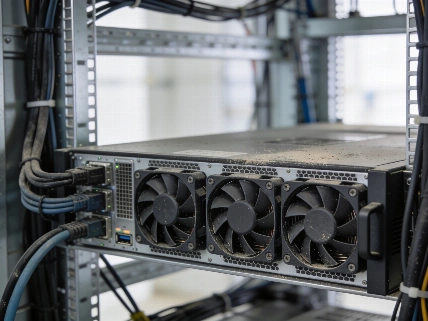
Despite this, IBM's stock remains under pressure. Shares rebounded 4% to $214.94 by midday July 24, but are still down more than 18% over the past month and hovering near a 52-week low. The company's mainframe business, a traditional revenue engine, saw Z mainframe sales plunge 42% in the second quarter, while transaction processing software tied to those systems dropped 9%. This reversal followed a period of strong growth and was attributed to clients accelerating hardware purchases ahead of expected price hikes, then deferring software buys to later quarters.
Wall Street's Response and Price Target Cuts
Wall Street analysts have responded by lowering their expectations. Morgan Stanley cut its price target for IBM to $190 from $293, maintaining an equal weight rating, while Stifel reduced its target to $235 from $290 but kept a buy rating. Oppenheimer had already downgraded the stock after IBM's July 14 warning. Analysts cited concerns about execution, the risk of further mainframe declines, and uncertainty over how quickly deferred deals will close. IBM's management says about one-third of delayed deals have already closed in July, and historically, two-thirds to three-quarters of such deals are recaptured within six months. Still, guidance for full-year constant currency revenue growth was trimmed to 4%-5%, down from above 5% previously.
IBM's performance stands out in a challenging year for tech stocks. The company's shares are down about 30% in 2026 through July 22, compared to a 10% gain for the S&P 500 and a 17% decline for the iShares Expanded Tech-Software Sector ETF. IBM now trades at 19.08 times earnings, with a 3.15% dividend yield and a quarterly payout of $1.69 per share. Free cash flow held steady at $4.8 billion for the first half of the year, and the company has maintained its streak of consecutive quarterly dividends since 1916-a key reason some income-focused investors have stayed put despite the volatility.
What Needs to Go Right for IBM
IBM's leadership is asking investors to trust that the bulk of delayed deals will close by year-end and that mainframe demand will stabilize. CFO Jim Kavanaugh has said there is no evidence of clients abandoning the mainframe platform, and that installed capacity could still deliver a record year. For IBM to regain investor confidence, four things must happen: the remaining two-thirds of slipped deals must close by the fourth quarter, software growth must reach the 6%-8% range now targeted, free cash flow must rise by about $1 billion for the year, and Z mainframe revenue must stop declining by early 2027. The company is also investing over $10 billion in quantum computing over five years, but that is unlikely to offset the near-term impact of a 42% mainframe drop.
For ordinary investors, the next two quarters will be critical. IBM's current stock price already reflects modest revenue growth and stable cash flow, but not a return to double-digit software growth. The October earnings call will be a key test, especially for Z mainframe revenue, which Krishna says should recover within a year. As recent coverage of AI's impact on tech sector fortunes shows, investor patience for delayed turnarounds is wearing thin across the industry.
In the second quarter of 2026, IBM reported total revenue of $17.2 billion, up 1% from the prior year. Software revenue reached $7.76 billion, with Red Hat up 11% and data offerings up 19%. Consulting revenue was flat at $5.33 billion, while infrastructure revenue fell 7% to $3.84 billion, reflecting the sharp mainframe decline. Operating earnings per share rose 5% to $2.93, and free cash flow for the first six months was unchanged at $4.8 billion.
IBM's situation highlights the difference between foundational technology and application software in the age of AI. Infrastructure software, which manages data, security, and hybrid cloud environments, is often less vulnerable to rapid disruption than consumer-facing applications. For investors, understanding which parts of a company's business are exposed to technological shifts-and which are essential to enabling those shifts-can be critical in assessing long-term risk and opportunity. As AI adoption accelerates, the distinction between enabling and competing with new technology will likely become even more important for both companies and their shareholders.