Intel is deepening its AI partnership with Google Cloud, but investors punished the stock as manufacturing risks and industry-wide chip concerns overshadowed the new collaboration
Intel Corporation is expanding its partnership with Google Cloud, aiming to accelerate chip design and enterprise operations by deploying Gemini Enterprise AI tools across its workforce. The move, announced July 16, is intended to showcase Intel's commitment to artificial intelligence and digital transformation at a time when the company is under pressure to prove its relevance in the rapidly evolving semiconductor sector.
Despite the high-profile announcement, Intel shares closed down 5.84% that day, falling to $96.98 from $102.99. The decline was not a direct response to the Google Cloud deal, but rather a reaction to broader industry news. Taiwan Semiconductor Manufacturing Company (TSMC), the world's largest contract chipmaker, reported record second-quarter results and raised its 2026 capital spending target to as much as $64 billion. Investors interpreted TSMC's higher spending as a sign that even the most profitable chipmakers will need years to fully capitalize on AI demand, leading to a broad sell-off in semiconductor stocks. Intel, still working to make its foundry business profitable, was hit harder than most.
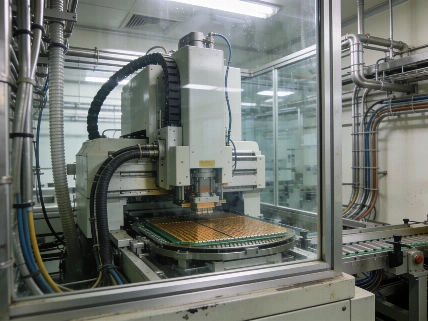
Intel's recent stock performance has been shaped by a series of manufacturing and competitive challenges. The company's shares had already dropped from a 52-week high of $142.35 in late June to around $103 by mid-July, amid reports that its advanced 18A manufacturing process may not reach profitable yields until 2027. Meanwhile, AMD reported $5.8 billion in first-quarter data center revenue, surpassing Intel's $5.1 billion in the same segment for the first time. These developments have weighed more heavily on Intel's valuation than its AI partnership announcements.
AI Integration and Strategic Risks
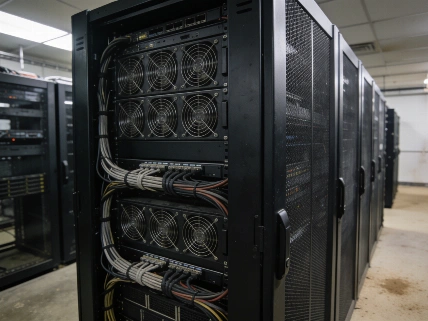
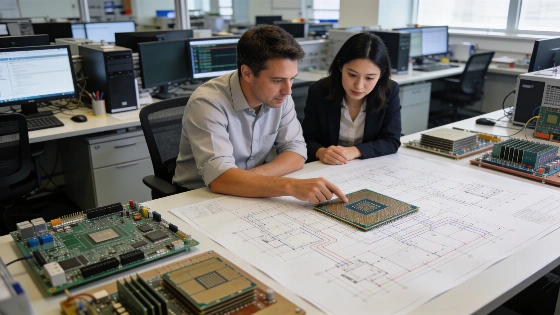
The expanded agreement with Google Cloud will see Intel use Gemini Enterprise as a central platform for building and deploying AI agents across engineering, supply chain, and corporate operations. Google Cloud is also increasing the computing resources available to Intel's chip designers, introducing custom AI-driven workflows designed to shorten the semiconductor development cycle. The goal is to speed up Intel's digital transformation and improve its competitiveness in next-generation chip design.
However, the partnership introduces a strategic wrinkle. Google designs its own AI accelerators, known as Tensor Processing Units (TPUs), which compete with Intel's products in the data center market. By relying on Google Cloud's infrastructure for critical chip design workflows, Intel is now developing some of its most advanced silicon on a platform controlled by a direct competitor. This reflects a broader industry trend where chipmakers must collaborate with rivals to keep pace with technological change, even if it means sharing sensitive development environments.
While Google's stock barely moved on the news, rising about 0.1%, the muted reaction highlights the market's different treatment of AI infrastructure providers versus buyers. Google benefits from steady enterprise software revenue regardless of how Intel's hardware business performs, while Intel's fortunes remain tied to its ability to deliver profitable manufacturing at scale.
Mutual Dependence and Industry Dynamics
The relationship is not one-sided. Google Cloud has committed to deploying Intel's latest Xeon 6 processors across its own infrastructure under an agreement reached in April 2026. Every workload Google shifts onto Xeon hardware helps Intel demonstrate that its chips remain relevant for major cloud providers, even as Nvidia and custom silicon dominate the AI training conversation.
Wall Street increasingly views chipmakers through two lenses: the AI partnerships they announce and their ability to execute on manufacturing. Intel's experience this week illustrates the gap between strategic announcements and investor focus on operational risks. A broad partnership with Google Cloud barely registered against the backdrop of TSMC's capital spending update, which sent shockwaves through the entire sector.
Institutional investors appear willing to take a longer-term view. The U.S. government acquired a roughly 10% equity stake in Intel last August, and Nvidia invested $5 billion in December, even though the two companies compete directly in AI infrastructure. This pattern of strategic investment suggests that major players are betting on Intel's turnaround, despite ongoing volatility and skepticism from retail investors.
Manufacturing Execution Remains Critical
Intel is scheduled to report second-quarter earnings on July 23. Analysts and investors will be watching closely for updates on the 18A manufacturing timeline and any signs of improvement in foundry margins. If Intel's management cannot demonstrate progress in controlling the physical costs of chip production, further AI software integration may not be enough to restore investor confidence.
For context, TSMC's second-quarter gross margin reached 67.7%, underscoring the profitability gap between the industry leader and competitors like Intel. The ability to achieve high yields and control capital expenditures remains the defining challenge for chipmakers seeking to benefit from the AI boom.
Intel's situation echoes recent trends seen in other tech giants, where heavy investment in AI and cloud infrastructure has weighed on margins and stock performance. For example, Microsoft's stock faced new price target cuts as spending surged, as detailed in this analysis of Microsoft's recent financial pressures.
Ultimately, Intel's expanded partnership with Google Cloud highlights both the promise and the complexity of AI-driven transformation in the semiconductor industry. The company's future will depend not just on its ability to adopt new technologies, but on its success in executing the difficult, capital-intensive work of manufacturing advanced chips at scale.
In the semiconductor sector, manufacturing execution is often the decisive factor separating winners from laggards. While AI partnerships can accelerate innovation and open new revenue streams, they cannot compensate for persistent production challenges or cost overruns. Investors and analysts will continue to scrutinize Intel's progress on yield, efficiency, and capital allocation as the company navigates a fiercely competitive landscape.