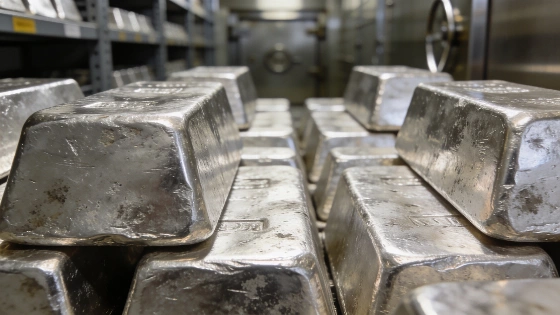
JPMorgan has cut its 2027 silver price forecast by 26 percent, signaling that the metal's rally may have already run its course and leaving recent buyers facing steep potential losses if rates stay high
JPMorgan has issued a significant revision to its silver outlook, sharply reducing its 2027 price target by more than 25%. The bank's updated forecast places even its most optimistic scenario only slightly above current market levels. For investors who entered the market near the January peak, this suggests that a full recovery may not occur within JPMorgan's projected timeframe.
In early September 2026, silver traded in the $66-$67 per ounce range, marking a notable decline from its January peak and reflecting the market's adjustment after a rapid rally.
The most notable change comes from JPMorgan's revised projections. The bank now anticipates silver will average $70.60 per ounce in 2026, down from its previous estimate of $84.30. For 2027, the forecast falls to $63.90, a 26% reduction from the earlier $85.80 target. Even in the strongest quarter of the new outlook, Q4 2027, the price is projected at $65-essentially in line with current levels. This signals that, in JPMorgan's view, silver's potential for further gains is limited in the near term.
The primary factor behind this shift is the Federal Reserve's interest rate policy. Over the past two years, many silver investors expected rate cuts to weaken the dollar and enhance the appeal of non-yielding assets like silver. Contrary to these expectations, the Fed has maintained its target range at 3.50% to 3.75% since July 2026. By mid-September, market participants were reassessing the likelihood of another rate increase, with futures indicating a 66% probability ahead of the September meeting, as reported by The National. Higher rates increase the attractiveness of cash and Treasury bills, raising the opportunity cost of holding metals that do not generate income.
Strong U.S. jobs data for August 2026 intensified the so-called 'hike trade,' putting additional pressure on precious metals as higher interest rates increase the opportunity cost of holding non-yielding assets like silver.
Recent changes in the solar industry have further weighed on silver demand. Chinese manufacturers accelerated silver imports ahead of a new export tax on photovoltaic products, but demand is now expected to decline by approximately 30% this year as silver-thrifting technologies become more widespread. JPMorgan's metals team estimates this could reduce demand by 60 million ounces.
Forecasts from other institutions highlight the divergence in market views. For example, HSBC raised its 2027 silver target to $68 in May, creating a $4 difference compared to JPMorgan's new estimate. For investors, this gap represents the distinction between a modest gain and a multi-year loss.
For those who purchased silver near the January highs, JPMorgan's outlook points to a potential 47% drawdown by 2027, with no recovery projected in the near term. This represents a prolonged period of losses rather than a temporary setback. Investors who entered the market before 2025 remain in positive territory, but now face the decision of whether to secure gains or risk further declines. For prospective buyers awaiting a price drop, the current outlook suggests there is little urgency to act. When the best-case scenario is already reflected in current prices, waiting becomes a rational approach.
This situation extends beyond silver. With the Federal Reserve maintaining elevated rates, cash and short-term Treasuries now directly compete with all non-yielding assets. Investors are compensated for holding cash, raising the threshold for accepting volatility. As Barrons analysis notes, even high-growth sectors are under increased scrutiny as the cost of capital rises.
JPMorgan identifies four key variables to monitor: the direction of gold prices, the tightness of the physical silver market, photovoltaic demand from China and India, and the federal funds rate. Currently, Federal Reserve policy remains the dominant influence. Silver's future trajectory will be shaped more by monetary policy decisions than by developments in mining or manufacturing. For investors, the implication is clear: if interest rates remain high and industrial demand continues to weaken, silver is unlikely to provide portfolio relief. The period of easy gains in silver appears to have ended, with cash now offering a more stable alternative.
Silver's price is determined by a distinctive combination of industrial and investment demand. Unlike gold, which is primarily held by central banks and investors as a reserve asset, silver is consumed in manufacturing-especially in solar panels, electronics, and vehicles. This dual role contributes to greater price volatility: declines in industrial demand or shifts in speculative flows can lead to sharp price movements. The gold-to-silver ratio, which measures how many ounces of silver are needed to purchase one ounce of gold, serves as a key indicator of this relationship. A falling ratio indicates silver is outperforming gold, while a rising ratio suggests the opposite. Investors should recognize that silver's performance is influenced not only by financial markets but also by technological and manufacturing trends.