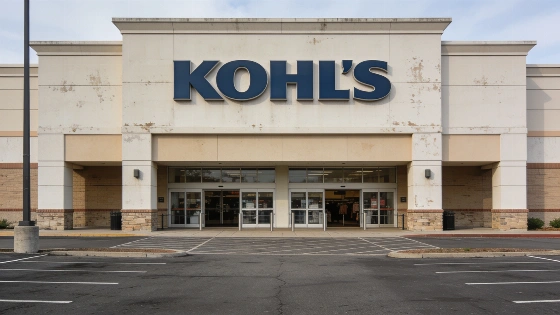
Kohl's is rolling out Babies"R"Us shops to 56 more stores after another quarter of falling sales and customer traffic as budget-conscious shoppers increasingly turn to off-price rivals for lower prices and deeper value.
Kohl's is intensifying its in-store Babies"R"Us partnership in an effort to counter the ongoing loss of shoppers to discount retailers such as Ross Dress for Less and Marshalls. This month, the company is adding Babies"R"Us shops to 56 additional locations, responding to a trend where core customers-particularly those with limited budgets-are seeking lower-priced alternatives elsewhere.
The urgency behind this move is underscored by recent results: Kohl's reported its eighteenth consecutive quarter of declining comparable sales, with a 0.9% year-over-year decrease in the second quarter of 2026. Operating income dropped 6.5% during the same period, and foot traffic declined by 1.4%, according to Placer.ai. Company leadership acknowledges that low- and middle-income shoppers are making difficult choices, often forgoing discretionary purchases or switching to more affordable brands.
Off-price retailers are benefiting from this shift. Ross Dress for Less saw store visits increase by 16.4% in the same quarter, while dd's Discounts rose 8.4%. As traditional department stores like Kohl's and Macy's lose ground, discounters are attracting value-driven consumers looking to maximize their spending. Placer.ai data shows that while overall apparel retailers experienced a 3.5% decline in visits, the value segment is outperforming the broader market.
In response, Kohl's is expanding its Babies"R"Us presence, introducing new brands and products within these in-store shops. The rollout includes 25 stores in California, 20 in Texas, and select locations in New York, Illinois, Arizona, Colorado, Idaho, Nebraska, New Jersey, Oregon, and Pennsylvania. Additionally, the company plans to offer a broader selection of baby gifts under $25 across all stores this fall, aiming to appeal to budget-conscious parents and gift buyers. According to an official company announcement, the expansion is scheduled for September 2026 and is part of a wider initiative to enhance value for shoppers.
Kohl's has allocated approximately $150 million from tariff refunds to improve its pricing proposition for customers, aiming to better compete for price-sensitive shoppers amid ongoing market pressures.
Industry analysts remain cautious about Kohl's prospects for reversing its decline. Neil Saunders of GlobalData Retail notes that the retailer continues to lose market share across major categories, and persistent sales declines indicate that a turnaround is not yet underway. While company leadership is betting on an expanded baby section and more value-priced gifts to attract shoppers, current figures do not indicate a recovery.
For additional context, U.S. retail sales at clothing and accessories stores fell 2.1% year over year in July 2026, according to Census Bureau data, while discount and off-price chains reported gains. The Federal Reserve's ongoing efforts to combat inflation have kept borrowing costs elevated, putting pressure on household budgets and making discretionary spending more challenging for many families.
As Kohl's works to stabilize its business, it faces the same margin pressures and evolving consumer behavior affecting other large retailers. For example, Dick's Sporting Goods experienced a sharp stock decline after a disappointing quarter, as previously reported. The broader message is clear: in the current environment, retailers that cannot deliver both value and relevance risk falling behind.
Kohl's latest expansion of Babies"R"Us represents a tactical effort to strengthen a vulnerable segment, but it does not address all underlying challenges. The retailer is contending with a consumer base that is more price-sensitive than ever, and competition from off-price chains continues to intensify. Without a compelling reason for shoppers to return and spend, these incremental changes may only slow, rather than halt, the erosion of market share.
Department stores have traditionally relied on discretionary categories such as baby gifts and apparel to drive traffic and margins, but current economic conditions are prompting a reassessment. For Kohl's, the challenge extends beyond adding new brands or partnerships-it is about persuading a skeptical, budget-conscious customer that the store offers unique value not available elsewhere for less. Without a sharper value proposition, Kohl's risks joining the list of retailers struggling to adapt in a rapidly changing market.
Department stores and off-price retailers operate on fundamentally different models. Department stores like Kohl's typically provide a broad assortment of brands at mid-tier prices, while off-price chains such as Ross Dress for Less and Marshalls focus on selling branded merchandise at significant discounts, often sourced from overstock or past-season inventory. This enables discounters to attract price-sensitive shoppers, particularly during periods of economic stress or high inflation. For traditional department stores, competing solely on price is rarely sustainable, making differentiation and customer loyalty essential for long-term viability.