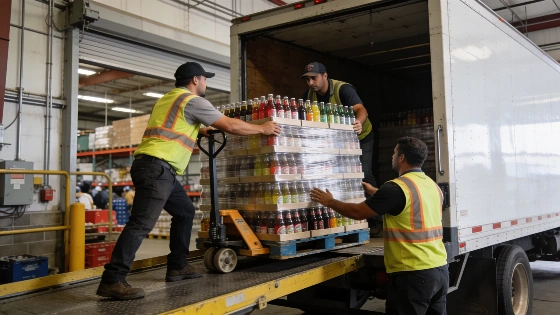
MGP Ingredients acted quickly to reroute distribution before Republic National Distributing Company filed for bankruptcy, limiting exposure as the whiskey market faces oversupply and industry rivals struggle
When a major distributor runs out of cash, suppliers can face sudden disruptions, stalled shipments, and unpredictable sales. That scenario became reality for MGP Ingredients, the 85-year-old Atchison, Kansas-based distiller behind brands like Penelope Bourbon, Remus, Yellowstone, and El Mayor tequila. For years, MGP relied on Republic National Distributing Company (RNDC), once the second-largest wine and spirits distributor in the U.S., to move a significant share of its products to retailers.
But as RNDC's financial troubles mounted, MGP's management saw the risk and acted before the distributor's July 26 Chapter 11 bankruptcy filing in the Southern District of Texas. The bankruptcy listed liabilities between $1 billion and $10 billion and more than 100,000 creditors, putting hundreds of beverage suppliers at risk of unpaid invoices and lost sales channels.
Strategic Shift to Reyes Limits Fallout
In June, just weeks before RNDC's collapse, MGP shifted distribution for 10 key markets to Reyes Beverage Group, the nation's largest beer and beverage distributor. According to company statements, the transition caused minimal disruption for customers and allowed MGP to maintain product flow to store shelves. Early results were encouraging: in the first month with Reyes, depletions-an industry metric tracking how quickly distributors sell through inventory to retailers-rose 7% for MGP's premium-plus brands and 4% for mid-tier labels, signaling real consumer demand rather than inventory buildup.
MGP continues to transition additional markets to other healthy distributors, aiming to complete the process later this year. For a smaller player competing with industry giants like Diageo and Brown-Forman, securing reliable distribution is one of the few levers it can fully control.
Financial Exposure and Industry Risks
Despite the proactive move, MGP could not avoid all losses. The company booked a $2.1 million provision for credit loss in the second quarter tied to RNDC's bankruptcy, reflecting money unlikely to be recovered. MGP's Luxco subsidiary holds a $3.59 million unsecured claim in the bankruptcy case, joining dozens of beverage makers in line for potential partial repayment. By comparison, Proximo Spirits, maker of Jose Cuervo, has the largest unsecured claim at about $93.9 million. Court filings show RNDC owes more than $400 million to unsecured creditors, and recoveries in such cases are typically limited.
By recognizing the loss now, MGP has cleared the RNDC risk from its balance sheet, avoiding a drawn-out uncertainty as the bankruptcy process unfolds. This approach stands in contrast to some rivals who may still be exposed to unpaid receivables and distribution gaps.
Whiskey Oversupply Adds Pressure
Even as MGP navigates the distributor fallout, the broader American whiskey market is under strain from a heavy oversupply. Distillers across the industry are cutting production to work through aging inventory, and MGP's CFO has noted that production is at its lowest level since 2018. In the second quarter, sales of brown spirits from MGP's Distilling Solutions unit fell 59% as customers reduced orders.
The company's stock price reflected these pressures, trading around $17.40 on August 3-down about 28% year-to-date and near the low end of its 52-week range of $15.72 to $30.57. The industry-wide glut has weighed on many producers, but MGP's management believes its early moves and focus on premium brands could position it to emerge stronger than weaker competitors.
Premium Brands and Financial Position
While whiskey sales slumped, MGP's premium-plus segment showed resilience. Sales in this category rose 5% in the quarter, led by Penelope Bourbon's 13% growth and continued strength from Yellowstone. Ingredient Solutions, which supplies specialty wheat proteins and starches to food manufacturers, grew sales 2% and was the only segment to post higher revenue. Still, total company sales fell 15% to $124.4 million, dragged down by the whiskey decline. Adjusted earnings of $0.72 per share exceeded internal expectations, and MGP reaffirmed its full-year outlook for net sales between $480 million and $500 million, with adjusted EBITDA projected at $90 million to $98 million.
Despite these positives, MGP's balance sheet is stretched. The company ended the quarter with $351.8 million in net debt and net leverage of 3.5 times, up from 1.8 times a year earlier, following a roughly $111 million payment for Penelope. Cash on hand was $17.8 million, and management expects leverage to peak in the third quarter before declining. This limits MGP's ability to pursue aggressive acquisitions, even as industry rationalization may create opportunities to buy distressed assets at attractive prices.
What to Watch Next
Investors and industry watchers should monitor several key signals: whether depletions with Reyes hold up as more markets transition, whether brown spirits sales stabilize as the whiskey oversupply clears, and whether net leverage peaks and then declines as projected. Continued growth in premium-plus brands like Penelope will also be critical to offsetting weakness in the broader whiskey segment. Analysts remain cautiously optimistic, with the average 12-month price target for MGPI at $24.67, according to TheStreet, though this reflects expectations for a recovery rather than current conditions.
For context, the beverage industry is no stranger to sudden disruptions. As seen in other sectors, such as when Novo Nordisk's shares dropped after a key drug trial missed its target, companies that act early to manage risk can sometimes limit the damage from events outside their control. Novo Nordisk's recent experience highlights how quickly fortunes can shift when a single partner or product stumbles.
MGP's swift response to RNDC's collapse helped it avoid deeper losses, but the company still faces a challenging market and a leveraged balance sheet. The next few quarters will test whether its strategy can deliver stability and growth as the industry works through excess supply and shifting consumer demand.
Distribution is a critical but often overlooked factor in the beverage business. Unlike direct-to-consumer brands, most distillers and brewers depend on third-party distributors to reach retailers and bars. When a distributor fails, suppliers can lose not only unpaid invoices but also access to key markets, shelf space, and promotional support. This risk is heightened in regulated industries like alcohol, where state laws often restrict direct sales and limit the ability to quickly switch partners. Companies that diversify their distribution channels and monitor partner health closely may be better positioned to weather such shocks, but even the best planning cannot eliminate all exposure to industry upheaval.