Red Bull paid €1.1 billion in dividends on 2025 results, down 18% even as group profit reached a record. Sponsorship costs rose alongside faster sales growth in the U.S.
Nearly 14 billion cans left Red Bull's shelves in 2025, up 10%. The strongest sales gains came in the U.S.
The dividend fell 18% to €1.1 billion on 2025 results, even as the group posted its highest profit on record. Consolidated net revenue grew 9% to €12.2 billion, while profit rose 5% to about €1.9 billion, according to Red Bull's 2025 accounts. The company is holding back more cash while its sponsorship bill climbs.
The distribution is worth about $1.2 billion. Roughly €250 million comes from retained earnings, while net income at the Austrian parent company was €1.68 billion, largely unchanged from the year before. Those figures describe different parts of the business: the record profit belongs to the group, while €1.68 billion is the parent company's result. Bloomberg's filing-based dividend report also puts Fides Trustees' expected payment at about €25 million.
Red Bull spent about €3.2 billion on marketing in 2025. Sponsorship accounted for around €1.5 billion, while advertising costs were just under €900 million.
Even after the cut, the payout sends substantial sums to the founding families. An Austrian filing shows €533 million going to Mark Mateschitz and €533 million to the wider Yoovidhya family. Mark Mateschitz owns 49% of the company; the Thai Yoovidhya family owns 51%. Red Bull's ownership structure dates to its founding in Fuschl-am-See in 1987.
Sponsorship spending rose 22% to more than €1.5 billion, nearly half of Red Bull's marketing budget. The company sold almost 14 billion cans in 2025, up 10%, with its strongest gains in the U.S. The figures show sales rising as sponsorship takes a larger share of the marketing spend, but they do not establish that sponsorship alone drove the increase.
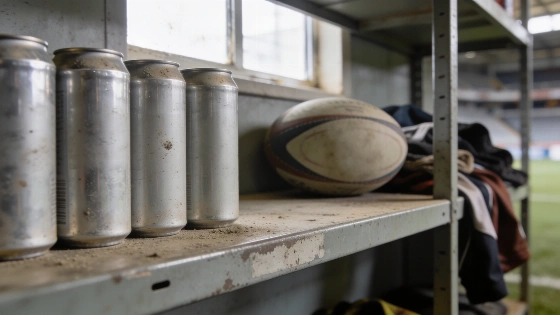
That investment is increasingly visible in sport. Red Bull added a rugby union team in Newcastle in 2025, expanding beyond its football and motor-sports presence. The figures do not show that the dividend cut was earmarked for a specific expansion.
Mark Mateschitz's 49% stake followed the death of his father, Dietrich Mateschitz, in autumn 2022. The remaining 51% belongs to the Thai Yoovidhya family.
The ownership history helps explain the change in the payout. Since Dietrich Mateschitz died in 2022, Red Bull has stopped paying the additional dividend previously tied to his holding, now owned by his son Mark. The filing records the current ownership split and the changed dividend structure. In 2025, Chalerm Yoovidhya transferred his remaining 2% stake to Fides Trustees.
Other consumer companies take different approaches to returning cash. A retail payout comparison showed how sharply those policies can differ. At Red Bull, the figures put the focus on the cash the company keeps and its growing sponsorship bill.
The dividend reduction does not reveal where every withheld euro will go. Using retained earnings to support a dividend also does not, by itself, show how management will use the rest of the cash. Red Bull's sponsorship spending reached more than €1.5 billion in 2025.