
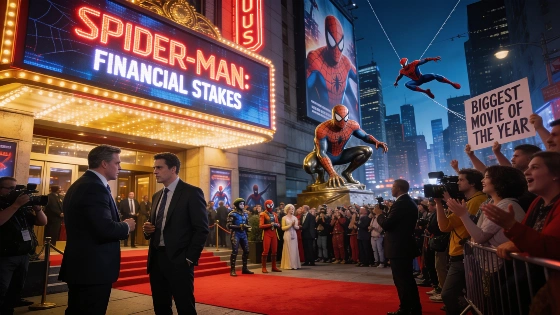
As Marvel's newest film hits theaters, shifting production budgets, evolving audience expectations, and franchise fatigue are putting pressure on studios and investors to rethink their strategies for blockbuster returns
Marvel Studios' latest release, Spider-Man: Brand New Day, arrives at a time when the economics of blockbuster filmmaking are under renewed scrutiny. With Tom Holland returning for his fourth solo outing as Peter Parker, the film not only extends the Marvel Cinematic Universe (MCU) but also reflects the financial and creative pressures facing major studios. As production budgets for superhero films continue to climb, studios are increasingly focused on balancing audience demand for spectacle with the need for sustainable returns.
According to reporting by Rotten Tomatoes, Spider-Man: Brand New Day has drawn early praise for its more grounded storytelling and mature character development. The film features a high-profile cast, including Zendaya, Mark Ruffalo, Jon Bernthal, and Sadie Sink, and introduces new dynamics by integrating characters from across the MCU. While critics highlight the film's emotional depth and ambitious action sequences, they also note the challenges of maintaining narrative coherence in a franchise now spanning nearly 40 interconnected movies.
Budget Pressures
Rising production and marketing costs have become a defining feature of the modern superhero genre. Industry estimates suggest that major MCU releases now routinely exceed $200 million in production expenses, with additional tens of millions allocated to global marketing campaigns. These escalating costs raise the stakes for studios, which must deliver strong box office results to justify such investments. For investors and stakeholders, the risk profile of each new release is shaped not only by creative choices but also by broader trends in consumer behavior and streaming competition.
Recent box office data underscores the volatility of the current market. While some superhero films continue to generate robust ticket sales, others have struggled to meet expectations, reflecting a more selective audience and increased competition from alternative entertainment options. The performance of Spider-Man: Brand New Day will be closely watched as a bellwether for the genre's ongoing viability and the financial health of the MCU brand.
Franchise Fatigue and Audience Shifts
One of the central risks facing studios is the potential for franchise fatigue. As the MCU expands, maintaining audience engagement becomes more challenging, especially as storylines grow more complex and interconnected. Critics have noted that Brand New Day attempts to address this by focusing on character-driven drama and scaling back the multiverse elements that have dominated recent entries. This shift may appeal to long-time fans seeking a return to the franchise's roots, but it also introduces trade-offs in terms of spectacle and crossover appeal.
For consumers, the proliferation of superhero content across theaters and streaming platforms has led to greater choice but also increased competition for attention. Studios are responding by experimenting with release strategies, including shorter theatrical windows and premium streaming options, in an effort to maximize revenue and adapt to changing viewing habits. These shifts have direct implications for box office performance, ancillary revenue streams, and the long-term value of franchise intellectual property.
Financial Performance and Market Data
In 2025, the U.S. box office generated approximately $8.9 billion in ticket sales, according to the National Association of Theatre Owners, a figure that remains below pre-pandemic levels. Superhero films accounted for a significant share of this total, but the average opening weekend gross for major releases has declined compared to the peak years of the MCU. At the same time, streaming subscriptions in the U.S. surpassed 350 million in 2025, reflecting a shift in consumer spending from theatrical releases to at-home entertainment. These trends highlight the importance of diversified revenue models and the need for studios to manage both creative and financial risks.
Creative Trade-Offs and Investor Implications
The critical reception of Spider-Man: Brand New Day points to a broader debate within the industry about the balance between innovation and formula. While the film's emphasis on emotional storytelling and practical effects has been well received, some reviewers caution that its extended runtime and dense plotting may limit its appeal to casual viewers. For investors, the key question is whether such creative choices can translate into sustained box office momentum and ancillary revenue, or whether the MCU's interconnected structure has reached a point of diminishing returns.
As studios weigh future investments in franchise properties, they must consider not only the direct costs of production but also the opportunity costs of tying up capital in long-term projects. The evolving landscape of audience preferences, distribution channels, and competitive offerings will continue to shape the financial calculus behind each new release. For now, Spider-Man: Brand New Day serves as a case study in the complex interplay between creative ambition and financial discipline in the modern entertainment industry.
Blockbuster filmmaking is increasingly defined by the tension between escalating costs and uncertain returns. Studios must navigate a landscape where audience loyalty is no longer guaranteed, and where the success of a single release can have outsized effects on broader corporate strategy. For investors and consumers alike, understanding the financial mechanics behind major releases offers insight into the risks and rewards that shape the future of popular entertainment.