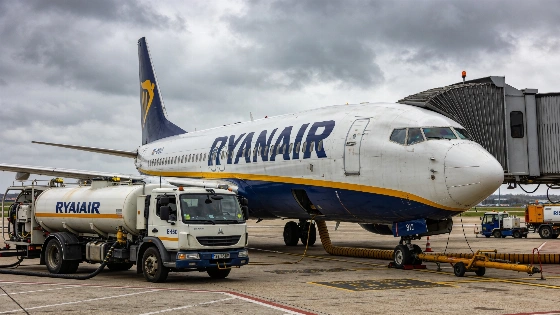
Ryanair's CEO signals that airfares could jump in 2027 if oil prices remain elevated, putting pressure on travelers and investors as the airline's hedging advantage faces real-world limits
Ryanair has cautioned that ticket prices could rise sharply in 2027 if oil prices remain at current elevated levels. CEO Michael O'Leary informed shareholders that sustained high fuel costs may force the airline-known for its low fares and high passenger volumes-to increase airfares, challenging its core business model.
Ryanair reduced its full-year passenger target for fiscal 2027 from 216 million to 214 million, aiming to limit exposure to unhedged fuel costs during the winter season.
Fuel hedges and their limits
Ryanair entered the current period of oil price volatility with a stronger hedge position than most European competitors, having secured 80% of its fuel needs through March 2027 at approximately $67 per barrel. An additional 15% is hedged at $85 for the following fiscal year. While this provides a significant buffer, it does not eliminate risk. The remaining unhedged fuel is now more than twice as expensive as the hedged portion, prompting Ryanair to reduce winter flying and lower its full-year passenger target from 216 million to 214 million. Management expects these adjustments to reduce winter losses by €70 million to €100 million, according to company filings and a Reuters financial review.
Despite the hedge, Ryanair's first-quarter profit after tax declined 34% to €538 million, even as passenger numbers increased by 6%. Average fares fell by about 6% in the same period, indicating that the airline's capacity to pass higher costs to customers is currently limited. Ryanair has stated it will not introduce additional fuel surcharges unless competitors do so first. However, O'Leary has indicated that if oil prices remain high and rivals raise fares, Ryanair may be compelled to follow. According to Reuters, O'Leary publicly stated that if oil prices persist at elevated levels, airfares will "significantly rise," though the company does not plan to implement separate fuel surcharges unless the broader market moves in that direction.
Competitive fallout and investor stakes
O'Leary emphasized to shareholders that airlines with less robust hedging could be forced to cut capacity or exit the market if high oil prices persist through winter. This scenario could strengthen Ryanair's position, enabling it to capture additional market share and rebuild pricing power once fuel costs stabilize. For budget-conscious travelers, who are already affected by inflation and rising living expenses, Ryanair may retain an advantage if weaker competitors reduce service or withdraw.
Reuters reported on September 10, 2026, that Ryanair had paused further fuel hedging, despite previously being one of Europe's best-protected airlines against price shocks. CEO Michael O'Leary said this was done in hopes of extending hedges closer to Christmas.
What's next for fares and flyers
Currently, Ryanair anticipates fares will be modestly lower in the July-to-September quarter, but the outlook for winter and early 2027 remains uncertain. If oil prices stay high, the company has warned of a likely "significant uplift" in ticket prices. This would directly affect price-sensitive travelers and test Ryanair's value proposition.
According to the U.S. Energy Information Administration, average spot prices for Brent crude oil in 2026 have ranged between $80 and $110 per barrel, with jet fuel premiums increasing during periods of geopolitical instability. Airlines with limited hedging have experienced margin compression and, in some cases, have reduced service or exited unprofitable routes.
Ryanair's approach of aggressive fuel hedging and strict cost control has provided some resilience, but not complete protection. The airline's ability to manage through this period depends on both the direction of global oil prices and the competitive actions of other carriers. If less-prepared airlines scale back, Ryanair could gain greater pricing power-provided it can maintain its reputation for low fares while managing higher costs. For both investors and travelers, the coming quarters will determine whether Ryanair's model can withstand sustained energy price pressures or if even the leading budget airline will need to pass increased costs on to customers.
Fuel hedging is a risk management strategy that enables airlines to lock in fuel prices for a specified period, reducing exposure to volatile energy markets. While effective in mitigating short-term price fluctuations, hedges can become disadvantageous if market prices fall below the locked-in rate or if the hedged volume is insufficient during a prolonged price spike. Airlines must balance the cost of hedging with the risk of being unprotected, and the effectiveness of these strategies often distinguishes industry survivors from those forced to reduce service or exit the market.