SpaceX secured a $1.6 billion contract for 18 military satellite launches, offering a revenue boost just as its stock faces pressure from a looming lockup expiration and recent price swings
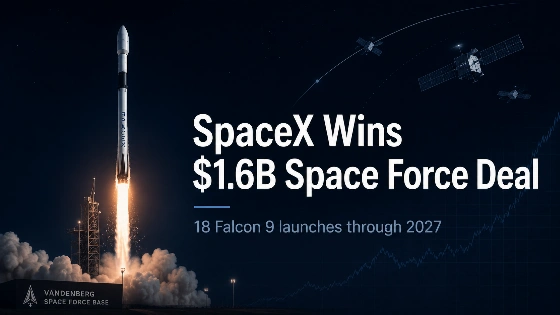
SpaceX has secured a major win from the U.S. Space Force, landing two task orders worth a combined $1.6 billion to launch 18 Falcon 9 rockets carrying military satellites. The launches, all scheduled to lift off from Vandenberg Space Force Base in California, are set to be completed by the end of 2027. The contract arrives at a critical moment for SpaceX, as its shares have struggled since the company's June IPO and investors brace for the company's first earnings report as a public company.
The new launches will support the Pentagon's Space-Based Sensing and Targeting (SBST) portfolio, a network designed to detect and track fast-moving airborne threats, including hypersonic weapons and cruise missiles. According to Space Systems Command, these satellites are intended to provide near real-time data to U.S. forces, filling gaps left by older early-warning systems. The SBST network is a key component of the $185 billion "Golden Dome" missile defense shield proposed in recent years.
Contract Details and Financial Impact
The $1.6 billion price tag averages out to roughly $89 million per launch-significantly higher than the $70 million starting price SpaceX typically charges commercial customers for a Falcon 9 flight. The premium reflects the additional requirements for national security missions, such as security clearances, tighter mission integration, and stricter payload protection. For SpaceX, these government contracts provide a higher-margin, predictable revenue stream at a time when the company is investing heavily in artificial intelligence and Starship development.
SpaceX's IPO in June was priced at $135 per share, with the stock climbing above $201 in its first week of trading, according to Reuters. But the momentum quickly faded: shares peaked at $225.64 on June 16 before falling to a low of $107.01 by July 28-a drop of about 52%. The stock's slide has been driven by a combination of high valuation (trading at roughly 40 times estimated 2026 sales) and heavy selling by early investors. Short interest has reached about 35% of available shares, reflecting skepticism about the company's lofty price relative to its revenue.
Lockup Expiration Looms
While the upcoming earnings report on August 4 is drawing attention, many market watchers are more focused on what happens two business days later, when the post-IPO lockup period expires for most pre-IPO investors. Nearly a billion shares could become eligible for sale, far exceeding the volume traded during the IPO itself. This overhang has contributed to recent selling pressure, as some investors move to exit ahead of the potential flood of new shares. The new Space Force contract may help steady the stock, but whether it can offset the impact of the lockup expiration remains to be seen.
SpaceX's ability to win this contract was also shaped by the struggles of its main competitors. United Launch Alliance's Vulcan rocket has been grounded since February 2026 due to a booster separation issue under Space Force investigation, while Blue Origin's New Glenn remains sidelined after a launch pad explosion in May. With both rivals out of commission, SpaceX is currently the only Western provider able to deliver this volume of national security launches on the required timeline.
Risks and Execution Challenges
Despite the contract's size, several risks remain for SpaceX and its investors. The company now holds at least $7 billion in Pentagon contracts this year, raising concerns among some lawmakers about the military's reliance on a single private vendor. Fitting 18 sensitive launches into Vandenberg's schedule by the end of 2027 will require a pace of nearly one national security launch per month, leaving little room for delays. Any technical setback, pad accident, or weather disruption could threaten SpaceX's near-perfect launch record and put additional pressure on the stock.
For investors, the contract strengthens SpaceX's long-term outlook but does not resolve the immediate supply-and-demand imbalance created by the lockup expiration. The next two weeks will test whether new buyers are willing to absorb the wave of shares likely to hit the market. For those considering how to handle sudden IPO wealth, disciplined planning is essential-a point underscored in this analysis of IPO windfalls and founder decisions.
According to the U.S. Department of Defense, the National Security Space Launch Phase 3 Lane 1 program, under which these contracts were awarded, recently raised its ceiling by $11.4 billion to $17 billion to accommodate more launches. This expansion reflects the growing demand for secure satellite deployment as geopolitical tensions and technological threats evolve.
Government contracts like these can provide stability for companies facing volatile public markets, but they also come with unique operational and political risks. Investors should weigh the benefits of predictable revenue against the challenges of execution, regulatory scrutiny, and the potential for sudden shifts in market sentiment as large blocks of shares become available for trading.
For those tracking the intersection of government spending, defense technology, and public markets, SpaceX's next earnings report and the aftermath of the lockup expiration will offer a revealing look at how these forces interact in real time.
Government launch contracts often command a premium over commercial rates due to the complexity and security requirements involved. Unlike commercial satellite launches, national security missions require extensive coordination with defense agencies, specialized payload handling, and strict compliance with classified protocols. These factors drive up costs but also create high barriers to entry, limiting competition and making contract wins especially valuable for established players like SpaceX. For investors, understanding these dynamics is crucial when evaluating the risks and rewards of companies operating at the intersection of technology, defense, and public markets.