
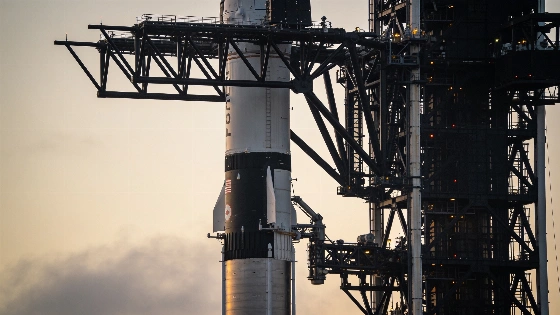
SpaceX is set to deploy 24 new Starlink satellites from California, pushing its active constellation to nearly 11,000 and reinforcing its position in the commercial satellite internet market
SpaceX is preparing for another significant step in its satellite internet expansion, with a scheduled launch of 24 Starlink satellites from Vandenberg Space Force Base in California. The mission, set for 9:01 p.m. Pacific time, will use a Falcon 9 rocket to deliver the satellites into low Earth orbit, further strengthening the company's global broadband network. The rocket will follow a south-southwesterly trajectory from Space Launch Complex 4 East, a route designed to optimize orbital insertion for this batch of satellites.
This launch, known as Starlink 17-50, will bring the total number of Starlink satellites in orbit to approximately 11,000, according to reporting by Spaceflight Now. The mission will utilize the Falcon 9 first stage booster B1097, which has already completed 11 previous flights, including high-profile missions such as Twilight, Transporter-17, Sentinel-6B, NROL-172, and multiple earlier Starlink deployments. After liftoff, the booster is expected to attempt a landing on the droneship Of Course I Still Love You, stationed in the Pacific Ocean. If successful, this will mark the 219th landing on this vessel and the 651st Falcon booster recovery overall, underscoring SpaceX's focus on reusability to control launch costs.
Starlink's rapid deployment pace has made it the world's largest commercial satellite constellation, with the company targeting both consumer and enterprise customers in regions where traditional broadband infrastructure is limited or unreliable. The service has become especially relevant in rural and remote areas, as well as in emergency response scenarios where ground-based connectivity is unavailable. For U.S. households, Starlink offers an alternative to cable and fiber internet, though monthly costs and equipment fees remain higher than some terrestrial options. The company's ongoing launches are part of a broader strategy to increase network capacity, reduce latency, and improve service reliability as subscriber demand grows.
According to Federal Communications Commission filings, SpaceX has received approval to deploy up to 12,000 Starlink satellites, with applications pending for an additional 30,000. As of June 2024, the company reported more than 2.6 million active subscribers worldwide. The Starlink network operates in low Earth orbit, typically between 340 and 550 kilometers above the surface, which allows for lower latency compared to traditional geostationary satellites. However, the rapid increase in satellite numbers has raised concerns among astronomers and regulators about orbital congestion and long-term space debris risks. SpaceX has responded by implementing collision avoidance protocols and working with international agencies to address these challenges.
For investors and industry analysts, SpaceX's Starlink project represents a major shift in the economics of satellite communications. The company's ability to reuse rocket boosters and mass-produce satellites has driven down per-launch costs, making frequent deployments financially viable. This approach has also intensified competition in the satellite broadband sector, with rivals such as Amazon's Project Kuiper and OneWeb racing to build their own constellations. The outcome of this competition could reshape global internet access, especially in underserved markets, and influence the future direction of commercial space activity.
Satellite internet services like Starlink operate by relaying data between ground stations, satellites, and user terminals. Unlike traditional cable or fiber connections, which require extensive physical infrastructure, satellite networks can reach remote locations with minimal on-the-ground investment. However, performance can be affected by weather, line-of-sight obstructions, and network congestion during peak usage. As more satellites are launched, providers must balance the benefits of expanded coverage with the technical and regulatory challenges of managing crowded orbital paths and ensuring long-term sustainability in space.