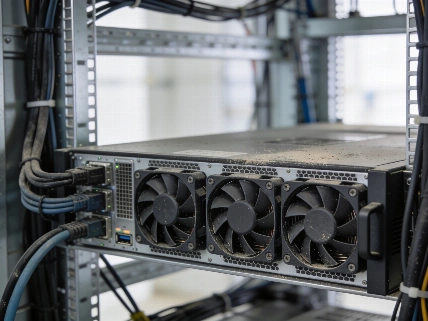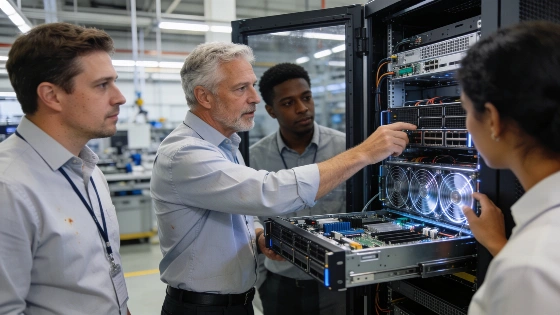
Super Micro Computer shares surged after the company projected a sharp jump in gross margins, even as revenue guidance landed at the low end of forecasts. Investors are now focused on whether these profits can last as AI server demand accelerates
Super Micro Computer (SMCI) delivered a jolt to investors by projecting a dramatic improvement in profitability for its fiscal fourth quarter, sending its stock up more than 20% in a single session. The company, a major supplier of servers for artificial intelligence data centers, said it now expects gross margins between 15% and 17%-nearly double its previous forecast. This margin expansion, driven by a more favorable mix of customers and products, overshadowed the fact that revenue is likely to come in at the low end of its earlier $11 billion to $12.5 billion range.
While analysts had anticipated about $11.7 billion in sales, Super Micro Computer's update suggests revenue will be closer to the lower bound. Yet the market's reaction made clear that investors are prioritizing profitability over top-line growth, at least for now. The company's ability to secure large AI infrastructure orders has never been in doubt, but the real test has been whether those orders can translate into sustainable earnings and cash flow.
Backlog and Funding
Super Micro Computer reported more than $60 billion in new orders during the quarter, resulting in a record backlog as of the end of fiscal 2026. These orders will be recognized as revenue over future periods, not immediately, which helps explain why investors were willing to look past the modest sales guidance. To support this surge in demand, the company raised $7 billion in June through a mix of common stock and convertible securities, funding roughly $39 billion in AI-related orders from over 20 clients. This move, while potentially dilutive to existing shareholders, was necessary to secure the components and inventory required for large-scale AI server deployments.
The company's business model requires it to acquire expensive graphics processors, networking hardware, memory, and cooling systems before it can recognize revenue. This puts pressure on working capital and increases the risk of cash burn, a concern that has dogged the company in recent quarters. As Meta's recent AI-driven rally also demonstrated, investors are increasingly focused on whether heavy spending in the AI sector can deliver lasting shareholder returns rather than just headline growth.
Margin Sustainability in Focus
Super Micro Computer's main competitors in the AI server space include Dell Technologies and Hewlett Packard Enterprise, both of which also saw their shares rise on the news. Many of these companies use similar chips from Nvidia and other suppliers, making it difficult to achieve high margins in what is typically a low-margin, high-volume business. The sudden jump in Super Micro Computer's gross margin suggests it has either achieved better pricing, a more profitable product mix, or benefited from temporary supply constraints.
Still, the durability of this margin improvement remains uncertain. The right mix of customers and products can shift from quarter to quarter, and supply shortages that allow for higher pricing may not last. Super Micro Computer's profit margins have been volatile in the past, with third quarter sales falling to $10.2 billion from $12.7 billion the previous quarter. Investors will be watching closely to see if the company can maintain these higher margins as supply conditions and competitive dynamics evolve.
What to Watch Next
The company is scheduled to report its full fourth quarter and fiscal year results on August 11. The key metric will be whether gross margin lands within the targeted 15% to 17% range. Investors should also pay attention to inventory levels, accounts receivable, and operating cash flow. If margin gains are offset by rising inventory or the need for additional external capital, the improvement may prove fleeting. Management's outlook for fiscal 2027 will be critical in assessing how quickly the record backlog can be converted into recognized sales and profits.
Another open question is whether Super Micro Computer's recent success can be replicated by rivals or if it is the result of a unique combination of customer relationships, supply chain management, and product design. A single quarter of improved pricing can boost results, but sustained profitability will require consistent execution across all aspects of the business.
For the fiscal fourth quarter, Super Micro Computer expects revenue at the low end of its guidance, gross margin between 15% and 17%, and a record backlog fueled by over $60 billion in new orders. The company's next earnings report will be a crucial test of whether this margin rebound is a lasting operational shift or a temporary benefit from favorable market conditions.
According to the company's preliminary update, Super Micro Computer's gross margin forecast for the fourth quarter nearly doubles its previous guidance, while revenue is expected to be at the lower end of the $11 billion to $12.5 billion range. The company's June capital raise of $7 billion was aimed at funding a $39 billion pipeline of AI-related orders, and its backlog now exceeds $60 billion as of the end of fiscal 2026.
Gross margin is a key measure of a company's profitability, representing the percentage of revenue left after accounting for the direct costs of goods sold. In the server industry, margins are often thin due to intense competition and the high cost of components. Sustained improvements in gross margin can signal stronger pricing power, better product mix, or improved supply chain management, but they can also be temporary if driven by short-term market imbalances. Investors should monitor whether Super Micro Computer can maintain these gains as the AI server market matures and rivals adjust their strategies.