A home and a secure retirement are harder to afford as housing and child-rearing costs rise faster than wages. The middle class still exists, but income alone does not show how financially secure many households feel.
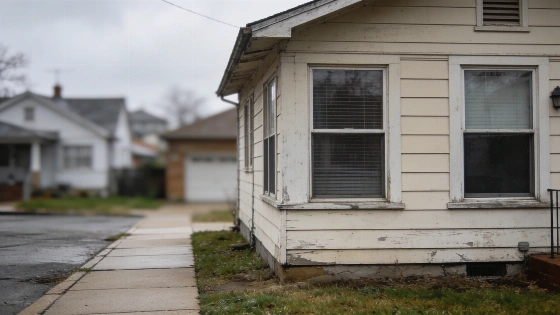
In a Self Financial survey last year, 22% of respondents named homeownership as their most important life milestone. One in four said financial pressure had forced them to delay it. Retirement feels further out of reach: U.S. adults say they need $1.46 million to retire comfortably, $200,000 more than in 2025. In Northwestern Mutual's 2026 Planning & Progress Study, 46% said they do not expect to be financially ready. Another 48% think they may outlive their savings.
The squeeze shows up in the size of the middle class. It accounted for 61% of Americans in 1971 and 51% in 2023, according to a 2024 analysis by the Pew Research Center. Pew defines middle-income households as those earning roughly two-thirds to twice the national median. The range adjusts for household size and location.
A September 2026 affordability study put the annual income needed to afford a typical U.S. home at $109,796.
The label has not changed. What that income buys has.
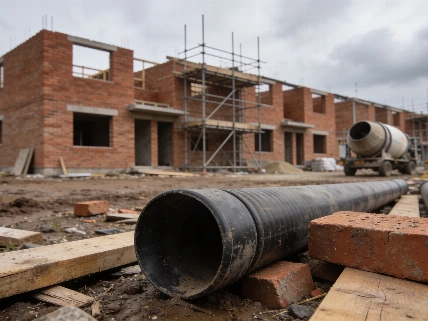
Housing and family expenses help explain the gap. The median U.S. single-family home price reached $357,275 in January 2026, up from $164,000 in 2012, according to the figures provided. Raising a child cost $165,630 in 2000 and $414,000 in 2025, a 150% increase. Wages grew 112% over the same period. Child-rearing costs rose nearly 40 percentage points faster. First American Data & Analytics reported 1.4% year-over-year home-price growth in August 2026, according to its August home-price analysis.
These figures do not describe every household's budget or predict what any one family will pay. But they point to a basic squeeze. When major expenses outpace earnings, families have less room to save, pay down debt, or handle a surprise bill. Student debt and health care costs add pressure. Mortgage payments can leave households stretched, even when their income falls within a conventional middle-class range. Realtor.com said mortgage rates remained above 7% that month in its September housing report. That added to affordability pressure even as home-price growth cooled.
The FHFA's U.S. House Price Index showed national home prices rose 2.6% year over year from July 2025 to July 2026. First American Data & Analytics separately reported 1.4% year-over-year home-price growth in August 2026.
Location changes the math. The middle class has shrunk most in expensive coastal and metropolitan areas. Many Midwest and rural communities remain more affordable. A salary that barely covers housing and other bills in Seattle may go further in Nebraska or Iowa, with more left for a family home and savings. National income thresholds can hide the gap between meeting the definition of middle class and affording its usual milestones.
Technology, remote work, and gig income give some households more ways to earn. But those options do not guarantee financial security. Side work may cover a monthly shortfall. It does not erase high housing, education, health care, or transportation costs. For household planning, compare local expenses with reliable take-home income, not an abstract national benchmark. A budget that includes housing, children, education, and cars can help clarify trade-offs. Emergency savings and limits on discretionary spending may also help households manage shocks, if they have room to set money aside.
Personal choices cannot fix the forces pushing costs up. Economists point to affordable housing, infrastructure, education, and workforce training as areas where changes could support productivity and wages over time. The Hoover Institution and other conservative think tanks favor less government intervention and policies that encourage business investment and private-sector innovation. Brookings and the Economic Policy Institute argue that coordinated action is needed to address structural barriers to affordability. These are competing policy proposals. None shows that its approach has already reversed the trend.
The middle class is best understood not as one salary band but as a balance of income, local costs, debt, and the ability to save. A household can meet Pew's income definition and still lack the cash flow to buy a home or feel confident about retirement. That distinction matters. Financial planning can help families make choices within their means, but it cannot make up for a mismatch between wages and essential costs. The shrinking share of Americans in the middle-income tier warns that financial security depends on purchasing power, not the label attached to a paycheck.