
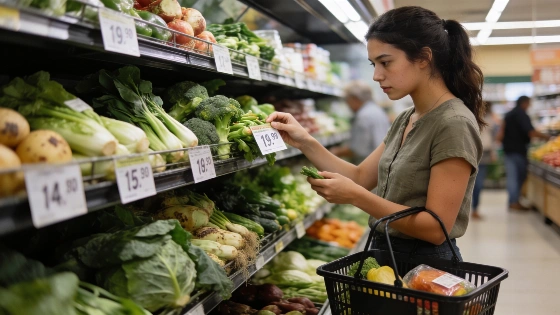
UBS forecasts that grocery prices will keep rising faster than overall inflation, driven by climate shocks, labor costs, and supply chain pressures. The bank says this trend could reshape consumer spending and benefit supermarkets over restaurants
For U.S. consumers hoping for relief at the grocery store, a new analysis from UBS offers little comfort. The global bank argues that food inflation is likely to remain elevated for years, outpacing broader price increases and putting continued pressure on household budgets. While many forecasters have predicted that food price growth would slow, UBS contends that the era of "cheap food" is over, and investors should prepare for a new normal of persistently higher grocery bills.
Structural Drivers of Food Inflation
UBS identifies five long-term forces that it expects will keep food prices rising faster than general inflation: climate shocks, higher labor costs, stricter animal welfare regulations, robust demand, and ongoing supply chain pressures. The bank's analysis suggests that most of these cost increases will be passed on to consumers, rather than absorbed by producers or retailers. Climate-related disruptions are seen as the most significant factor, with global heatwaves, droughts, and floods already reducing crop yields in major agricultural regions. UBS estimates that climate shocks alone could add nearly a full percentage point or more to annual food inflation in coming years.
Labor costs are also a key driver. Wages for workers involved in planting, harvesting, processing, and transporting food have risen sharply since the pandemic, and these increases are reflected in the prices consumers pay for staples like bread, eggs, and produce. Meanwhile, new animal welfare and environmental rules are raising compliance costs for meat and egg producers. Strong global demand for food, combined with supply chain bottlenecks and higher logistics costs, is further straining the system. UBS notes that while advances in agricultural technology are helping boost productivity, these gains are not arriving quickly enough or at sufficient scale to offset the structural cost pressures facing the industry.
Recent Data and Market Impact
Government data supports the UBS view. According to the U.S. Department of Agriculture, grocery store prices in June 2026 were 2.7% higher than a year earlier, while restaurant prices rose 3.4% over the same period. The USDA projects that overall food prices will climb 3.2% in 2026, with grocery prices up 2.8% and restaurant prices up 3.6%. Some categories are rising much faster: fresh vegetable prices jumped 11.9% year-over-year in May 2026, compounding increases that have already pushed prices well above pre-2021 levels. Bloomberg has reported that climate change is turning what used to be rare weather shocks into recurring events, making supply-side relief less likely in any given season.
Farmers are feeling the squeeze as well. With higher input costs and slower investment in new production capacity, many are earning less per unit produced. This dynamic is contributing to a cycle in which cost increases are passed along the supply chain, ultimately landing on consumers. As a result, food remains a major driver of headline inflation, limiting the Federal Reserve's ability to cut interest rates even as other price pressures ease. According to reporting by Financial Sumo, similar concerns about persistent inflation and market headwinds have been raised by other major banks in recent months, highlighting the broad impact of these trends on both consumers and investors. One recent analysis from Bank of America warned that seasonal and structural risks could challenge investor optimism in the months ahead.
Shifting Consumer Behavior
As food prices climb, consumer behavior is shifting. Restaurant spending is falling faster than grocery spending, with more households opting to cook at home to manage costs. Sales of private-label products are rising, and shoppers are increasingly turning to coupons and promotions. Non-essential food items are seeing weaker demand as families prioritize essentials and delay discretionary purchases. Supermarkets are positioned to benefit from this trend, as higher food prices do not typically reduce grocery demand, but do discourage dining out. Restaurants, on the other hand, face greater pressure as consumers cut back on non-essential spending.
UBS expects these patterns to persist as long as the five structural cost drivers remain in place. The bank argues that most of the additional costs will continue to be passed through to consumers, keeping food inflation elevated and reshaping spending patterns across the economy. For investors, this environment may favor companies with pricing power and exposure to essential goods, while sectors dependent on discretionary spending could face ongoing challenges.
Food Inflation's Broader Economic Effects
Food is a key component of the Consumer Price Index (CPI), and its persistent inflationary pressure is keeping overall inflation readings higher than they might otherwise be. This complicates the Federal Reserve's efforts to bring inflation back to target levels, as elevated food prices limit the central bank's flexibility to lower interest rates. Margins across the food supply chain are already under strain, and with little sign that the underlying cost pressures are easing, the pass-through to consumers is likely to continue. The split between essential and discretionary spending is becoming more pronounced, with households forced to allocate a larger share of their budgets to necessities like groceries while cutting back elsewhere.
According to the USDA's June 2026 Food Price Outlook, food-at-home prices rose 2.7% year-over-year, while food-away-from-home prices increased 3.4%. The agency projects that overall food prices will rise 3.2% in 2026, with grocery prices up 2.8% and restaurant prices up 3.6%. Fresh vegetable prices saw the steepest increase, up 11.9% in May 2026 compared to a year earlier. These figures underscore the persistent nature of food inflation and its impact on household budgets.
Food inflation is a complex phenomenon shaped by both global and domestic factors. While supply chain disruptions and labor costs are immediate drivers, longer-term trends such as climate change and regulatory shifts are likely to keep upward pressure on prices. For consumers, this means continued vigilance in managing food budgets and adapting spending habits. For policymakers and investors, the challenge will be to navigate an environment where essential costs remain stubbornly high, even as other parts of the economy stabilize.