Shares of Viking Holdings tumbled nearly 20% from August highs amid river cruise disruptions and sector-wide volatility, but Jim Cramer maintains his bullish stance as bookings and profits surge. Investors must weigh premium pricing against operational risks.
Viking Holdings stock has declined nearly 20% from its August peak, erasing a significant portion of recent gains as river cruise disruptions and sector-wide volatility intersect with the company's premium valuation. The sharp drop from $108 to $86 in less than a month unsettled investors, yet Jim Cramer remains positive-publicly encouraging viewers to buy the dip, citing strong bookings and resilient profits.
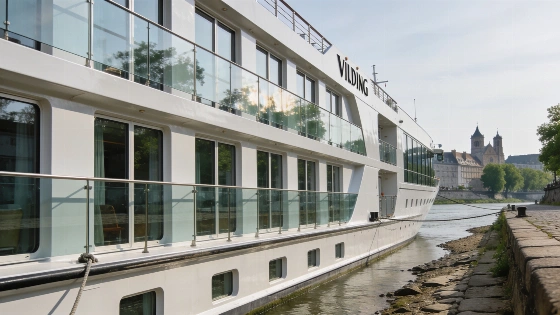
In late August, several Viking river cruise ships were seriously impacted by record-low water levels on the Rhine and Danube, with some vessels running aground or forced to alter itineraries.
These river disruptions struck at the core of Viking's business model, with voucher costs expected to persist as affected travelers redeem them over time. The broader cruise sector also faced pressure as oil prices rose, amplifying the stock's decline. According to TheStreet, the 20% drop from August highs was directly linked to both sector-wide headwinds and Viking's operational challenges.
Premium Price, Premium Risks
The issue of low water levels was not unique to Viking-Travel Weekly reported that Riviera Travel temporarily paused sales of Rhine and Danube river cruises due to the same conditions, highlighting an industry-wide disruption rather than a company-specific problem.
Demand That Defies the Chart
Despite volatility, Viking's forward bookings remain strong. By August 9, the company had sold 96% of its core capacity for 2026 and 53% for 2027, with advance bookings for 2027 totaling $4.71 billion-up 21% year over year. This level of visibility in travel supports the bullish thesis, even as operational risks persist. Yahoo Finance notes that this backlog provides a cushion most competitors lack.
Second-quarter results reinforced the company's momentum: adjusted earnings reached $1.31 per share on $2.19 billion in revenue, up 16.5% from a year earlier and well ahead of Wall Street's $0.95 consensus. Viking's focus on older, affluent, English-speaking travelers-who tend to maintain discretionary spending even during inflationary periods-has insulated it from some of the pressures facing mass-market cruise lines.
Volatility Cuts Both Ways
Viking shares remain up about 19% year to date, outpacing the S&P 500 through early August. However, the recent 7% drop in just five days highlights the risk of momentum-driven stocks: gains can reverse quickly if sentiment shifts. The stock remains above its 200-day moving average of $74, a technical level monitored by long-term holders. For those considering entry, scaling in gradually may help manage the risk of further volatility.
Three Real Risks to Weigh
Investors considering Cramer's call should weigh three realities. First, Viking is a long-term investment, not a short-term trade. Second, river cruise disruptions and resulting voucher costs will pressure margins into 2027 and 2028. Third, the premium valuation offers little cushion if growth slows or operational challenges persist. Analysts tracked by TheStreet rate Viking as a Moderate Buy, but opinions are divided. The company's bookings and customer demographics support the bullish case, yet river conditions and high expectations remain significant risks. As CNBC notes, the cruise sector is highly sensitive to oil prices and travel demand shocks, which can rapidly shift sentiment.
According to the Federal Reserve, the federal funds rate stood at 5.25% to 5.50% as of July 2026, keeping borrowing costs elevated for companies with expansion plans. The S&P 500 closed at a record 7,737 on August 4, while the consumer price index rose 3.2% year over year in July, reflecting persistent inflation that could affect discretionary travel spending.
River cruise operators like Viking face unique operational risks compared to ocean cruise lines. Water levels on major European rivers can fluctuate significantly due to weather, drought, or upstream management. When levels drop too low, ships may be unable to complete itineraries, forcing companies to bus passengers or issue travel vouchers-directly impacting margins and customer satisfaction. While Viking's forward bookings provide revenue visibility, operational flexibility and risk management are equally critical for sustaining long-term growth in this niche travel segment. Ultimately, Viking's fundamentals support optimism for patient investors, but the stock's premium price means any setback will be swiftly reflected in the share price. Those willing to hold through volatility may be rewarded, but conviction-and a strong stomach-are essential.