A 234-year-old British bookseller is shutting down 150 stores after a private equity buyout, highlighting the financial strain on traditional retailers as digital reading habits reshape the industry
One of the United Kingdom's oldest bookstore and newsstand chains is set to close hundreds of locations, underscoring the mounting pressure on traditional retailers as consumers shift from print to digital reading. WH Smith, founded in 1792, narrowly avoided bankruptcy in early 2025 by selling its high street business to Modella Capital, a British private equity firm. The deal, valued at £10 million, left Modella with control of the chain's high street stores, which were rebranded as TG Jones, while WH Smith retained its airport and railway station outlets.
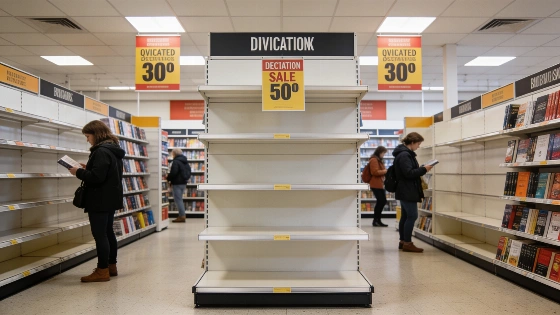
According to reporting by TheStreet, a London court approved a restructuring plan in July 2026 that will shutter 150 of the 480 TG Jones stores across the UK. The closures have already begun in cities such as Bath, Swindon, Uckfield, Redcar, and Market Harborough, with liquidation sales and "everything-must-go" signs appearing in store windows. The company said the decision was difficult but necessary to preserve the core business and protect as many jobs as possible, though at least 5,000 workers are expected to be affected by the shutdowns.
Modella Capital initially pitched the acquisition as a way to revitalize the legacy bookseller and turn it into a central hub for high street commerce. But by 2026, the firm acknowledged that the economics of operating large bookstores in high-rent commercial districts had become "almost completely broken." The company's restructuring plan aims to focus on profitable locations and adapt to changing consumer habits, as more readers turn to digital formats and online retailers for books, magazines, and newspapers.
In Swindon, the clearance sale at the local TG Jones store began with 30% discounts on all merchandise, with further markdowns expected as the final closing date approaches. The Post Office branch inside the Swindon store is also set to close by September, as the property is being sold to a new owner. While the company has not confirmed the full extent of job losses, the impact on local employment and high street foot traffic is likely to be significant.
For U.S. investors and consumers, the TG Jones closures highlight the ongoing challenges facing brick-and-mortar retailers worldwide. The shift to digital reading and e-commerce has forced legacy chains to rethink their business models, cut costs, and focus on locations with steady demand. This trend is not limited to the UK; U.S. bookstore chains have also faced store closures and consolidation in recent years, as digital platforms and online marketplaces capture a growing share of the market. For those interested in how consistent investing strategies can build wealth over time, see this analysis of steady ETF contributions and compounding at how regular ETF investing can add up over the long term.
According to the UK Office for National Statistics, retail sales volumes in the country fell by 2.3% in the first quarter of 2026 compared to the previous year, with non-food stores-including booksellers-seeing some of the steepest declines. The British Retail Consortium has reported that foot traffic on high streets remains well below pre-pandemic levels, and rising commercial rents have squeezed margins for many traditional retailers. These pressures have accelerated the pace of store closures and forced companies to reevaluate their physical presence.
Bookstore economics have changed dramatically over the past two decades. The rise of e-books, online retailers, and digital news platforms has eroded the core revenue streams that once supported large physical stores. For many chains, the cost of maintaining high-rent locations is no longer justified by in-store sales, especially as consumers increasingly expect convenience, lower prices, and instant access to digital content. Retailers that survive this transition are often those that adapt quickly, focus on profitable niches, or leverage their brand in travel and specialty locations where demand remains resilient.