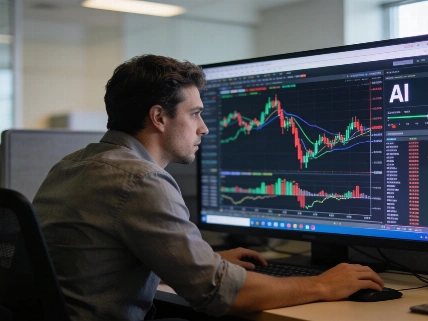
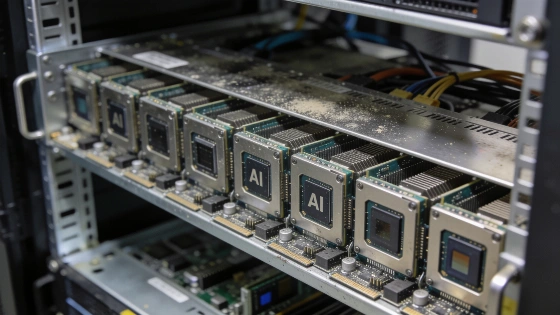
AI stocks are drawing comparisons to the dot-com era as investors chase rapid gains and valuations soar. History shows that emotional buying and unchecked capital can lead to painful corrections and long recovery periods
AI has become the dominant narrative on Wall Street, echoing patterns familiar to those who witnessed the dot-com era. Investors are channeling significant capital into artificial intelligence, often under the belief that current conditions are fundamentally different. However, the warning signs are evident: when market enthusiasm outpaces underlying business fundamentals, the resulting corrections can be severe.
At the start of the 2000s, technology stocks surged as companies adopted ".com" branding and investors rushed to participate early. While the technology ultimately transformed industries, this did not shield shareholders from the consequences when the bubble burst. The S&P 500 declined by more than 45%, and the Nasdaq-100 lost over 80% of its value. Many who invested at the peak faced recovery periods lasting years or even decades.
Goldman Sachs estimated that the top five U.S. hyperscalers are on track for about $800 billion in capital expenditures in 2026, rising to roughly $1.08 trillion in 2027, highlighting the unprecedented scale of the current AI buildout.
Investor Behavior and Emotional Cycles
Financial bubbles are rarely rooted in the technology itself. Instead, they are driven by investor psychology. Early gains attract additional buyers, motivated by fear of missing out, which further inflates prices. As capital pours into the sector, valuations can become disconnected from business realities, often funding ventures with limited prospects for success. When the market recognizes that expectations have exceeded what is achievable, corrections tend to be rapid and pronounced.
Cisco became emblematic of the dot-com crash, requiring nearly 25 years to return to its previous highs. The Nasdaq-100 took approximately 15 years to recover. These extended timelines underscore how emotionally driven investing can result in prolonged underperformance, even as the underlying technology continues to evolve.
AI Spending and Market Risks
Currently, Nvidia is a prominent leader in AI hardware, yet even well-managed companies can be swept up in speculative momentum. Nvidia has supported its customers in ways that stimulate demand for its chips, raising questions about the sustainability of current spending patterns. According to a Reuters financial review, Nvidia reported a $72.9 billion profit last year. Some market commentators argue that this level of profitability distinguishes the current AI cycle from the late-1990s dot-com environment, though the comparison remains debated.
Market observers have noted that similar dynamics are emerging as those seen during the dot-com era. As reported by Reuters, on September 14, 2026, a broad selloff in AI-related stocks followed public calls from leading U.S. AI executives to slow AI development over safety concerns. Nvidia shares declined by 3.4% that day. The Philadelphia chip index fell 5.2%, with AMD down 4.5% and Micron down 5.4%, indicating that the impact extended across the semiconductor sector.
Reuters market coverage has highlighted a renewed AI-bubble debate, with some industry leaders warning about slowing frontier AI, even as chip demand and capital spending remain extremely elevated.
Data from S&P Dow Jones Indices shows that the S&P 500 Information Technology sector returned 43.9% in 2023, partly fueled by optimism around AI. Historically, such sharp rallies have often been followed by periods of volatility, particularly when valuations become stretched relative to earnings and cash flow.
Long-Term Impact and Broader Consequences
Although bubbles can be damaging for investors, they often accelerate the adoption of new technologies by making them more affordable and accessible. Overinvestment typically leads to excess supply, which reduces costs and enables broader industry adoption. This pattern was evident after the dot-com crash, as internet infrastructure became less expensive and more widely available.
For individual investors, it is essential to differentiate between the potential of a technology and the price paid to gain exposure. Pursuing momentum can result in significant losses if market sentiment shifts, while a disciplined focus on fundamentals and long-term value may provide greater resilience against speculative risks.
Financial bubbles are fueled by a combination of innovation, optimism, and fear of missing out. While AI holds the potential to transform industries, the history of technology investing demonstrates that emotional cycles can drive valuations far beyond what fundamentals support. Investors who recognize the distinction between technological progress and market speculation are better equipped to navigate the inevitable fluctuations.