

Walter Updegrave
Walter Updegrave
30 articlesEditor
Personal Finance Columnist
Writes about retirement, investing, savings, credit, insurance, and consumer protection with a practical, skeptical voice focused on ordinary households.
30 latest articles by Walter Updegrave

Buffett's S&P 500 Advice: What 107 Positive 20-Year Periods Do and Don't Show
Every rolling 20-year period in Crestmont Research's data ended with a positive annualized total return. That record has limits, and fund fees differ.

Could a Small-Cap Turnaround Help This Growth ETF?
Vanguard's long-range model projects a possible return edge for U.S. small-caps over large-caps. IWO holds 1,127 growth stocks, but the forecast is no promise and recent gains say little about its next decade.
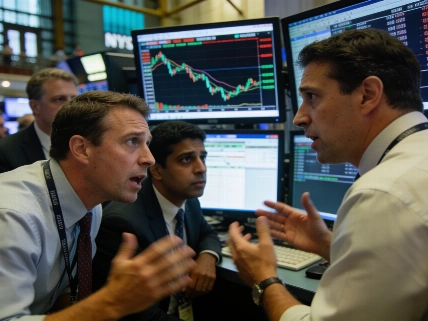
The Midterm Rally Faces a Tough Test in 2026
The S&P 500 has risen in every 12-month period after a midterm election since 1950. But high valuations leave less room for error, even if earnings growth and divided government support another gain.

Three ETFs That Can Cushion a Portfolio Without Market Timing
These three ETFs take different approaches to portfolio risk without requiring investors to move everything to cash. None can prevent losses or predict when a market downturn will come.
September's Market Split Left Few Places to Hide
Broad stocks, bonds and real estate weakened in September, while energy-heavy commodities and the Nasdaq-100 gained. Higher yields help explain the divide, but October's returns remain uncertain.

Why Dividend Income Could Shape Retirement Portfolios Through 2030
Dividend-paying stocks can provide cash during market declines, but a high yield alone can mislead. For retirees, the balance between income now and dividend growth over time may matter through 2030.

Jim Cramer's Three Rules for Avoiding Costly Stock Mistakes
Jim Cramer's rules focus on risks investors can manage: buying too much too soon, mistaking a troubled company for a bargain and holding on too long after a sharp gain.

Why VOO Could Help Investors Stay Put in a Recession
VOO spreads exposure across nearly 500 companies, which may help investors resist panic-selling during a downturn. But diversification cannot prevent market losses or replace cash needed soon.
What 98 Years of Market History Say About the 2026 Midterms
Prediction markets favor a Democratic takeover of Congress, while past S&P 500 returns have varied sharply with the party mix in Washington. The history points to risk, not a dependable forecast for investors.

Why Investors Look to Smaller, Fast-Growing Tech Stocks
The investor looks for tech companies with fast revenue growth, rising margins and room to scale. Silicon Motion's recent results show the kind of growth that draws attention, but the approach still carries company-specific and market risks.
Three ETFs to Consider Before a Downturn
Healthcare stocks and bonds may cushion some recession pressure, while broad-market funds keep stock exposure in the mix. The trade-offs include company concentration and the risk that bonds lose value when rates rise.

Weak September Jobs Report Gives Stocks a Lift as Treasury Yields Fall
Employers added 29,000 jobs in September, well below forecasts, while unemployment held at 4.2%. Treasury yields fell and stocks rose as investors weighed what the report could mean for the Fed's October decision.

Fed Rate Hike Odds Reach 96% for January 2027
The reported odds of at least one Fed rate increase by Jan. 27, 2027, have reached 96%. The report does not explain what is driving the forecast.

AI Leaders' Valuations Fall as Earnings Growth Outpaces Shares
Nvidia, Amazon and Alphabet trade at lower forward earnings multiples despite a powerful market rally. Strong growth forecasts support the case for Nvidia, but heavy AI spending and high expectations leave investors watching for results.

How Long Does It Take the S&P 500 to Recover From a Bear Market?
Yardeni Research counts 11 S&P 500 bear markets since 1957. Recoveries to a new high took a little over three years on average, but that figure cannot tell investors when the next loss will end.

Market Cap Sets the Scale for a Stock's Upside
A tenfold gain would take a $2 billion company to $20 billion, but a $1.2 trillion company would need to reach $12 trillion. Market cap helps frame the math, not predict the outcome.

Weak-Conviction Stocks Deserve a Closer Look as Bear-Market Risks Rise
Hartford's historical figures put the typical S&P 500 bear-market decline at 35%. Investors can review which holdings still fit their long-term plans without assuming a downturn is near.

Dividend Stocks Can Give Beginners a Steadier Starting Point
Dividend growers have historically delivered stronger returns with lower measured volatility than dividend cutters. But payouts are never guaranteed, and the long-term record cannot predict what new investors will earn.

XLP Has Lower Fees; IYK Has Higher 10-Year Returns
XLP charges 0.08% and yields 2.73%. IYK's reported 10-year return is higher, at 134%. The choice comes down to whether lower costs and income matter more than historical growth.

Netflix's Ad Ambitions Face a Viewing-Time Test
Netflix viewing time rose just 2% in the first half of 2026. Live programming helped drive sign-ups as the company prepared to expand its advertising business.

October's Crash History Is No Reason to Panic
Five of the S&P 500's 10 biggest one-day declines since 1981 came in October. Yet the index has averaged a gain for the month since 1928. Investors can weigh that history against current risks without trying to time a crash.

ARKX vs. XAR: Which Aerospace and Defense ETF Fits Your Portfolio?
ARKX returned more than XAR over the trailing year in the reported snapshot, but it charges more and showed greater volatility. Over four years, the funds finished almost even.

Cooler PCE Data Cut October Fed Hike Odds
August PCE inflation held at 3.4% year over year, while core PCE came in below forecasts. Futures-implied odds of an October Fed hike fell to 37%, and stocks rose modestly.

Ten Market Predictions That Put AI at the Center of 2036
Brian Richards imagines a 2026 to 2036 decade shaped by AI-driven productivity, round-the-clock stock trading and automated financial decisions. His 10% annual market-return assumption is a scenario, not a promise.
Prepare Your Portfolio Before a Bear Market Tests Your Nerve
Inflation and higher interest rates could pressure an already-high stock market. Investors can prepare by checking their risk tolerance and deciding how much cash and defensive exposure fit their plans.

Build a Recession Buffer Without Abandoning Your Long-Term Plan
Current indicators do not point to an imminent recession, but high valuations and household affordability pressures make preparation worthwhile. Cash reserves and a careful review of investments can protect flexibility without forcing investors to abandon long-term holdings.

VOO's lower fees challenge QQQ's growth edge
Over five years, $1,000 grew to $2,108 in QQQ and $1,892 in VOO. QQQ's higher fee and heavier technology concentration add risk for investors weighing growth against diversification.

Shiller CAPE Above 40 Puts S&P 500 Valuations in Focus
The S&P 500's Shiller CAPE has climbed above 40, a level last reached before the dot-com crash. The measure cannot time a downturn, but it can prompt investors to check their exposure before markets turn.

Oracle Shares Rebound 3.91% as Fusion Claw Draws Focus
Oracle shares rose 3.91% after the company introduced Fusion Claw and reports pointed to rising OpenAI revenue. The gains do not resolve questions about data center delays or execution.

Inflation Hedges Need More Than Scarcity
Gold and silver have posted sizable long-term gains, and Bitcoin's fixed supply draws investors seeking inflation protection. But fees, volatility and timing all matter before changing a portfolio.
