
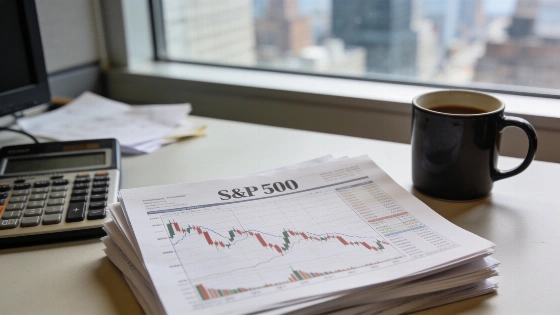
September has a reputation for stock market losses but investors who keep buying through downturns have historically outperformed those who try to time the market or sit on the sidelines
Each September, stock investors are reminded to prepare for volatility. Historically, the S&P 500's performance in this month is the weakest of the year, with recent periods marked by notable declines. However, investors who consistently add to their portfolios during these downturns-not only when markets are rising-have generally achieved stronger long-term results.
In September 2026, the S&P 500 ended the week of September 5 with a slight gain but remained about 1% below its mid-August record, having risen nearly 13% since the start of the year on the back of strong corporate earnings.
Why September Stands Out
September's market weakness is not linked to a single event or economic factor. Some analysts attribute it to institutional investors rebalancing portfolios or realizing profits before the fourth quarter. Others suggest that the month's reputation itself leads to preemptive selling. Regardless of the explanation, data shows that September has produced significant losses in several recent years: the S&P 500 declined 9.3% in September 2022, 4.9% in 2023, and nearly 4% in 2020.
Context is important. In most years, September's losses are modest or absent, and subsequent months have often brought strong recoveries. For long-term investors, missing these rebounds by staying out of the market can be more costly than enduring short-term declines.
The Cost of Market Timing
On September 4, 2026, the S&P 500 declined by 0.38% to 7,718.60 points after stronger-than-expected U.S. employment data increased expectations for a more hawkish Federal Reserve stance on interest rates.
FactSet reports that 87% of S&P 500 companies posted positive earnings surprises in the most recent second quarter, with 77% exceeding revenue expectations. These results supported the index's recovery from earlier declines, benefiting investors who remained invested rather than attempting to move in and out of the market. The risk of missing a rebound is heightened when stocks are temporarily discounted due to seasonal pessimism.
Building Wealth Through Consistency
Investors who continue to purchase quality stocks during downturns gain from lower entry prices and the compounding effect of long-term growth. This strategy, known as dollar-cost averaging, helps reduce the emotional impulse to chase rallies or sell during declines. Over the past decade, even the steepest September losses were offset by gains in the following months and years.
For instance, after the S&P 500's 9.3% drop in September 2022, the index rebounded in subsequent quarters as inflation pressures eased and earnings remained strong. Investors who bought during the downturn saw their positions recover and grow, while those who waited for clearer signals often missed the most favorable opportunities.
Understanding the Long Game
Short-term market movements are unpredictable, but evidence supports the value of maintaining discipline and investing consistently through both favorable and challenging periods. While September's reputation for losses is statistically supported, it does not warrant abandoning a long-term investment plan. Instead, it underscores the importance of focusing on fundamentals, diversification, and regular contributions rather than reacting to seasonal trends.
As outlined in a Reuters financial review, the S&P 500's average annual return since 1928 is approximately 10%, despite frequent corrections and bear markets. Investors who disregard short-term fluctuations and adhere to a consistent strategy have historically accumulated more wealth than those who attempt to anticipate market cycles. The key lesson is not to fear September, but to recognize that volatility is inherent to investing-and that patience, rather than perfect timing, is what drives long-term success.
Dollar-cost averaging involves committing a fixed dollar amount to an investment at regular intervals, regardless of price. This approach can help smooth the effects of volatility, as more shares are acquired when prices are low and fewer when prices are high. While it does not guarantee profits or prevent losses, it encourages steady market participation and reduces the likelihood of making emotional decisions in response to short-term swings. For many investors, particularly those saving for retirement or long-term goals, this method offers a practical way to navigate unpredictable markets without relying on forecasts or intuition.