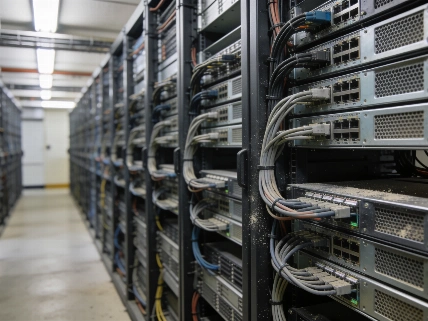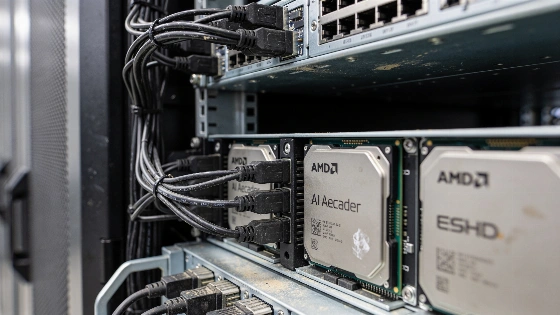
JPMorgan's Harlan Sur lifts AMD's price target to $550, citing strong data center momentum and AI chip demand, even as shares slide after earnings. Other analysts also boost targets, betting on AMD's expanding AI footprint
Advanced Micro Devices is drawing renewed optimism from Wall Street, even as its stock faces pressure following its latest earnings report. JPMorgan analyst Harlan Sur, ranked among the top 20 analysts tracked by TipRanks, recently raised his price target for AMD shares to $550 from $385, according to a research note reviewed by TradingView. Sur maintained a Neutral rating, but his higher target reflects growing confidence in AMD's long-term prospects, especially in artificial intelligence and data center markets.
AMD's second quarter results, released in early August, beat consensus expectations on both earnings and revenue. The company reported adjusted earnings of $1.66 per share, above the $1.62 forecast, and revenue of $11.54 billion, topping estimates of $11.28 billion. Data center sales surged 107% year over year to $6.7 billion, driven by demand for both CPUs and AI accelerators. Despite these strong numbers, AMD shares fell more than 7% after the report, as investors reacted to guidance for the September quarter that was slightly below the most bullish expectations and concerns about valuation. The stock now trades at 44.5 times forward earnings, above its five-year average of 34.5 times, according to reporting by TheStreet.
Sur's bullishness is rooted in AMD's positioning within the global AI boom. The company has steadily gained market share in AI chips, with its Instinct line of accelerators competing directly with Nvidia's GPUs. AMD's Epyc server processors are also powering a growing share of cloud and enterprise computing. Over the past three years, AMD stock has returned more than 300%, even after a recent pullback of nearly 20% from all-time highs. Sur expects data center growth to outpace overall AI infrastructure spending by 2027, a view echoed by AMD CEO Lisa Su, who told investors the company expects its data center segment revenue to more than double year over year in 2027.
Other major banks have also raised their price targets for AMD following the earnings release. Jefferies increased its target to $650, citing anticipated acceleration in AI GPU growth later this year. Wells Fargo lifted its target to $700, pointing to AMD's forecast for compound annual revenue growth above 35% between 2025 and 2030. Truist moved its target to $594, highlighting improved product performance and execution. Morgan Stanley, while more cautious, raised its target to $465 and noted management's positive outlook for data center revenue growth.
AI and Data Center Momentum
Much of the optimism around AMD centers on its Helios rack-scale AI system, which began shipping this quarter to major customers such as Meta, OpenAI, and Oracle. The company has also raised its long-term market forecasts, now projecting the AI accelerator market could reach $1.4 trillion by 2030, with the server CPU market approaching $220 billion. AMD CFO Jean Hu told CNBC that data center sales are expected to accelerate in the second half of 2026, supporting stronger revenue and earnings growth.
Wall Street's bullishness comes despite some near-term turbulence. While AMD's third quarter revenue guidance of around $13 billion was ahead of consensus, it fell short of the most optimistic projections. Investors remain focused on the company's ability to execute in a highly competitive AI chip market, where Nvidia remains the dominant player. Still, analysts see AMD's expanding product lineup and deepening relationships with major cloud and AI customers as key drivers for future growth.
For context, the broader AI stock landscape has seen dramatic shifts in recent years, with investors rewarding companies that can demonstrate real revenue from AI initiatives. As recent analysis of the AI sector's $2 trillion market value shift shows, Wall Street is increasingly demanding clear financial results, not just ambitious spending, from tech giants and chipmakers alike.
Key Numbers and Market Context
AMD's data center business has become its largest growth engine, accounting for more than half of total revenue in the latest quarter. The company forecasts that both its server CPU and AI accelerator businesses will be significant contributors to growth through 2027 and beyond. While the stock's valuation remains elevated compared to historical averages, analysts argue that AMD's exposure to secular AI trends and its ability to win business from major cloud providers could justify a premium multiple-if execution remains strong.
For investors, the main risks include intensifying competition from Nvidia and other chipmakers, potential delays in customer adoption of new AI systems, and the possibility that overall AI infrastructure spending could slow if economic conditions deteriorate. AMD's ability to deliver on its ambitious growth targets will be closely watched in the coming quarters, especially as the company ramps up shipments of its latest AI hardware to high-profile customers.
AMD's recent earnings report highlights the company's growing importance in the AI and data center markets. As the demand for advanced computing power accelerates, chipmakers like AMD are racing to capture a larger share of the expanding AI ecosystem. For investors, understanding the interplay between product innovation, customer adoption, and market expectations is critical when evaluating opportunities in this fast-evolving sector.