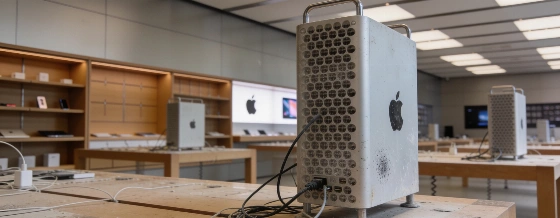
Apple is overhauling its retail stores to support the introduction of new smart home devices, marking a strategic move beyond the iPhone and presenting important considerations for investors and consumers.
Apple is implementing a comprehensive redesign of its retail stores to accommodate forthcoming smart home devices, according to Bloomberg and other industry sources. This initiative reflects Apple's strategy to broaden its hardware portfolio beyond the iPhone, with preparations underway for a dedicated smart home hub featuring an integrated display. The planned device is expected to function as a central control point for connected home products, enable FaceTime calls, display widgets, and operate an enhanced version of Siri powered by an A18-class processor.
Recent code discoveries reported by MacRumors and 9to5Mac indicate that Apple is developing a new home operating system, separate from iOS and tvOS, to power this device. The system is designed to integrate with smart lights, locks, cameras, and other accessories, providing users with a unified interface for managing their home environment. The device is rumored to include a 7-inch display and support both tabletop and wall-mounted configurations, positioning it as a direct competitor to Amazon's Echo Show and Google's Nest Hub.
Currently, Apple's smart home lineup includes the HomePod mini ($129) and Apple TV 4K ($199), which serve as hubs but do not feature a dedicated display. The anticipated smart home hub would address this gap, potentially increasing the appeal of Apple's ecosystem for households already invested in its products. Industry reports also indicate that updated versions of the HomePod mini and Apple TV 4K are in development, with processor enhancements to support advanced Siri and Apple Intelligence features. However, Apple has not officially announced launch dates for these products.
According to Statista, Amazon led the U.S. smart speaker market in 2023 with a 65% share, followed by Google at 19% and Apple at 10%. Apple's share of the broader smart home device market remains comparatively small, highlighting the significance of this hardware initiative. The company's most recent quarterly report showed $90.8 billion in revenue, with iPhone sales accounting for more than half. Expanding into smart home hardware could help Apple diversify its revenue streams and reduce dependence on smartphone sales.
For consumers, a central question is whether Apple can deliver a more seamless and reliable smart home experience than existing platforms. Key factors include integration, privacy, and ongoing software support. A unified Apple home hub could simplify device management for users already within the Apple ecosystem and may also encourage adoption of Apple's subscription services and accessories.
Pricing will play a critical role in consumer adoption. With the HomePod mini and Apple TV 4K priced at $129 and $199 respectively, the new smart home hub is expected to be priced within or slightly above this range. A competitive price could attract new customers, while a higher price point may limit adoption given the availability of lower-cost alternatives from Amazon and Google. Apple has not confirmed a release date, but industry reports suggest a possible launch between September and the end of 2026, subject to development and supply chain factors.
Apple's expansion into the smart home sector occurs amid heightened competition and the need to demonstrate innovation beyond the iPhone. The company's ability to deliver a compelling, integrated home experience will be closely monitored by investors and analysts, as success in this category could affect both market share and long-term financial stability. Consumers should consider the benefits of integration and convenience alongside potential risks such as ecosystem lock-in and ongoing costs.
Smart home hubs centralize control of connected devices, but their effectiveness depends on seamless integration, strong privacy protections, and consistent software updates. As more household devices become internet-enabled, secure and efficient management will be a key factor in technology adoption. Apple's forthcoming hardware and retail changes represent a strategic effort to capture a larger share of this evolving market.