A quiet federal review of Chinese-made lidar sensors could reshape which suppliers U.S. automakers trust, raising new questions about data security, supply chain risk, and the future cost of advanced vehicle technology
In early 2025, U.S. regulators finalized new rules to limit Chinese technology in American vehicles, but notably left lidar sensors off the restricted list. While the Bureau of Industry and Security acknowledged potential national security risks, it prioritized wireless hardware and signaled that lidar could be revisited in the future.
That moment appears to have arrived. According to TechCrunch, Idaho National Laboratory-a Department of Energy facility-is now quietly testing Chinese-made lidar sensors for vulnerabilities that could allow mass disabling or unauthorized data transmission. The review, funded by unnamed companies in the electric and autonomous vehicle sector, comes as lawmakers draft bills to further restrict Chinese lidar in U.S. infrastructure.
Security Risks and Industry Blind Spots
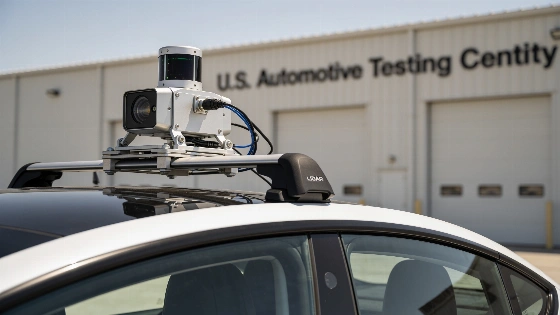
Lidar, which uses lasers to map surroundings for autonomous driving and advanced safety features, is a critical component in many new vehicles. Two main risks are under scrutiny: the possibility that sensors could be remotely disabled at scale, and the threat that compressed sensor data could be covertly sent to servers in China via cellular chips. Both scenarios could have major implications for road safety and data privacy if Chinese lidar becomes widespread in U.S. vehicles.
Despite the stakes, major automakers and technology firms-including Rivian, General Motors, Ford, Kodiak, Lucid, Nuro, and Uber-told TechCrunch they were unaware of the Idaho review. Others, such as Nvidia, Zoox, and Aurora, did not respond to inquiries. This silence may reflect a deliberate strategy, as public acknowledgment of reliance on Chinese technology could expose companies to regulatory or reputational risk.
Policy Gaps and Market Impact
Recent legislative efforts have focused on federal agencies. The fiscal 2025 National Defense Authorization Act bars the Pentagon from using Chinese-made lidar, specifically naming Hesai, a major supplier. A separate bill would extend similar restrictions to Department of Transportation contracts. However, neither law currently affects consumer vehicles sold at dealerships, leaving a significant gap in oversight.
Rivian's recent public statements illustrate the shifting ground. In May, its CEO discussed the possibility of building lidar domestically, potentially with Chinese partners, citing cost pressures and limited alternatives. Weeks later, the company reversed course, denying plans to bring lidar development in-house. Such reversals highlight the uncertainty automakers face as regulatory and market pressures evolve.
Hesai, which remains on the Pentagon's list of alleged Chinese military-linked suppliers, is contesting that designation in court. Its shares, listed on Nasdaq, have traded well below their 52-week high, reflecting investor concerns about regulatory risk. As of the most recent week, Hesai closed at $19.10, down from a high of $30.85 earlier in the year.
Financial Stakes and Supply Chain Decisions
The outcome of the Idaho National Laboratory review could influence which lidar suppliers automakers are willing to use, potentially affecting costs, supply chain stability, and the pace of innovation in advanced driver-assistance systems. If vulnerabilities are found, automakers may face pressure to shift away from Chinese suppliers, which could raise costs or slow deployment of new features.
For now, the lack of clear federal rules for consumer vehicles means that most U.S. drivers remain unaffected by these developments. But as lawmakers and regulators revisit the issue, the landscape could change quickly-especially if new evidence emerges about security risks or if additional restrictions are enacted.
According to the U.S. Department of Commerce, the U.S. imported over $1.2 billion in automotive sensors and related components from China in 2024, a figure that has grown steadily over the past five years. Lidar represents a small but rapidly expanding share of this market, driven by rising adoption in electric and autonomous vehicles.
Lidar technology is central to the development of self-driving and advanced safety systems, but its integration into U.S. vehicles raises complex questions about supply chain security, data privacy, and regulatory oversight. Unlike cameras or radar, lidar provides high-resolution, three-dimensional mapping, making it attractive for automakers seeking to improve vehicle automation. Yet the global supply chain for lidar is heavily concentrated in China, creating both cost advantages and potential vulnerabilities. As policymakers weigh new restrictions, automakers must balance innovation, affordability, and security in their sourcing decisions.