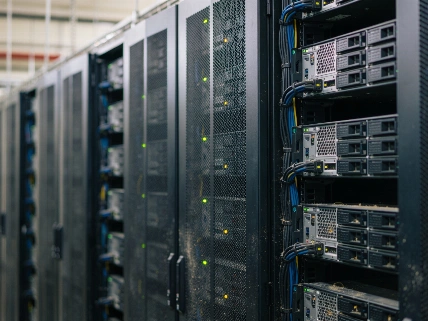
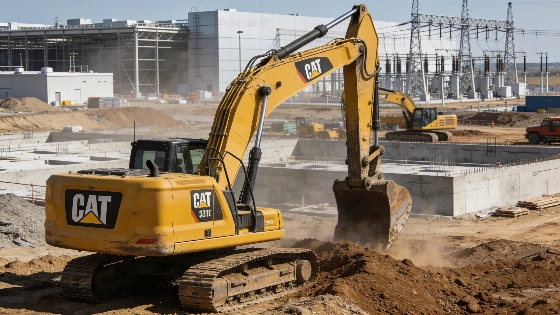
Caterpillar's latest results show that the AI investment wave is fueling demand far beyond chipmakers, as data center construction drives record equipment sales and reshapes which companies benefit from artificial intelligence spending
For much of the past two years, investors seeking exposure to artificial intelligence have focused on technology giants like Nvidia, Microsoft, and AMD-companies that design the chips and software powering the AI revolution. But Caterpillar's latest quarterly results suggest the financial impact of AI is spreading well beyond Silicon Valley and into the industrial economy.
The construction equipment manufacturer reported record revenue of $20.54 billion for the second quarter of 2026, with adjusted earnings of $8.17 per share. Both figures far exceeded Wall Street's expectations, sending Caterpillar shares up roughly 10% and adding significant gains to the Dow Jones Industrial Average. According to the company's management, strong order rates and a growing backlog are being driven in part by a surge in data center construction-a trend closely tied to the rapid expansion of AI infrastructure.
Building the physical backbone for artificial intelligence requires more than just advanced processors. Before a single server is installed, companies must clear land, pour foundations, install generators, and construct power systems-tasks that depend on heavy machinery and industrial equipment. As tech giants like Microsoft, Amazon, Alphabet, and Meta invest tens of billions of dollars to expand their AI capacity, demand for Caterpillar's excavators, loaders, engines, and power generation equipment has accelerated.
Infrastructure's New Role
While investors have traditionally associated AI with semiconductor stocks, the reality is that the AI economy is rewarding a much broader set of companies. Hyperscale data centers-massive facilities designed to handle AI workloads-require extensive earthmoving, backup power systems, and specialized cooling infrastructure. These projects can take months or years to complete, and the capital spending involved is substantial.
Caterpillar's 24% year-over-year revenue growth and earnings beat were not driven solely by AI-related demand. Mining, energy, and general infrastructure spending continue to support the company's business. But the growing importance of data center construction as a revenue driver marks a shift in how investors may think about AI exposure. Instead of focusing only on who makes the fastest chip, the question is increasingly who profits every time a new AI campus breaks ground.
This shift is not unique to Caterpillar. Other industrial suppliers, power companies, electrical equipment makers, cooling-system providers, and engineering firms are also seeing increased demand as the AI boom ripples through the broader economy. As Amazon's recent post-earnings rally demonstrated, capital spending on AI infrastructure is becoming a central theme for both tech and industrial investors.
Beyond Silicon Valley
The latest earnings season suggests that the AI investment story is broadening. While Nvidia's meteoric rise has captured headlines, the companies building the physical infrastructure for AI are now seeing tangible financial rewards. For Caterpillar, this means participating in one of Wall Street's largest investment cycles without manufacturing chips or developing AI software.
Analysts had expected Caterpillar to report about $18.95 billion in revenue and earnings closer to $6.10 per share for the quarter. The company's outperformance highlights how capital spending on AI infrastructure is driving growth in sectors that were previously considered peripheral to the technology story. Investors are now paying closer attention to which companies benefit from the construction and operation of data centers, not just those that supply the computing power inside them.
According to Caterpillar's filings, the company's stock has gained nearly 60% year-to-date, reflecting rising optimism that AI-driven infrastructure spending could remain a powerful growth engine for years. While the company is not suddenly a technology firm, its results underscore how the AI economy is creating new winners outside the traditional tech sector.
Key Figures and Market Context
Caterpillar's $20.54 billion in quarterly revenue and $8.17 per share in adjusted earnings set new company records for the period ending June 30, 2026. The company's stock price surge added hundreds of points to the Dow Jones Industrial Average on the day of the announcement. These results come as global capital expenditures on data centers are projected to exceed $400 billion in 2026, according to industry research, with a significant portion allocated to AI-related infrastructure.
For investors, the message is clear: the AI boom is no longer confined to chipmakers and software developers. Companies that supply the physical tools and systems needed to build and operate data centers are increasingly central to the story. As the list of beneficiaries grows, so does the complexity of investing in the AI economy.
Understanding the mechanics of data center construction is essential for investors evaluating the broader impact of AI. Building a hyperscale facility involves not only advanced computing hardware but also extensive site preparation, electrical and cooling systems, and ongoing maintenance. These projects require coordination among multiple industries, from heavy equipment manufacturers to utility providers. As AI workloads grow more demanding, the need for robust, reliable infrastructure will likely remain a key driver of capital spending-and a source of opportunity for companies positioned to meet that demand.