
Amazon's post-earnings rally added $388 billion in market value after AWS and AI investments fueled record cloud sales, but surging capital spending and cash flow pressures raise new questions for investors
Amazon's latest earnings report delivered a jolt to Wall Street, sending shares up more than 15% in a single day as investors responded to evidence that the company's massive artificial intelligence (AI) and cloud infrastructure spending is starting to pay off. The surge followed a quarter in which many market watchers had braced for more skepticism about Amazon's capital expenditures and the pace of growth at Amazon Web Services (AWS), its cloud division.
Instead, Amazon posted its fastest overall sales growth in five years, with revenue up 20% year-over-year for the second quarter. AWS, which accounts for about a fifth of Amazon's revenue, grew 37%-its strongest performance in 18 quarters. The division's backlog, a measure of future contracted sales, hit a record $496 billion, up 36% from the previous quarter and nearly two and a half times higher than a year ago. AWS's AI and custom-chip businesses, including its Graviton CPU line, reached a $25 billion annual sales run rate, growing at a triple-digit pace.
JPMorgan's New Outlook
JPMorgan responded to the results by raising its price target for Amazon stock to $365 from $330, maintaining an Overweight rating and keeping the company on its Best Idea list. That new target implies a potential 34% upside from recent prices. The bank's analysts argue that Amazon's results show not just a one-off earnings beat, but a structural inflection in AWS demand driven by AI adoption. They now assign a 32-times multiple to projected 2027 earnings, requiring at least a 10% increase in their previous earnings-per-share estimate to $11.41 to justify the new target.
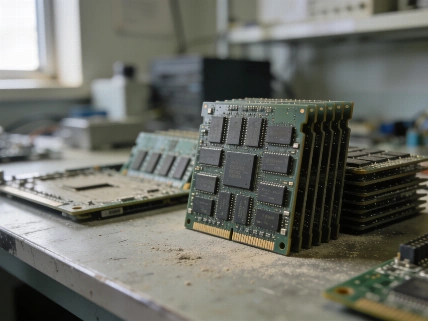
Despite the strong top-line and cloud growth, Amazon's free cash flow turned negative, with a $7.6 billion outflow over the trailing 12 months compared to an $18.2 billion inflow a year earlier. The company's capital expenditures for 2026 are now expected to reach $220 billion, up from a prior estimate of $200 billion, largely due to higher memory costs and ongoing data center buildouts. CEO Andy Jassy said even at that spending level, Amazon will face capacity constraints as demand for AI and cloud services continues to outpace supply.
Stock Performance and Market Impact
Following the July 30 earnings release, Amazon shares jumped 15.3% on July 31, closing at $271.58-their largest single-day gain since 2012. The rally added approximately $388 billion in shareholder value, pushing Amazon's market capitalization to $2.95 trillion. Over the past week, the stock gained 17%, and it is up 18% year-to-date, outperforming the S&P 500's 9.4% rise for the same period, according to Seeking Alpha data.
Other major Wall Street firms also raised their price targets after the report. Goldman Sachs now sees Amazon at $375, Truist Securities at $350, Morgan Stanley at $335, RBC Capital at $330, and Bank of America at $320. The consensus target stands at $320.18, representing a 17.9% upside from current levels. While most analysts remain bullish, some, including Bank of America, are cautious about whether Amazon's heavy AI investments will translate into sustainable long-term cash flow.
Guidance and Cash Flow Risks
Amazon's forward guidance for the third quarter projects sales between $197 billion and $202 billion, or 9% to 12% growth, and operating income of $22.5 billion to $26.5 billion. The company noted that the timing of Prime Day, which moved into the second quarter, will make year-over-year comparisons more challenging. Excluding that effect, Amazon estimates Q3 growth would be nearly four percentage points higher.
Despite robust operating cash flow, which rose 33% to $161.4 billion over the past year, Amazon's infrastructure spending is consuming more cash than the business generates after capital investments. Management attributes the cash flow deficit to the timing of data center construction, which typically takes two years before generating revenue, while AI servers can recoup their costs in less than three years. For the bullish case to hold, AWS must convert its record backlog into sales and profits quickly enough to offset rising depreciation and capital costs.
Investor Perspective
For investors, the central question is whether Amazon's aggressive AI and cloud investments will deliver enough long-term profit to outweigh near-term cash flow pressures. While the company is investing to meet demand that already exceeds its current capacity, the risk remains that capital spending could continue to outpace revenue growth if demand slows or costs rise further. Analysts and shareholders will be watching AWS growth, operating margins, backlog conversion, and the trajectory of free cash flow closely in the coming quarters.
As investors weigh Amazon's prospects, it's worth noting that other high-profile bets on transformative technology can also face periods of volatility and skepticism. For example, ARK Invest recently doubled down on SpaceX even as its shares fell below their IPO price, a move that highlights the risks and potential rewards of backing companies in the midst of major capital cycles. For more on how institutional investors navigate these inflection points, see this analysis of ARK's SpaceX strategy: how ARK Invest is handling SpaceX's recent stock slide.
Amazon's post-earnings rally underscores the market's willingness to reward companies that can show tangible progress from large-scale technology investments. But with capital spending at record levels and cash flow under pressure, the company's ability to convert demand into durable profit remains the key test for shareholders.
Amazon's Q2 2026 earnings report showed overall sales up 20% year-over-year, AWS revenue up 37%, and a record $496 billion AWS backlog. The company's market cap reached $2.95 trillion after a 15.3% one-day stock gain on July 31, 2026. Capital expenditures for 2026 are projected at $220 billion, and free cash flow turned negative by $7.6 billion over the trailing 12 months, according to company filings and Seeking Alpha data.
Understanding the dynamics of free cash flow is critical when evaluating companies with heavy capital investment cycles. Free cash flow measures the cash a business generates after accounting for capital expenditures, and it can swing sharply when companies ramp up spending on infrastructure or technology. While negative free cash flow can signal risk, especially if it persists, it may also reflect investments that could drive future growth. For investors, the challenge is to distinguish between temporary cash flow deficits tied to expansion and structural issues that could erode long-term profitability.