
A tenfold gain would take a $2 billion company to $20 billion, but a $1.2 trillion company would need to reach $12 trillion. Market cap helps frame the math, not predict the outcome.
At a $1.2 trillion valuation, a tenfold gain would put a company at $12 trillion. A $2 billion company would need to reach $20 billion for the same return. The math sets very different hurdles, but it cannot tell investors whether either company will get there.
Market capitalization is the value investors assign to a company's outstanding shares at current share prices. It gives a quick sense of scale and a place to start research. Not a forecast.
Micron reported record fiscal 2026 results: revenue of $133.2 billion, up 256% year over year, and diluted EPS of $75.52, up 811%.
Size changes the growth hurdle
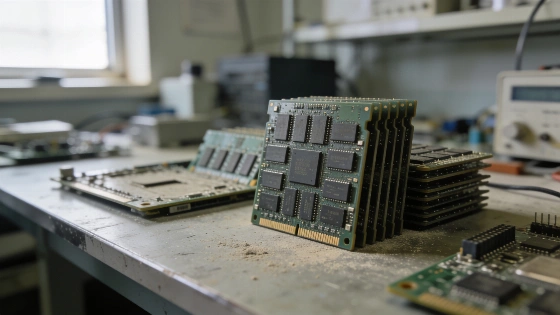
Consider the challenge of finding the next Nvidia. Micron has become a major participant in the AI trade as demand for its memory chips has grown. Its latest reported market capitalization is about $1.19 trillion to $1.20 trillion. A tenfold return from that starting point would require a valuation of roughly $12 trillion, more than twice Nvidia's valuation at the time described in the original comparison.
Penguin Solutions and Netlist, two smaller memory companies, each had a valuation below $5 billion in the source material. Their memory revenue more than doubled year over year. That growth does not guarantee further expansion or a higher share price. Independent market coverage put Micron's forward P/E at around 14.55, a figure that shows how earnings momentum can shape the way investors view a large market value.
The arithmetic helps explain why some investors look beyond established giants. It does not prove that smaller companies are better investments. Revenue growth, profitability, financing needs, competition and execution all matter. The source material does not provide enough information to settle those questions. Not a verdict.
Reuters reported that Micron's quarterly revenue forecast more than quadrupled to $54.23 billion, above estimates of $51.07 billion, and its shares jumped. The forecast illustrates how sharply changing expectations can affect the market value investors assign to a company.
Market-cap categories
Investors use broad labels to compare company size. Here, micro-cap stocks are below $300 million; small-cap stocks range from $300 million to $2 billion; mid-cap stocks from $2 billion to $10 billion; large-cap stocks from $10 billion to $200 billion; and mega-cap stocks above $200 billion. These labels describe market value, not sales, profits or financial strength. As of September 30, 2026, Nvidia's market capitalization was about $5.51 trillion, according to CNN market data. That put it far above the commonly used mega-cap threshold.
Smaller companies may have more room to expand, but their shares also tend to be more volatile. Losses can be substantial. Mature large and mega-cap companies may have less room for multiple-fold growth, yet their size does not stop them from outperforming smaller stocks. The source material reported Nvidia, a mega-cap, up more than 20% year to date, ahead of the S&P 500 and most small companies in the same comparison. No reporting date was supplied, so that figure should not be read as a current market update.
Separately, Reuters-linked coverage reported that Nvidia authorized an additional $150 billion share buyback. The remaining repurchase capacity was $235 billion through fiscal 2028, according to coverage of the buyback authorization.
A broad small-company index is not the same as a focused portfolio. In the cited five-year comparison, the Russell 2000 gained less than 30%, while the S&P 500 gained more than 70%. The Russell 2000's largest holding represented less than 0.5% of the fund. Even a standout stock can have little effect on the index's overall return. Investors who choose concentrated small-cap positions take on a different risk profile. The discussion of overlapping exposure in this portfolio analysis also shows why the number of holdings alone does not determine diversification.
Research before the bet
A low market cap can be a reason to investigate a company, not a reason to buy it. The approach described in the source material uses a market value below $10 billion as a prompt for more research. Investors can then review earnings reports and company presentations to assess the direction of the business.
For memory companies, that means weighing exposure to industry demand against the evidence in their results. A fast-growing market is not proof of future returns. Check the company's numbers.
Small-cap stocks can also magnify portfolio losses. A single tenfold winner could outweigh losses in several smaller positions. The reverse is possible too: a portfolio of speculative companies may lose capital without producing a breakout winner. Investors need to monitor company updates and accept that individual results can differ sharply from index performance.
Market capitalization works best as a scale check. It shows how large a valuation would need to become for a particular return. Fundamentals help test whether the business can support that possibility. A smaller starting point lowers the arithmetic hurdle, not the uncertainty. Investors who cannot keep up with company results and news may find that the volatility and research demands of individual small-cap stocks outweigh their theoretical upside.