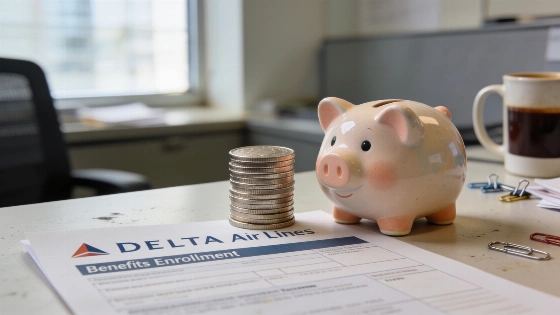
Delta Air Lines will match the federal $1,000 deposit for eligible employees' children's Trump Accounts, creating a $2,000 starting balance and intensifying the race among major employers to attract young families
Delta Air Lines has intensified the competition for frontline talent by pledging a $1,000 match to the federal government's $1,000 seed deposit for eligible employees' children's Trump Accounts. This initiative immediately doubles the starting balance for qualifying newborns in 2025, providing $2,000 in each account before families make any contributions. The move escalates the contest among major employers seeking to attract workers with young families.
Delta's $1,000 match applies only to children of employees born on or after January 1, 2025, who meet federal eligibility and have opened a Trump Account.
Delta's program is straightforward: for children born on or after January 1, 2025, who qualify for the federal $1,000 deposit, the airline will contribute an additional $1,000, resulting in a $2,000 initial balance. This benefit is part of Delta's $18 billion annual investment in employee rewards, which also includes $1.3 billion in profit sharing and a 4% base pay increase in 2026. The central question is how much that $2,000 could grow by the time a child turns 18-and whether it can meaningfully affect a family's financial outlook.
Projections from the White House Council of Economic Advisers indicate that the federal $1,000 alone could grow to approximately $5,800 over 18 years if invested in a stock index fund and left untouched. Doubling the initial deposit to $2,000 would yield about $11,600 by age 18 under the same assumptions. While significant, this amount does not cover college tuition or a home down payment. The widely cited $303,800 figure assumes a family contributes the maximum $5,000 annually for 18 years-a scenario that is not feasible for most households. The actual impact will depend on families' ability to make additional contributions and on how easily employers facilitate those contributions.
The U.S. Treasury clarified on August 11, 2026, that employers can contribute up to $2,500 per year per employee to Trump Accounts on a tax-advantaged basis, setting the framework for these corporate matches.
American Airlines has already committed to allowing eligible employees to direct up to $2,500 of pretax pay into their children's Trump Accounts starting in 2027, pending Treasury rules. This payroll deduction feature is key for compounding growth, distinguishing a one-time bonus from a sustained long-term benefit. Delta's announcement, in contrast, did not mention a payroll deduction option, focusing instead on the match and its existing emergency savings and profit-sharing programs. For now, Delta employees must wait to see if the airline will introduce payroll contributions-a detail covered in this CNBC report.
There is a practical consideration: none of these deposits are automatic. Parents must opt in, file IRS Form 4547, and activate the account through the Trump Accounts app or website. Employer matches cannot be credited to accounts that have not been opened. With Delta's workforce distributed across multiple hubs and shifts, the risk of missed opportunities is significant. Employees should ensure their account is open and activated, confirm the federal election is made, and check with HR regarding the match's timing and requirements.
The U.S. Department of the Treasury set the Trump Account federal seed at $1,000 for U.S. citizen children born from 2025 through 2028 with a Social Security number. The annual cap on tax-free employer contributions is $2,500, and the total annual contribution limit from all sources is $5,000. These rules create both opportunities and constraints, particularly for families who may not have additional funds to contribute each year.
Delta's initiative indicates that the competition for workers is shifting from headline pay to long-term family benefits. However, the numbers highlight the limitations of a one-time match. Without ongoing contributions-either from payroll or the family-the account's growth is limited. The greatest benefit will accrue to employees who can consistently add to these accounts, and to companies that make the process seamless. For others, the $2,000 match is a valuable gesture, but it is unlikely to be transformative for college or homeownership. The key question is whether Delta and its peers will develop the infrastructure for sustained, automatic saving, or if this is simply another phase in the benefits competition.
In 2026, the average annual tuition and fees at a four-year public college in the U.S. reached $11,260 for in-state students, according to the College Board. Meanwhile, the S&P 500's average annualized return over the past 20 years has been about 9.5%, though future returns are not guaranteed. These figures provide context for families evaluating the value of employer matches to Trump Accounts.
Employer-sponsored child savings accounts are a relatively new feature in the U.S. benefits landscape. Unlike 529 college savings plans, which are funded by families and offer state tax advantages, Trump Accounts combine federal seed money, employer matches, and optional payroll contributions. The accounts are intended to be invested in low-cost index funds and left untouched until the child turns 18, maximizing compounding growth. The effectiveness of these accounts will depend on participation rates, consistency of contributions, and whether employers streamline the process for busy families. As more companies participate, the pressure will increase to transform one-time incentives into lasting financial infrastructure for the next generation.