The Dow edged higher while the Nasdaq slipped as memory chip stocks dropped on worries about AI hardware bottlenecks and potential new competition, with investors closely watching Nvidia's upcoming earnings report for signals on AI demand
U.S. stock indexes diverged in midday trading, with the Dow Jones Industrial Average gaining ground while the S&P 500 and Nasdaq Composite slipped. The split reflected sector-specific pressures, as technology hardware stocks weighed on the broader market ahead of a closely watched earnings report from Nvidia. Investors are parsing signals about the health of the artificial intelligence (AI) supply chain and the potential for new competition in the memory chip space.
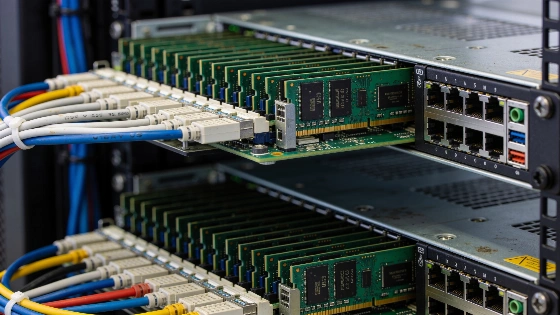
Micron Technology shares fell sharply after reports suggested the U.S. government may allow Apple to source memory chips from Chinese suppliers as a diplomatic gesture before President Xi Jinping's upcoming visit. This development, combined with industry warnings that AI computing speeds are outpacing memory bandwidth, raised concerns about bottlenecks that could slow growth for chipmakers. The possibility of a new Chinese competitor entering the market added to the pressure, sending major memory chip stocks lower.
AI Hardware Bottlenecks and Market Impact
Industry experts have flagged a growing mismatch between the rapid advances in AI processing power and the slower pace of memory bandwidth improvements. This gap can create performance bottlenecks, limiting the effectiveness of new AI hardware and potentially dampening demand for certain types of chips. As a result, companies that manufacture memory chips, such as Micron Technology, have faced increased scrutiny from investors. The news that Apple could be permitted to buy from Chinese suppliers further complicates the competitive landscape, raising questions about future market share and pricing power for U.S.-based chipmakers.
Nvidia, a key supplier of AI hardware, saw its stock decline ahead of its upcoming earnings release. The company's results are widely viewed as a barometer for AI-related demand and broader technology sector sentiment. Investors are treating the report as a critical test for the sustainability of recent gains in AI and semiconductor stocks. Meanwhile, buyers of AI hardware, including Alphabet, managed modest gains, suggesting that end users may be less exposed to current supply chain risks than manufacturers.
Dow Strength Outside Technology
While technology stocks dragged on the S&P 500 and Nasdaq, the Dow Jones Industrial Average remained in positive territory, buoyed by gains in sectors less exposed to the chip industry. Visa and Travelers were among the Dow components posting notable advances, helping offset weakness in technology names. This rotation highlights the importance of sector diversification, as different parts of the market respond to shifting risks and opportunities.
Broader market sentiment was also influenced by upcoming economic events. Investors are awaiting Nvidia's quarterly results, the Federal Reserve's preferred inflation gauge, and remarks from Fed chairman Kevin Warsh at the Jackson Hole symposium. Each of these events has the potential to move markets by shaping expectations for interest rates, inflation, and the outlook for technology spending.
Geopolitical Moves and Oil Prices
Geopolitical developments added another layer of complexity to the trading session. Treasury Secretary Scott Bessent announced a new round of sanctions targeting countries that continue to do business with Tehran, which contributed to a decline in oil prices. Lower energy costs can provide relief to consumers and businesses, but also signal concerns about global demand and economic growth.
According to data from the U.S. Energy Information Administration, U.S. crude oil prices fell by more than 2% in the week ending August 21, reflecting both geopolitical pressures and shifting expectations for global supply and demand. The interplay between sanctions, energy prices, and broader economic indicators remains a key area of focus for investors navigating an uncertain environment.
Understanding the dynamics of the semiconductor industry is crucial for investors interested in technology stocks. Memory chips are a foundational component of modern computing, but their value depends on both technological innovation and the structure of global supply chains. When bottlenecks emerge-whether due to technical limitations or geopolitical shifts-they can ripple through the entire sector, affecting everything from pricing to long-term investment decisions. For individual investors, these developments underscore the importance of monitoring both company fundamentals and the broader forces shaping the technology landscape.