
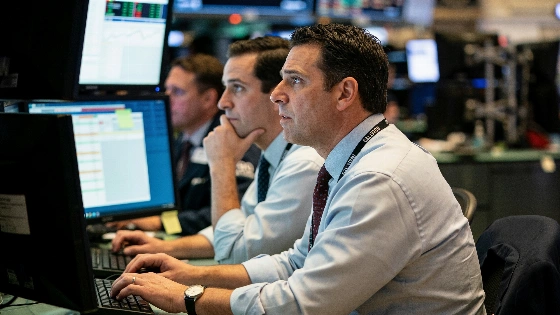
Fed Chair Kevin Warsh's vague remarks on inflation and policy left investors searching for direction as Treasury yields surged and stocks fell, highlighting the market's discomfort with uncertainty from the Federal Reserve
Federal Reserve Chair Kevin Warsh's latest press conference left investors with more questions than answers, as his reluctance to provide clear guidance on inflation and future policy moves triggered sharp reactions across financial markets. Warsh, who led his second Federal Open Market Committee (FOMC) meeting, avoided specifics on how the Fed plans to bring inflation back to its 2% target, instead emphasizing the central bank's commitment to price stability without outlining concrete steps. The lack of detail unsettled both bond and equity markets, which have grown accustomed to more transparent communication from the Fed in recent years.
During the press conference, Warsh dismissed the idea that the Fed's decision to hold rates steady was a "pause," and repeatedly sidestepped questions about the timing or triggers for future rate hikes. He also downplayed the value of the FOMC's official statement, which was nearly identical to the previous month's, offering little new insight into the Fed's assessment of economic conditions. This approach marked a departure from the more explanatory style of his predecessors, leaving investors to interpret the Fed's intentions with limited information.
Market Volatility Follows Fed Silence
The immediate market response to Warsh's comments was pronounced. The yield on the 30-year Treasury bond jumped to 5.2%, its highest level since 2008, reflecting investor concerns that inflation above the Fed's 2% target could persist. Meanwhile, the S&P 500 index fell 1.5% in the final hour of trading, erasing earlier gains as traders digested the Fed's ambiguous messaging. The volatility underscored the market's reliance on forward guidance from the central bank, especially at a time when inflation has remained above target for several years and economic uncertainty is elevated.
According to the Bureau of Labor Statistics, core inflation has hovered above 2% for five consecutive years, with the Fed's preferred measure, core Personal Consumption Expenditures (PCE), recently rising to 2.6% before ticking higher again. The recent uptick has been attributed in part to geopolitical tensions, including the ongoing conflict in Iran, which has driven up energy prices and added complexity to the inflation outlook. These external factors limit the Fed's ability to control price levels through monetary policy alone, further complicating the central bank's task.
Fed's Communication Strategy Under Scrutiny
Warsh's approach to communication has drawn criticism from market participants who value predictability and transparency. Unlike previous Fed chairs who used tools like the "dot plot" to signal future rate paths, Warsh has questioned the usefulness of such forward guidance and even suggested that regular press conferences may not continue. This shift toward a more opaque style has left investors with less information to anticipate policy changes, increasing the risk of abrupt market moves when new decisions are announced.
The FOMC's 9-3 split vote on the latest rate decision, with no explanation for the dissent, added to the uncertainty. Without clarity on what drove the disagreement among policymakers, investors are left to speculate about the Fed's internal debates and the potential for policy shifts. Warsh's insistence that the Fed will achieve price stability, without specifying the tools or timeline, has done little to reassure markets that the central bank has a clear plan for addressing persistent inflation.
Implications for Investors and the Economy
The Fed's current stance presents challenges for both investors and households. Uncertainty about the path of interest rates can lead to increased volatility in stocks and bonds, making it harder for individuals to plan for borrowing, saving, or investing. Higher long-term yields raise borrowing costs for businesses and consumers, potentially slowing economic growth and affecting everything from mortgage rates to corporate financing.
For context, the Federal Reserve's dual mandate requires it to pursue both stable prices and maximum employment. While monetary policy can influence demand and credit conditions, it has limited power over supply shocks such as those caused by energy price spikes or international conflicts. This means that even aggressive rate hikes may not fully address inflation if external pressures persist. Investors should be aware that the Fed's ability to guide inflation back to target depends not only on its policy decisions but also on factors beyond its control, including global events and fiscal policy. As the central bank navigates these challenges, clear communication remains a critical tool for maintaining market stability and public confidence.