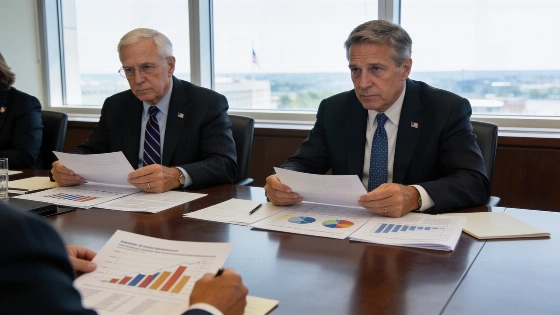
With inflation running above target and oil prices rising, the Federal Reserve's July meeting could set the stage for a rate hike or signal a longer pause, leaving markets and households bracing for shifting borrowing costs
As the Federal Reserve prepares for its July policy meeting, investors, economists, and households are watching closely for signs of a shift in interest rates. With inflation still running above the central bank's 2% target and energy prices rebounding, the debate inside the Federal Open Market Committee (FOMC) has intensified. The outcome could affect everything from mortgage rates to credit card bills, as well as the broader direction of the U.S. economy.
Inflation and Market Expectations
Recent inflation data has complicated the Fed's decision-making. While the labor market remains resilient and gross domestic product growth has held steady, consumer prices have not cooled as quickly as policymakers hoped. The most recent Consumer Price Index (CPI) reading came in below Wall Street forecasts but still well above the Fed's comfort zone. Oil prices, which had dipped earlier in the year, have rebounded on renewed geopolitical tensions, adding to the risk of higher transportation and goods costs in the months ahead.
According to the CME Group FedWatch Tool as of July 27, traders see a 63.5% chance that the Fed will keep rates unchanged at this week's meeting, but the probability of a quarter-point hike has climbed to 36.5%-a sharp increase from just weeks ago, when markets were nearly certain of a pause. Looking further ahead, the odds of at least one rate hike by September have risen to nearly 80%, and by December, markets are pricing in a significant chance that the federal funds rate could reach 4.00% to 4.25%.
Internal Fed Divisions
Inside the FOMC, the debate is far from settled. Some policymakers argue that holding rates steady gives the economy more time to absorb past increases, while others warn that persistent inflation-especially in core categories like housing and services-requires a more aggressive stance. The minutes from the June meeting revealed a growing split, with several members expressing concern that inflation could accelerate if energy prices remain elevated or if supply chain disruptions worsen.
Fed Chair Kevin Warsh has repeatedly emphasized the central bank's commitment to price stability, telling Congress earlier this month that monetary policy remains the primary tool for controlling long-term inflation. Yet the challenge is balancing that mandate with the risk of slowing job growth or tipping the economy into recession. Lower rates can support hiring and consumer spending but risk fueling further price increases, while higher rates may cool inflation but also raise borrowing costs for households and businesses.
September and Beyond
The Fed's next major decision point comes in September, after two more months of inflation and labor market data. The central bank's preferred inflation gauge, the Personal Consumption Expenditures (PCE) index, rose to 4.1% year-over-year in May, with consensus estimates suggesting a modest cooling in June. Much will depend on whether energy prices stabilize and whether wage growth continues to outpace inflation. The annual Jackson Hole Economic Policy Symposium in August could also provide clues, as Fed leaders often use the event to signal policy shifts or clarify their outlook.
Political pressure is also mounting. President Donald Trump has called for lower rates, arguing that the U.S. should have the world's lowest borrowing costs to support growth and reduce the burden of the national debt. Meanwhile, some FOMC members, including Cleveland Fed President Beth Hammack and Dallas Fed President Lorie K. Logan, have voiced concerns about rising prices in their districts and the risk of an inflation spike if the Fed waits too long to act.
Impact on Households and Markets
For consumers, the federal funds rate directly influences the cost of variable-rate debt, including credit cards, auto loans, and adjustable-rate mortgages. After a series of quarter-point rate cuts in 2025 aimed at supporting the labor market, the Fed has held rates steady in 2026 as inflation pressures have reemerged. The decision to pause or hike rates in July will ripple through financial markets, affecting stock and bond prices as well as the cost of borrowing for millions of Americans.
According to reporting by TheStreet, the current environment has forced traders to reassess their expectations for Fed policy, with many now bracing for tighter conditions by year-end. The uncertainty has also led to increased volatility in Treasury yields and equity markets, as investors weigh the risks of persistent inflation against the possibility of slower economic growth. For a look at how other major financial institutions are responding to leadership changes and shifting market conditions, see this analysis of Bank of America's stance on Apple's CEO transition: how Bank of America is positioning itself as Apple's leadership changes.
As of July 2026, the federal funds rate target remains at 3.5% to 3.75%, unchanged since June. The Bureau of Economic Analysis reported that U.S. GDP grew at an annualized rate of 2.1% in the second quarter, while the national unemployment rate held steady at 3.8%. The most recent CPI showed annual inflation at 3.5%, with core inflation-excluding food and energy-at 3.2%. These figures highlight the delicate balance the Fed faces as it weighs its next move.
The federal funds rate is the primary tool the Federal Reserve uses to influence short-term interest rates across the economy. When the Fed raises this rate, borrowing becomes more expensive for banks, which typically pass those costs on to consumers and businesses through higher loan and credit card rates. Conversely, lowering the rate can stimulate borrowing and spending but may also risk higher inflation if demand outpaces supply. The Fed's dual mandate-to promote maximum employment and stable prices-means it must constantly weigh the trade-offs between supporting growth and containing inflation, especially in periods of economic uncertainty.