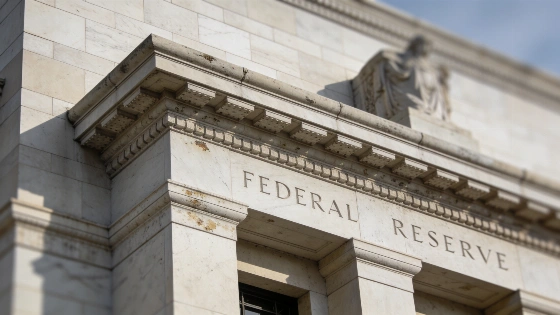
Federal Reserve officials remain wary of inflation risks, but recent declines in consumer prices and weak job growth have shifted market expectations toward steady interest rates through late 2026
Federal Reserve policymakers are signaling ongoing concern about inflation, but recent economic data has led markets to expect that interest rates will likely remain unchanged for the rest of 2026. The minutes from the Federal Open Market Committee's (FOMC) July meeting reveal that several members saw a need for tighter policy if inflation failed to ease, and some questioned whether current financial conditions were restrictive enough to bring inflation back to the Fed's 2% target. Despite these concerns, the committee voted to keep the federal funds rate steady at 3.50% to 3.75%, with three members dissenting in favor of a quarter-point hike.
While some FOMC members continue to warn about the risk of persistent inflation, the latest data suggest that price pressures are moderating. This shift has prompted investors and analysts to push back expectations for further rate increases, at least in the near term.
Inflation Data Shows Signs of Cooling
Recent inflation readings have provided some relief for policymakers and consumers alike. The Consumer Price Index (CPI) fell by 0.4% in June and edged up just 0.1% in July, marking the lowest monthly increases since at least July 2025. Core CPI, which strips out volatile food and energy prices, was flat in June and rose 0.2% in July. These figures indicate that underlying inflation may be stabilizing, even as energy prices remain volatile due to ongoing geopolitical tensions, particularly the Iran war, which has caused gas prices to swing sharply from month to month.
Energy costs, while excluded from core inflation measures, continue to influence the broader economy. For example, fluctuations in oil and gas prices affect transportation and food costs, which can feed through to overall inflation. Despite these risks, the recent moderation in both headline and core inflation has reduced the urgency for additional rate hikes.
Labor Market and Producer Prices Add to Caution
Softness in the labor market has further contributed to the Fed's cautious stance. The July jobs report showed a loss of 23,000 nonfarm payroll positions, a sharp contrast to economists' expectations for an 85,000 gain. Average hourly earnings barely increased, suggesting that wage-driven inflation pressures may be easing. Meanwhile, the Producer Price Index (PPI), which tracks wholesale prices, rose just 0.1% in July, below analyst forecasts.
These developments have led market participants to adjust their outlook for monetary policy. According to CME Group's FedWatch tool, traders now expect the Fed to hold rates steady at its September and October meetings, with a possible hike delayed until December. However, these forecasts remain subject to change as new data emerges and global risks evolve.
Election Timing and Policy Risks
The timing of the upcoming midterm elections in November is also shaping the Fed's approach. Policymakers are likely to avoid major rate moves in September and October to minimize the appearance of political influence. Any decision to raise rates before year-end would probably require a significant upside surprise in inflation data or a renewed surge in energy prices.
Looking ahead, the Federal Reserve Bank of Cleveland's Nowcasting tool projects core CPI to rise 0.2% in August, while the Personal Consumption Expenditures (PCE) Price Index-the Fed's preferred inflation gauge-is expected to increase by 0.25% in July and 0.27% in August. These projections, if realized, would likely support the case for holding rates steady through the fall.
For context, the federal funds rate has remained at 3.50% to 3.75% since the July FOMC meeting. According to the Bureau of Labor Statistics, the annual inflation rate for July stood at 2.1%, down from 2.5% in May. The unemployment rate ticked up to 4.2% in July, reflecting the recent softness in job creation. These figures suggest that while inflation risks persist, the immediate threat of runaway prices has diminished, giving the Fed more flexibility to wait for clearer signals before adjusting policy.
Central banks like the Federal Reserve use interest rates as their primary tool to manage inflation and economic growth. Raising rates makes borrowing more expensive, which can slow spending and investment, helping to cool inflation. But higher rates also increase the risk of tipping the economy into recession, especially if wage growth and job creation are already slowing. Policymakers must weigh the risk of persistent inflation against the potential for economic contraction, making each rate decision a balancing act between price stability and growth.