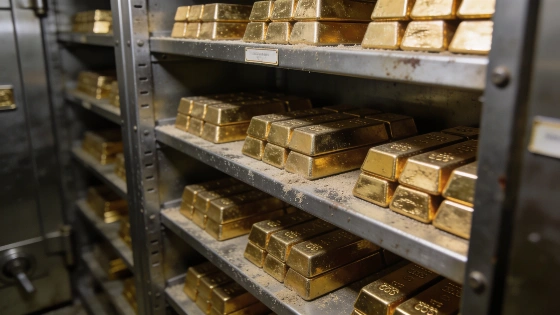
A record $58 million GLD call spread is reshaping gold's rally, as sophisticated traders cap upside exposure amid Treasury buyback plans and looming Fed rate hikes. The move highlights how structure, not just direction, is driving profits in volatile markets.
Gold's rally reached a pivotal moment in late August when a single $58 million options spread in the SPDR Gold Shares ETF (GLD) demonstrated that even the most bullish traders are now limiting their upside exposure. Rather than betting on unlimited gains, one trader sold all potential GLD profits above $430 per share, collecting a substantial premium while purchasing calls at a lower strike. With GLD closing August at $406.58, this structure is already deep in the money-outperforming outright bullish positions that relied on a continued surge.
On August 24, a record options trade in GLD involved selling about 116,000 call options at a $420 strike and buying the same amount at a $430 strike, locking in a net premium of $58 million for the seller.
Options Market Shake-Up
August's policy environment fueled gold's volatility. Treasury Secretary Scott Bessent's announcement of expanded buybacks-doubling the maximum operation size to $4 billion and targeting longer-dated bonds-pushed the dollar lower and gold higher. Spot prices rose 10% in August, marking the largest monthly gain since January, according to Bloomberg and TheStreet. However, the most significant developments occurred in the options market, where traders shifted from outright calls to spreads and exotics, seeking exposure while managing volatility risk more efficiently.
The $58 million GLD call spread stood out. The trader sold approximately 116,000 in-the-money $420 calls expiring September 18, collecting $202 million, and used $144 million to buy the same number of $430 calls. With a break-even at $425 and GLD closing August 24 at $426.69, the position required only a brief pause in gold's rally to secure gains. By August 31, with GLD near $406.58-$406.69, the profitability of the structure was evident, as confirmed by TheStreet.
Who's Buying, Who's Selling
Despite the prominence of this large spread, most traders continued to pursue upside exposure. On August 24, over 37,000 GLD calls traded versus fewer than 20,000 puts, according to ThinkOrSwim data cited by CNBC. Thirteen of the 15 highest-volume GLD contracts that day were calls, and total volume was nearly five times the 30-day average. Central banks contributed to the momentum, purchasing a record 289 tonnes of gold in the second quarter-a fivefold increase from the previous quarter, based on World Gold Council data.
The U.S. Treasury's expanded buyback program, announced on August 19 under Scott Bessent, increased the maximum operation size to at least $4 billion and focused on 10-30 year bonds. However, as of late August, no actual buybacks had occurred-the market reaction was driven by expectations, not real flows.
Policy Crosscurrents
Gold's path is being shaped by conflicting policy signals. Bessent's buyback program, scheduled from September 9 through November 4, is designed to suppress long-term yields and weaken the dollar-both factors that support gold. At the same time, Federal Reserve Chairman Kevin Warsh has adopted a hawkish stance on inflation, warning at Jackson Hole on August 28 that 3.7% price growth will not be tolerated. Markets responded by raising the probability of a September rate hike to 60.4% as of August 31, up from 56% earlier in the week.
According to Reuters, the initial Treasury buyback announcement led to a brief decline in long-term yields, but this was quickly reversed as market participants assessed the details. Bessent clarified that buybacks are an addition to, not a replacement for, regular auctions-limiting their potential impact on both bond and gold markets (ROIC).
This policy tension has kept gold prices volatile. After reaching $4,598.89 on August 28, spot bullion fell to $4,435 by August 31, according to CNBC. For holders of naked calls, such swings are challenging. For those selling covered upside, the volatility can translate into realized gains.
What's at Stake for Investors
The resolution of this options standoff will become clear in mid-September. The Federal Reserve's rate decision is set for September 16, with the GLD options expiring two days later. If Warsh raises rates, the seller retains the full $58 million premium. If rates remain unchanged and gold surges above $425, call buyers may recover some value-but only if the rally is both sharp and sustained.
For investors, the message is clear: in a market shaped by powerful policy dynamics, trade structure is as important as conviction. Outright call buyers pay high premiums for volatility that may not materialize, while sellers of covered upside are compensated for capping their gains. As recent Fed coverage illustrates, those who profit most are not just correct on direction-they are rewarded for managing uncertainty.
August's $58 million GLD call spread exemplifies tactical discipline. While central banks and retail traders respond to headlines, the most sophisticated participants are monetizing volatility rather than simply betting on trends. With the federal funds rate at 5.50%-the highest since 2007-and inflation at 3.7% year-over-year in July, gold's spot price fluctuated between $4,400 and $4,600 per ounce in late August. Central bank gold purchases reached a quarterly record, highlighting ongoing demand for safe-haven assets amid policy uncertainty.
Options spreads like the one that dominated gold trading in August are designed to balance risk and reward by capping both upside and downside. Unlike outright calls, which can lose value quickly if the underlying asset stalls or reverses, spreads allow traders to collect premium while limiting exposure to extreme price moves. For individual investors, understanding these mechanics is essential before moving beyond basic ETF trades. In a market where policy shifts can erase gains overnight, the advantage belongs to those who structure risk precisely-transforming volatility from a threat into a source of income.