Silo's latest episode explores how past technological fears and leadership choices continue to impact the survival and governance of its underground society, raising questions about risk, control, and unintended consequences
In the world of Silo, the tension between technological progress and existential risk is more than a backdrop-it's the engine driving the colony's fate. The latest episode delves into the origins of the silo project, revealing how decisions made centuries earlier still dictate the lives and risks faced by current residents. The show's narrative structure, which weaves together flashbacks from the 21st century with present-day crises in Silo 18, highlights the persistent influence of past fears and the unintended consequences of efforts to control them.
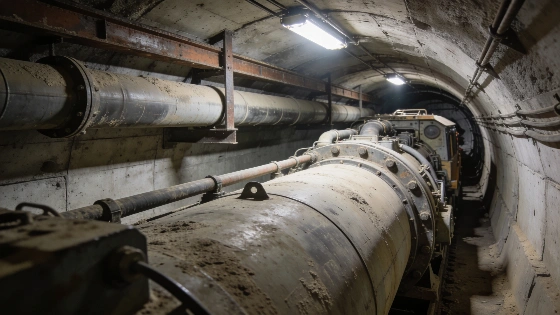
At the heart of the episode is the revelation that the silo system was conceived as a response to the threat of nanotechnology. The project's architect, Per Stensen, convinced powerful stakeholders that the only way to survive the proliferation of destructive nanobots was to move humanity underground. This decision, rooted in a desire to protect, also introduced new forms of control and risk. The episode makes clear that the silo's elaborate safeguards-such as the mysterious Safeguard pipes-are not just technical features but instruments of power, capable of both protecting and endangering entire populations.
Leadership, Control, and Consequences
The episode also examines the moral and practical dilemmas faced by those in charge. Juliette, now a central figure in Silo 18, must weigh the risks of challenging the system's safeguards against the potential cost to her community. Her debates with Bernard, a former head of I.T., underscore the difficulty of making decisions with incomplete information and the danger of justifying extreme measures in the name of security. Bernard's own regrets about his past actions serve as a reminder that even well-intentioned leaders can cause harm when they prioritize control over transparency.
Meanwhile, flashbacks to the project's inception show that skepticism and dissent were present from the start. Helen, a journalist, questions Stensen's motives and the ethics of sacrificing lives to prove a point about nanotech dangers. Her refusal to accept the official narrative and her willingness to walk away highlight the importance of independent scrutiny in any system built on secrecy and fear.
Systemic Risks and Human Costs
The episode doesn't shy away from showing the human toll of these systemic choices. In Silo 17, survivors confront the legacy of past sacrifices, including the discovery of a welded-shut chamber where a mother died to save others from poison gas. The trauma experienced by characters like Jimmy, who lost everyone he knew, illustrates how policies designed to ensure survival can also inflict lasting psychological harm.
These storylines echo real-world debates about the balance between security and freedom, especially when new technologies introduce risks that are hard to predict or contain. The silo's leaders, past and present, grapple with the challenge of protecting their people without becoming the very threat they sought to escape. The episode suggests that the line between safety and oppression is often blurred, and that the costs of control can be as high as the dangers it seeks to prevent.
Financial and Societal Trade-Offs
While the show's setting is fictional, its themes resonate with real financial and policy decisions. The episode raises questions about resource allocation-Stensen's willingness to spend trillions on underground colonies rather than addressing surface-level problems like poverty and disease mirrors debates about public spending priorities. The logic of building massive infrastructure to mitigate one risk, while potentially neglecting others, is a familiar tension in both government and corporate strategy.
For U.S. viewers, the episode's exploration of risk management, leadership accountability, and the unintended consequences of large-scale interventions offers a lens through which to consider current debates about technology regulation, emergency preparedness, and the ethics of decision-making under uncertainty. The silo's history serves as a cautionary tale about the limits of control and the importance of questioning the narratives that justify extraordinary measures.
According to the Federal Reserve's 2023 Financial Stability Report, systemic risks-such as those posed by emerging technologies or concentrated power structures-remain a top concern for policymakers and market participants. The report highlights that while technological innovation can drive economic growth, it also introduces new vulnerabilities that require careful oversight and transparent governance. These findings echo the dilemmas faced by the leaders in Silo, where efforts to manage one risk can inadvertently create others.
Risk management is a core principle in both financial markets and public policy. In practice, this means not only identifying potential threats but also considering the trade-offs involved in different mitigation strategies. Overly rigid controls can stifle innovation and erode trust, while insufficient safeguards can leave systems exposed to catastrophic failure. The challenge lies in finding a balance that protects against genuine dangers without imposing unnecessary costs or undermining the resilience of the broader system.