Intel is raising $15 billion through a rare stock offering to fund AI-driven manufacturing and foundry growth, as demand for advanced chips and data center technology accelerates in 2026
Intel is making its boldest financial move in decades, announcing a $15 billion public stock offering to fund its next phase of growth as artificial intelligence (AI) demand surges. The company, which has not issued new public equity since its 1971 listing, is turning to shareholders to support a capital-intensive expansion of its manufacturing and foundry operations. This decision comes as Intel's turnaround story has shifted from skepticism to outperformance, with the company now ranking as the fifth-best performing S&P 500 stock year-to-date, according to Slickcharts data.
Intel's management has raised its 2026 capital expenditure forecast to over $20 billion, up from $18 billion, reflecting the scale of investment required to meet rising demand for advanced chips. The proceeds from the stock sale are earmarked for general corporate purposes, but the company has made clear that the funds will be used to accelerate real-world AI applications, develop purpose-built silicon, and expand its foundry business. This approach allows Intel to avoid taking on additional debt, preserving a balance sheet that has already seen significant repair in recent years.
AI and Foundry Drive Capital Needs
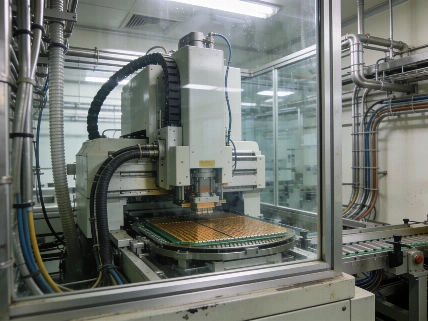
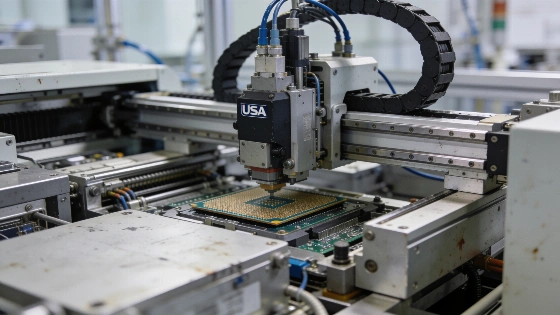
The capital raise addresses two critical priorities. First, Intel is ramping up its foundry business, having begun high-volume manufacturing of select Intel Core Ultra Series 3 "Panther Lake" processors using ASML's high-NA extreme ultraviolet (EUV) lithography technology. This makes Intel the first company to ship high-volume logic products with this advanced process. The company also announced a €5 billion investment to expand Xeon 6 manufacturing capacity in Europe and has expanded its Bowers campus to support leading-edge process technology.
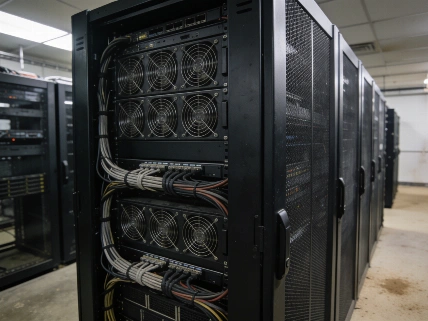
Second, Intel is targeting the rapidly growing AI inference and physical AI market. In the second quarter of 2026, Intel's Data Center and AI segment revenue jumped 59% year-over-year to $6.3 billion. More than 130 customers are now adopting or testing Intel Core Ultra Series 3 and Core Series 3 processors for edge AI and robotics applications. The company's Vector Core Compute initiative, which integrates Intel Xeon, SambaNova RDUs, and Nvidia Blackwell GPUs, is already live, underscoring the scale of the opportunity and the capital required to compete.
Strong Results Set the Stage
Intel's decision to raise equity comes on the heels of its strongest quarterly performance in over 15 years. For the second quarter of 2026, Intel reported total revenue of $16.1 billion, up 25% from the prior year. The Data Center and AI segment delivered $6.3 billion in revenue, while operating income for the segment rose to $2.47 billion from $633 million a year earlier. Intel Foundry revenue reached $5.8 billion, up 31%, with operating losses narrowing to $2.09 billion from $3.17 billion. Client Computing and Physical AI revenue climbed 13% to $8.9 billion. Non-GAAP earnings per share came in at $0.42, nearly double Wall Street's estimate. For the third quarter, Intel is guiding for revenue between $15.8 billion and $16.8 billion and non-GAAP EPS of $0.38.
Chief Financial Officer Dave Zinsner has emphasized that Intel is significantly increasing investments in equipment, clean room space, and substrates to support anticipated growth through 2027. The $15 billion equity raise is the mechanism to fund these commitments, ensuring Intel can keep pace with both customer demand and technological change.
Strategic Positioning, Not Survival
Unlike many companies that issue new shares out of financial distress, Intel is raising capital from a position of operational strength. The company has launched Xeon 6+, its first server-class product on the Intel 18A process, and introduced the OpenVINO Physical AI framework for large-scale robotics deployment. Intel has also secured commercial AI deployments in physical retail and expanded partnerships with Foxconn, Siemens, Hitachi, and Fortinet, while deepening its collaboration with Google Cloud for internal AI transformation.
As AI workloads shift from training to inference-where models are run continuously at enterprise scale-demand for CPUs like Intel's Xeon is expected to grow. Intel's chips have been selected as the host CPU for Nvidia's DGX Rubin NVL8 systems and are deployed across major cloud providers including Google Cloud, AWS, Microsoft Azure, and Tencent. The $15 billion in new equity provides the financial runway to continue scaling manufacturing, secure foundry customer commitments, and capture the physical AI and robotics opportunity validated by more than 130 customer engagements.
Intel's aggressive capital strategy mirrors moves by other technology leaders betting on AI-driven growth, even as heavy spending and cash flow risks remain a concern for investors. For example, SpaceX's recent capital raises have drawn scrutiny for similar reasons, as discussed in this analysis of how major tech firms are navigating the balance between investment and financial discipline: how SpaceX's capital spending is shaping investor sentiment.
Financial Stakes and Market Context
Intel's move to raise $15 billion through a public stock offering is rare among large-cap U.S. companies, especially those with a history of strong cash generation. The decision to issue equity rather than debt reflects both the scale of the investment required and management's desire to avoid overleveraging the company's balance sheet. For investors, the offering introduces dilution risk, but it also signals confidence in Intel's ability to generate returns from its AI and foundry investments. The company's year-to-date stock performance-up 170.79%-places it among the top S&P 500 gainers, trailing only SanDisk, Dell, Micron, and Seagate.
As the semiconductor industry faces unprecedented demand for advanced chips, Intel's willingness to invest heavily in manufacturing capacity and AI infrastructure could reshape its competitive position. The outcome will depend on the company's ability to execute on its technology roadmap, secure foundry customers, and maintain profitability as capital spending accelerates.
For the second quarter of 2026, Intel reported total revenue of $16.1 billion, a 25% increase from the previous year, with Data Center and AI segment revenue up 59% to $6.3 billion. Operating income for the segment rose to $2.47 billion, and Intel Foundry revenue climbed 31% to $5.8 billion, with operating losses narrowing to $2.09 billion. Non-GAAP EPS reached $0.42, nearly double analyst expectations.
Raising capital through equity rather than debt is a strategic choice for companies facing large-scale investment needs. While issuing new shares can dilute existing shareholders, it also preserves financial flexibility and reduces interest expense, which can be critical when funding long-term projects like semiconductor manufacturing. For investors, understanding the trade-offs between dilution, leverage, and growth potential is essential when evaluating companies making aggressive capital allocation decisions in fast-evolving sectors like AI and advanced manufacturing.