
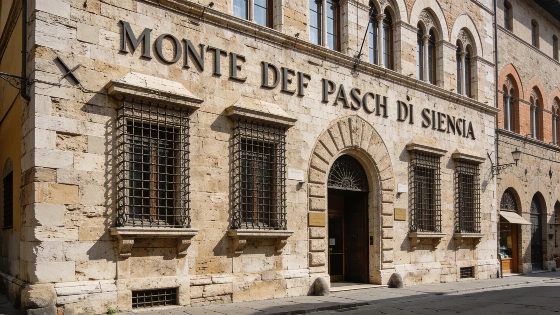
Italy's Monte dei Paschi di Siena is exploring multiple acquisition targets as it seeks to strengthen its position in the European banking sector, raising questions about consolidation risks and the impact on shareholders
Italy's Monte dei Paschi di Siena (MPS), one of Europe's oldest banks, is reportedly considering a strategy that involves pursuing several takeover opportunities rather than focusing on a single acquisition. This approach signals a shift in how some European banks are responding to ongoing consolidation pressures and the need to build scale in a competitive market. For U.S. investors and observers, the move highlights the evolving landscape of European banking and the potential ripple effects for global financial markets.
According to reporting by Lex, MPS's interest in multiple deals comes as European banks face persistent challenges, including low interest rates, regulatory demands, and the need to improve profitability. By targeting more than one acquisition, MPS aims to diversify its growth strategy and potentially reduce the risks associated with betting on a single transaction. This tactic could also help the bank spread integration costs and avoid overexposure to any one market or asset base.
Consolidation Pressures in European Banking
The European banking sector has seen a wave of consolidation in recent years, driven by the search for efficiency, scale, and resilience in a low-margin environment. Mergers and acquisitions have become a common response to regulatory requirements and the need to compete with larger, more diversified rivals. For MPS, pursuing multiple takeovers could be a way to accelerate its transformation and catch up with peers that have already expanded through deals.
However, the strategy is not without risks. Integrating several institutions at once can strain management resources and create operational challenges. There is also the risk that cultural differences, incompatible systems, or unexpected liabilities could undermine the benefits of consolidation. For shareholders, the outcome depends on how well MPS manages these complexities and whether the deals deliver the promised synergies.
Implications for Investors and Markets
For U.S. investors with exposure to European financial stocks or global banking ETFs, MPS's approach is a reminder of the uncertainties that come with cross-border and multi-target acquisitions. While successful consolidation can lead to stronger, more competitive banks, failed integrations or overambitious expansion can erode value and increase volatility. Investors should pay close attention to how MPS structures its deals, the quality of the assets involved, and the bank's ability to maintain capital strength during the process.
As of the end of 2025, European banks have continued to face profitability challenges, with average return on equity for the sector hovering around 7%, according to the European Banking Authority. MPS, which has undergone significant restructuring in recent years, reported a modest improvement in its capital ratios but remains under scrutiny from regulators and investors alike. The outcome of its acquisition strategy could influence broader sentiment toward European bank stocks in the coming quarters.
Understanding the Risks of Multi-Deal Strategies
Multi-deal acquisition strategies can offer diversification benefits, but they also introduce layers of complexity that single transactions may avoid. Each target brings its own set of financial, operational, and regulatory risks. The success of such a strategy often depends on the acquiring bank's experience with integration, its ability to retain key talent, and its capacity to manage overlapping business lines without losing focus on core operations.
For investors, it's important to distinguish between headline growth and sustainable value creation. While a flurry of deals may signal ambition, the real test is whether the combined entity can deliver improved efficiency, profitability, and risk management over time. In banking, scale alone does not guarantee success-especially when integration challenges are underestimated or market conditions shift unexpectedly.
Bank mergers and acquisitions are typically driven by the pursuit of cost savings, expanded customer bases, and enhanced product offerings. Yet, the regulatory environment in Europe remains stringent, with capital requirements and supervisory scrutiny shaping the pace and structure of deals. For U.S. investors, understanding these dynamics is essential when evaluating the prospects of European banks engaged in aggressive consolidation strategies.