A viral JPMorgan analysis and a misunderstood USDA figure have fueled talk of a looming food price spike, but the real risks to your grocery bill are more nuanced and concentrated than headlines suggest
Few expenses hit American households as directly as the grocery bill, and recent warnings about a potential food price surge have spread rapidly online. The latest alarm centers on a JPMorgan analysis of fertilizer markets and a widely shared-but often misinterpreted-USDA figure suggesting grocery prices could jump by double digits in coming years. But a closer look at the data and market trends reveals a more complex, less sensational story.
Fertilizer Disruptions and the Supply Chain
Earlier this year, the temporary closure of the Strait of Hormuz disrupted global shipments of nitrogen-based fertilizers, which are critical for crop yields. The Middle East supplies over 40% of the world's urea exports and more than a quarter of ammonia exports, making the region's stability vital for global agriculture. When shipments stalled during the planting season, global nitrogen fertilizer prices spiked by 25% to 50%, according to JPMorgan's European chemicals team. Because nitrogen must be applied at planting, missed deliveries can reduce harvests and eventually push up food prices.
Higher fertilizer costs can force farmers to plant less or switch crops, with the effects showing up at the grocery store months later. But JPMorgan's own economists estimate that rising fertilizer prices could temporarily lift global food inflation to 4-5%-not the 12.3% figure circulating on social media. Importantly, this estimate is global, not specific to the U.S., and is expected to be temporary rather than a sustained trend.
What the USDA's Numbers Really Mean
The 12.3% figure attached to the JPMorgan warning is real, but it's not a forecast. It represents the upper bound of a 95% prediction interval for U.S. grocery prices in 2027, based on USDA modeling. The actual USDA forecast for grocery price inflation that year is 2.9%, with a lower bound of -5.6%, meaning prices could even fall. The agency explicitly advises focusing on the midpoint, not the extremes, because the range narrows as more data becomes available.
For a family spending $800 a month on groceries, a 12.3% increase would mean an extra $1,181 a year. But using the USDA's actual forecast, the increase would be about $278. Building a household budget or financial plan around the upper bound rather than the forecast could lead to unnecessary anxiety or misallocation of resources.
Market Moves Since the Spike
The fertilizer price surge that triggered these warnings has already begun to unwind. JPMorgan's April analysis anticipated elevated prices through the second quarter, followed by a correction. That's largely what happened: retail urea peaked near $864 per ton in mid-May but averaged $678 in early August, according to DTN Progressive Farmer. Anhydrous ammonia and UAN32 prices have also dropped from their peaks, though not all fertilizer types have returned to pre-crisis levels.
Meanwhile, the USDA projects beef and veal prices will rise 10.7% in 2026, while egg prices are expected to fall more than 30% and fresh vegetable prices to rise 6.8%. These shifts reflect a mix of supply chain factors, weather, and livestock cycles, not just fertilizer costs. For context, as Financial Sumo has reported on other JPMorgan market calls, it's crucial to distinguish between headline-grabbing numbers and the underlying data.
What's Really Driving Your Grocery Bill
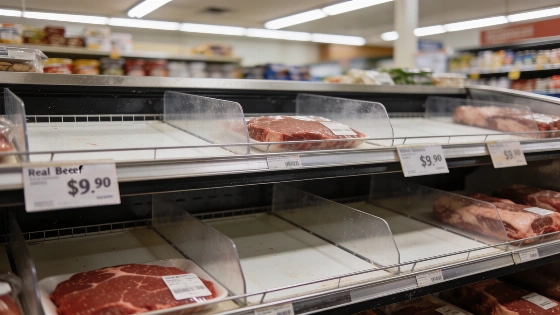
While fertilizer prices matter, the main driver of grocery inflation this year is beef. U.S. cattle herds have shrunk to their smallest size in 75 years, pushing wholesale beef prices to record highs. This is a classic cattle cycle: rebuilding herds takes years, and in the meantime, fewer animals are sold, keeping prices elevated. By contrast, egg prices-which soared in recent years-are now forecast to drop sharply. Overall, grocery inflation is running at 2.7%, close to historical norms.
For consumers, the practical takeaway is to pay attention to which categories are rising fastest. Substituting away from beef, for example, can have a bigger impact on your budget than trying to hedge against broad food inflation. Monitoring the USDA's monthly outlook will provide a more accurate picture than viral social media posts or outdated research notes.
According to the Bureau of Labor Statistics, the Consumer Price Index for food at home rose 1.1% in the 12 months ending July 2026, a significant slowdown from the 9.9% spike seen in 2022. Beef prices, however, have outpaced the average, with double-digit increases over the past year, while egg prices have declined sharply after previous surges.
Understanding how agricultural supply chains, commodity markets, and livestock cycles interact can help consumers make more informed decisions about their grocery spending. Fertilizer prices are just one piece of a much larger puzzle. While global disruptions can ripple through to U.S. households, the most immediate risks to food budgets often come from domestic factors like weather, herd sizes, and shifting consumer demand. Staying focused on the categories that are actually moving-and using official forecasts rather than viral extremes-can help households manage costs more effectively.