Lockheed Martin's earnings rebound and $230 billion backlog are drawing bullish attention, but Wall Street analysts remain cautious even as new missile contracts and facility investments reshape the outlook
Lockheed Martin's latest quarterly results have put the defense giant in the spotlight, with a surge in earnings and a contract pipeline that has few historical parallels. On CNBC's Mad Money Lightning Round, Jim Cramer described the stock as "sensational" and praised CEO Jim Taiclet's leadership, signaling rare conviction in a sector often marked by cautious optimism.
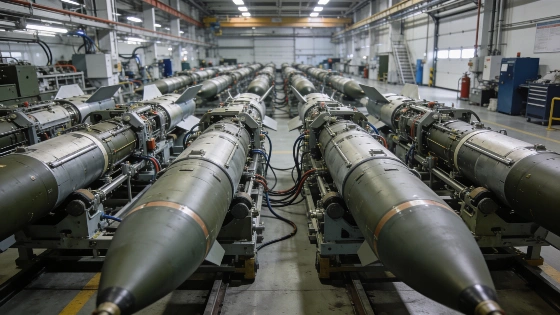
Lockheed's second quarter 2026 numbers mark a dramatic turnaround from the prior year. The company reported net earnings of $1.836 billion, up from just $342 million in Q2 2025, when program losses weighed heavily on results. Net sales climbed 11% year-over-year to $20.1 billion, while diluted earnings per share jumped to $7.94 from $1.46. Free cash flow swung from negative $150 million to a robust $2.9 billion, and business segment operating profit soared 279% to $2.162 billion. The Missiles and Fire Control division led the way, with sales up 19% and operating profit up 24% from a year earlier, driven by accelerating production of PAC-3, THAAD, and precision strike missiles.
Lockheed's contract wins in recent months have been extraordinary in both scale and strategic importance. In July 2026, the company secured a seven-year contract modification worth up to $53.86 billion to ramp up PAC-3 Missile Segment Enhancement interceptor production. June brought a $35 billion procurement contract for Terminal High Altitude Area Defense (THAAD) interceptors, and earlier in the year, Lockheed landed a $1.9 billion extension for the C-130J training program. These deals, totaling over $90 billion across two missile programs in just weeks, reflect a global defense environment shaped by rising geopolitical tensions and renewed U.S. focus on domestic missile manufacturing.
Lockheed ended the quarter with a record $230.4 billion backlog, up from $193.6 billion at the end of 2025, fueled by $65 billion in new orders in Q2 alone. That backlog now represents roughly three years of revenue at the current pace, providing rare visibility for investors. The company is backing its contract momentum with an $8-9 billion investment plan through 2030 to modernize and expand more than 20 U.S. manufacturing sites, including new facilities in Arkansas and Alabama. A partnership with GM Defense aims to leverage commercial manufacturing scale to accelerate defense production timelines.
Despite these operational gains, Wall Street analysts have not fully embraced the stock. JPMorgan's price target stands at $620, but most major firms remain neutral, suggesting that institutional sentiment has yet to catch up with Lockheed's business momentum. The company raised its full-year 2026 earnings guidance to $29.95-$30.65 per share and lifted free cash flow expectations to $7.0-$7.2 billion. Net sales are now projected between $79.75 billion and $81.75 billion, an 8% increase over the prior year. As of the latest data, Lockheed Martin shares are up 21.12% year-to-date and 38.03% over the past year, outpacing the S&P 500's returns for the same periods.
Lockheed's transformation comes as other major U.S. industrials also pursue large-scale government contracts and infrastructure investments. For example, AMD's recent partnership with Microsoft to supply AI hardware for Azure highlights how defense and technology sectors are increasingly intertwined, with both relying on long-term contracts and government-backed spending to drive growth.
Lockheed's recent performance underscores the importance of contract-driven revenue and operational execution in the defense sector. While the company's backlog and earnings recovery are impressive, investors should remain aware that defense spending is subject to political cycles, shifting priorities, and regulatory scrutiny. The gap between analyst caution and business results may present opportunities, but it also reflects the sector's inherent uncertainties.
For investors, Lockheed Martin's story is a reminder that large government contractors can experience dramatic swings in earnings and sentiment based on contract flow, program execution, and geopolitical events. The company's raised guidance and record backlog offer rare visibility, but the sector's fortunes can shift quickly if budgets tighten or priorities change. As always, suitability depends on individual risk tolerance, time horizon, and portfolio goals.