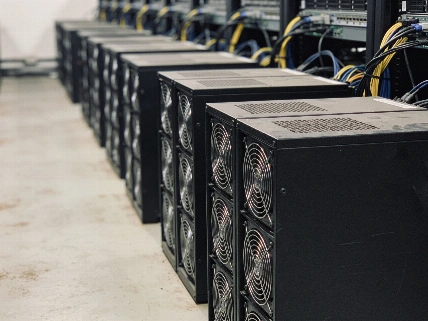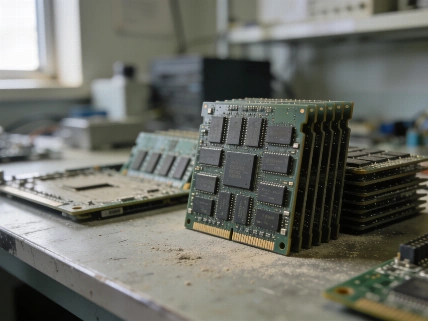
AMD's Helios racks will power AI workloads in Microsoft's Azure data centers, challenging Nvidia's dominance and signaling a shift in how cloud giants source critical chips for artificial intelligence infrastructure
AMD has taken a significant step in its campaign to challenge Nvidia's dominance in artificial intelligence hardware, landing Microsoft as the largest customer yet for its new Helios rack-scale AI system. The move marks a notable shift in the cloud computing landscape, as Microsoft will deploy Helios racks across its Azure data centres to support AI inference for both its own operations and those of its cloud clients. This development comes as cloud providers increasingly seek alternatives to single-vendor reliance, a trend that accelerated after pandemic-era chip shortages exposed the risks of supply chain concentration.
Microsoft Adds AMD Helios to Its AI Infrastructure
Microsoft's decision to add AMD's Helios to its infrastructure does not mean it is abandoning Nvidia or its own Maia chips. Instead, Azure will now operate with three major AI chip suppliers, giving customers more flexibility and reducing the risk of bottlenecks tied to any one vendor. According to reporting by TheStreet, Microsoft emphasised that its customers want performance, scale, and choice, rather than a single solution. The addition of Helios, which integrates AMD's Instinct MI455X GPUs, EPYC Venice CPUs, Pensando networking hardware, and ROCm software, reflects a broader industry move towards diversified sourcing and full-stack architecture decisions.
Wall Street responded quickly to the news. AMD shares rose as much as 5% on the day of the announcement, while analysts at Rosenblatt and UBS raised their price targets for the stock to $655 and $700, respectively. Microsoft's stock was little changed, suggesting that the deal is more consequential for AMD's growth prospects than for Microsoft's overall capital spending. Goldman Sachs had already lifted its AMD price target earlier in the month, citing strong demand for high-performance CPUs in AI workloads—a trend also discussed in our recent coverage of chip sector momentum.
AMD Competes on Cost per AI Task
Notably, AMD is not competing on sticker price alone. Industry estimates put the cost of a Helios rack between $5 million and $5.5 million, compared with $3.5 million to $4 million for Nvidia's next-generation Vera Rubin system, according to CNBC. AMD's pitch centres on cost per completed AI task, arguing that its integrated approach can deliver better value for certain workloads.
Analysts at Wolfe Research and Jefferies have pointed to Microsoft's adoption as evidence of Helios' competitiveness, though Nvidia is not standing still. The GPU leader has already announced its Kyber rack, which will double the number of GPUs per rack, intensifying the arms race in AI infrastructure.
AMD's Data Centre Business Continues to Expand
AMD's data centre revenue has surged in recent years, climbing from $6.5 billion in 2023 to $16.6 billion in 2025, with analysts projecting it could reach $31.2 billion in 2026. Despite this growth, Nvidia still controls more than 95% of the data centre GPU market, while AMD holds about 4.5%.
Wall Street appears to be betting that the gap will narrow faster than headline numbers suggest, especially as more cloud providers diversify their chip suppliers and validate AMD's latest offerings at scale.
Cloud Providers Shift Towards Multi-Vendor AI Strategies
Microsoft's three-vendor strategy is part of a broader industry response to the vulnerabilities exposed by recent supply chain disruptions. Cloud giants that once relied almost exclusively on Nvidia are now spreading orders across multiple chipmakers and, in some cases, developing custom silicon.
This shift changes the competitive calculus: it is no longer just about which chip is fastest, but whether hyperscalers are willing to concentrate billions in annual spending with a single supplier when credible alternatives exist. AMD's next test will come at its upcoming Advancing AI event, where further customer announcements could signal whether this week's momentum is the start of a lasting shift in the AI hardware market.
For context, AMD's Venice CPU began ramping production in May, with more customer validations than any previous EPYC generation. The company's integrated approach—bundling CPUs, GPUs, networking, and software—reflects a full-stack strategy that could appeal to enterprise buyers seeking both performance and supply chain resilience. As the AI infrastructure market evolves, the ability to offer a credible alternative to Nvidia may prove as important as raw performance metrics.
The Next Test for AMD's AI Hardware Strategy
Understanding the dynamics of the AI chip market requires a look at how cloud providers manage risk, performance, and cost. The move towards multi-vendor strategies is not just about hedging against shortages; it is also about negotiating power, innovation, and the ability to tailor infrastructure to specific workloads.
For investors and technology buyers alike, the pace at which AMD can convert high-profile wins into sustained market share gains will be a key metric to watch in the coming quarters.